

Audio By Carbonatix
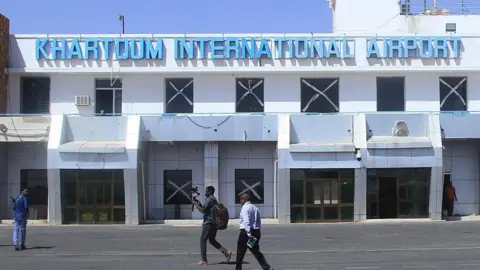
The Sudanese government has recalled its ambassador to Ethiopia for “consultations” following a series of drone attacks targeting critical infrastructure, including Khartoum International Airport. Sudanese officials formally accused Ethiopia of launching the strikes from its territory with technical and material support from the United Arab Emirates, describing the assault as "direct aggression." The move marks a significant escalation in regional tensions as Sudan’s internal civil war increasingly draws in neighbouring powers.
Direct Accusations of Foreign Aggression
Sudanese military officials claim to have "conclusive evidence" and "confirmed information" linking recent aerial assaults to Ethiopian airbases. Army spokesperson Brig. Gen. Asim Awad Abdelwahab stated that the government analysed data from a drone intercepted on March 17 and found it originated from the UAE and took off from Ethiopia. Sudan alleges that the drones that hit the capital on Monday were launched from Ethiopia’s Bahir Dar Airport. “What Ethiopia and the UAE have done is direct aggression against Sudan and won’t be met with silence,” Abdelwahab said, adding that the armed forces “will respond twice as hard” to preserve the dignity and security of the nation.
Ethiopia Rejects Allegations of Involvement
The Ethiopian Ministry of Foreign Affairs issued a swift denial, characterising the claims as “baseless accusations.” Ethiopia maintains it shares a "historic and enduring bond of friendship" with Sudan and has "refrained from publicising the grave violations" committed by Sudanese belligerents. However, Ethiopia countered by accusing Sudan’s army of supporting “mercenaries” from the Tigray People’s Liberation Front (TPLF). “It is evident that these hostile actions... are undertaken at the behest of external patrons seeking to advance their own nefarious agenda,” the Ethiopian statement said.
The Role of the United Arab Emirates
The conflict has highlighted the alleged role of the UAE in supporting the Rapid Support Forces (RSF). Sudanese officials previously reported tracking a drone identified as "Emirati property" before shooting it down. While Sudan claims the UAE is supplying drones and financing RSF training camps—including reports of upgraded facilities at Asosa airport—Emirati officials deny any military involvement. A UAE official dismissed the “unfounded accusations and deliberate propaganda” as “part of a calculated pattern of deflection – shifting blame to others to evade responsibility for their own actions.”
Impact on Khartoum and Civilian Safety
The strikes have shattered a period of relative calm in Khartoum that followed the RSF being pushed out last year. Monday's attack caused minor damage to an administrative building, with witnesses reporting blasts and smoke. Sudan’s information minister told Reuters that no one was wounded in the airport strike. However, the authorities were forced to announce a 72-hour suspension of operations. This follows a drone strike on Saturday in Omdurman that killed five people on a civilian bus and another in Al Jazirah that killed relatives of commander Abu Agla Kaikal. The Norwegian Refugee Council reported on X that more than 700 people have been killed by drone strikes across Sudan since the start of this year.
African Union and Ghana Lead Calls for De-escalation
As the conflict enters its fourth year in 2026, the African Union (AU) has moved to activate high-level mediation to prevent a full-scale interstate war. Leaders in Ghana have voiced concern that the regionalisation of the conflict undermines the "Silencing the Guns" initiative. Ghana’s diplomatic corps has emphasised that the security of the continent's major aviation hubs is vital for the African Continental Free Trade Area (AfCFTA). The AU has called for an immediate "humanitarian truce" to address a crisis where over 150,000 people have died, and 12 million have fled their homes.
Implications for Continental Stability
The diplomatic rift threatens to transform a domestic power struggle into a broader regional war involving the entire Horn of Africa. Previous attacks have targeted Kordofan, Blue Nile, and White Nile states, shifting the war’s focus toward drone-heavy attrition and sophisticated drone warfare. With the civil war leading to famine, claims of genocide in the Darfur region, and at least 150,000 people dead—though some sources place the toll at 59,000 with aid groups fearing it is much higher—the humanitarian cost continues to mount.
Currently, 12 million people remain displaced in what the UN calls the world's largest humanitarian crisis. Analysts warn that the involvement of external backers and historical disputes over the Blue Nile waters risk a fragmented conflict that could destabilise the entire continent. Sudan’s government remains firm, with Foreign Minister Salem warning that Khartoum is ready to “enter into an open confrontation” with Ethiopia if the violations of its sovereignty do not cease.
Latest Stories
-
CDD-Ghana calls on Chief Justice to avoid partisan political commentary
8 minutes -
Ghana could save $500m a year by switching from liquid fuels to gas – Energy Advisor
11 minutes -
Daily Insight for CEOs: Accelerating performance before year-end
13 minutes -
Apples versus Pears: Which fruit is better for blood sugar?
15 minutes -
‘Ghana believes in you’ – Sports Minister sends goodwill message to Black Princesses ahead of World Cup
17 minutes -
Improper EV home charging can overload circuits and cause fires – Ing. Ato Roberts
23 minutes -
Why dieting alone may not be enough for weight loss – experts explain obesity complexities
32 minutes -
‘Layer upon layer of miracles’: How Nepal flood survivors were rescued from tunnel
34 minutes -
Roads Minister praises Astee and P&W Ghanem for quality work on Upper West Big Push road projects
37 minutes -
Chief Justice spoke the truth at the wrong place -Dr Jabir Mohammed
40 minutes -
51-year-old drug ‘pusher’ in Accra and his 42-year-old wife arrested by NACOC
41 minutes -
NADMO intensifies monitoring in Daboya as Bagre Dam spillage raises flood fears
42 minutes -
8 Foods that can help you sleep better at night, according to nutrition experts
45 minutes -
JoyNews Republic Bank Habitat Fair clinic set for September 11–13 at Marina Mall
47 minutes -
Parents troop to Joy FM Back-to-School Fair for school deals and discounts
49 minutes