

Audio By Carbonatix
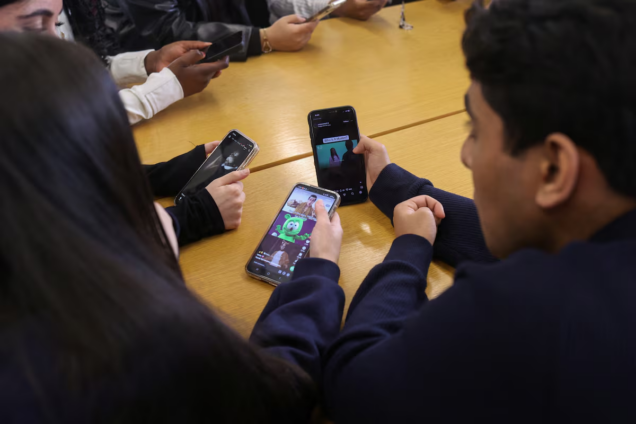
Social media ranks alongside smoking as a danger to children, senior British doctors said on Tuesday, as they urged lawmakers to tackle the harm that they say excessive screen time is causing to young people.
The Academy of Medical Royal Colleges detailed the impact of social media on children in a submission to the government's consultation on protecting children online, which closes on Tuesday.
"It ranks alongside smoking and wearing seatbelts in cars as a unifying force for the medical profession."
"There can be few issues which have united clinicians so resoundingly in recent years as the impact that unfettered exposure to tech and devices is currently having on children and young people's health," said the body, which represents the UK and Ireland's 23 royal medical colleges and faculties.
More than half of the 132 doctors surveyed saw at least one case of health harm that could be related to tech and devices every week, and over a third saw evidence of harm multiple times a week, it said.
Harms ranged from physical injuries, for example, caused by replicating acts of extreme pornography, to mental health impacts, such as trauma from seeing violence online.
Britain is consulting on restricting children's access to social media, including a possible ban for under-16s, as well as curfews, app time limits and curbs on what it has described as addictive design features.
Australia became the first country last year to ban social media for children under 16, with European countries considering similar measures.
Britain's online safety law requires social media companies to take measures to protect children from illegal and harmful online content, but the government has committed to going further.
"The question isn't whether we are going to act; we will, whether that is a ban on social media for the under-16s or restrictions on key features and functions," Technology Secretary Liz Kendall told BBC News.
Hundreds of British families are testing social media bans, curfews and app time limits to see how they affect children's sleep, family life and schoolwork.
Experts are divided on how effective a total ban would be, while a group of young people in London recently told Reuters they were opposed to restrictions.
Latest Stories
-
RCI Immanuel Temple donates supplies to Motherly Love Orphanage
35 minutes -
COCOBOD asks investors to fund cocoa purchases, but proceeds may also repay old debt
58 minutes -
Gov’t hands over site for construction of 160-bed Savannah Regional Hospital
1 hour -
NCPTA clarifies GH¢200 cap on PTA dues and levies per parent
1 hour -
Asante Kotoko part ways with coach Eric Tinkler
1 hour -
GTA calls for ultra-modern Cocoa Museum in Western North
1 hour -
NPP says concerns over delegates’ register addressed ahead of October 3 polls
1 hour -
PwC Ghana appoints George Arhin as Country Senior Partner
1 hour -
New Economy will turn imports into opportunities for Ghanaian production – Ato Forson
1 hour -
Two Ada SHS students convicted, placed on 12-month good behaviour bond
1 hour -
Samson’s Take: Verify the badge – and verify the story
1 hour -
Treasury bill demand rebounds as investors submit GH¢3.66bn in bids
1 hour -
Listing 10 SOEs will strengthen governance, limit political interference – Mahama
2 hours -
Mahama announces 1,200MW state-owned gas power plant deal by end of 2026
2 hours -
COCOBOD sets up Cocoa Capital PLC to raise GH¢16.3bn for cocoa sector
2 hours