

Audio By Carbonatix
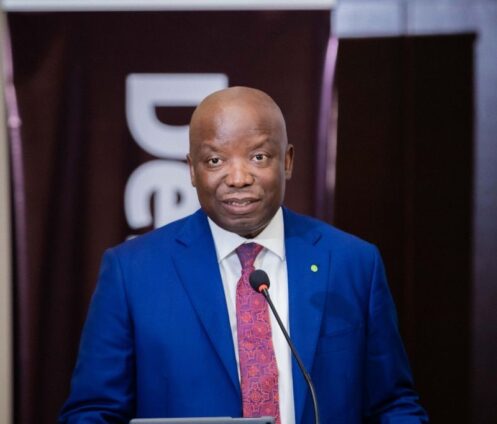
The Country Managing Partner of Deloitte Ghana, Daniel Kwadwo Owusu, has called for urgent and deliberate reforms to address rising graduate unemployment in Ghana, warning that the country’s current economic structure is unable to create enough jobs for its growing youth population.
Speaking at the 10th Ghana CEO Summit, Mr. Owusu said Ghana’s dependence on mining and a few dominant sectors cannot absorb the thousands of graduates produced annually by universities and colleges across the country.
“The rapid growth of the youth population calls for immediate diversification of the economy to create real and adequate jobs,” he stated.
According to him, research shows that only a small percentage of graduates secure meaningful employment within the first few years after completing school.
“Research has shown that about 15% of fresh graduates secure their first real employment between six months to two years after they leave university. Others could stay home for close to six years before securing some kind of permanent job,” he alluded.
Mr. Owusu described unemployment as a national challenge that requires coordinated efforts from government, businesses, and civil society.
“We should treat rising unemployment as a national issue,” he stressed, while raising critical questions on how Ghana can incentivize businesses to expand operations and encourage entrepreneurship among young graduates.
Digitalisation Key Tool in Solving Unemployment
He noted that digitalisation remains one of the key tools for driving job creation and economic transformation.
“One important tool to prioritize for enhancing job creation is digitalisation,” he said.
While acknowledging efforts by the Ministry of Communication, Digital Technology and Innovation, he noted that Ghana still has significant untapped opportunities in the digital economy.
“There are enormous opportunities in the digital economy, e-commerce and digital trade, artificial intelligence, platform-based activities, digital financial services, as well as technology infrastructure and data utilization. We must capitalize on these numerous opportunities to address the vast unemployment,” he added.
Investments in Technical and Vocational Education
Mr. Owusu also advocated stronger investment in technical and vocational education, arguing that countries such as China and Japan successfully used technical training to build globally competitive economies.
“It is time for us to lay greater emphasis on technical and vocational education,” he said.
On industrial growth, the Deloitte Ghana executive urged government to provide relief measures and incentives for local manufacturers to enable expansion and job creation.
Private Sector Incentive
“Another way to address the rising unemployment is for government to incentivize the private sector, especially the manufacturing sector and its value chain, with relief measures and other support to enable the sector to expand and employ substantial numbers of graduates,” he stated.
He highlighted the National Policy on Integrated Oil Palm Development as one of the promising initiatives capable of generating employment if fully implemented.
“The policy aims to establish about 10,000 hectares of new plantations and create 250,000 jobs through a $500 million financing window. These are promising policies, but implementation is necessary to generate jobs and drive sustainability,” he noted.
Mr. Owusu further called for increased support for Ghana’s agriculture sector, stressing the need for practical and actionable policies that can transform the industry.
“We have seen many policies in the past, but we need deliberate and actionable policies to transform the sector,” he said.
New GIPC Key in Modernising Ghana's Investment Framework
Touching on investment reforms, he expressed support for the new Ghana Investment Promotion Authority Bill, describing it as a major step toward modernising Ghana’s investment framework.
“We fully support the new Ghana Investment Promotion Authority Bill since it represents a significant modernization and expansion of Ghana’s investment legal framework,” he stated.
According to him, the proposed law would strengthen investor protection, improve dispute resolution mechanisms, and create a more conducive environment for both local and foreign investment.
In his concluding remarks, Mr. Owusu called for stronger collaboration between government, the private sector, and civil society to drive sustainable economic growth.
“I encourage government, the business community, and civil society to foster collaboration to drive sustainable business, stimulate job creation through innovation and deliberate policy creation, and enhance inclusive decision-making,” he said.
Latest Stories
-
Real-Time VAT on cross-border digital services – not a new tax and does not violate double taxation principle
31 minutes -
Digitalisation, AI key to Ghana’s tourism transformation – GHATOF
43 minutes -
Stronger GTA-private sector partnership needed to grow tourism – GHATOF
53 minutes -
Amazon eyes Ghana for broadband expansion after talks with Mahama
2 hours -
National Investment Quiz 2026: Six schools qualify for quarter-finals
2 hours -
‘Do not let Russia pay for its madness with lives of your people’ – Zelensky to Ghana, 46 other countries
2 hours -
6,079 promotion cases fully processed and paid – CAGD says amid nationwide teachers’ strike
3 hours -
Teacher unions to meet government Monday over nationwide strike
3 hours -
Photo story: Republic Bank-JoyNews Habitat Fair clinic wraps up after three days of housing solutions, expert engagement
3 hours -
National Peace Council urges investment in youth to sustain Ghana’s peace
3 hours -
Afenyo-Markin urges youth to speak up against injustice
3 hours -
CAF annuls Edo Queens victory, orders WAFU B final to resume from extra time
4 hours -
Interior Minister urges traditional authorities to enforce anti-bushfire bye-laws
4 hours -
3rd Republic Bank-JoyNews Habitat Fair Clinic ends on a high note after three days of strong patronage
4 hours -
Ten climbers missing after avalanche hits Himalayan base camp
4 hours