

Audio By Carbonatix
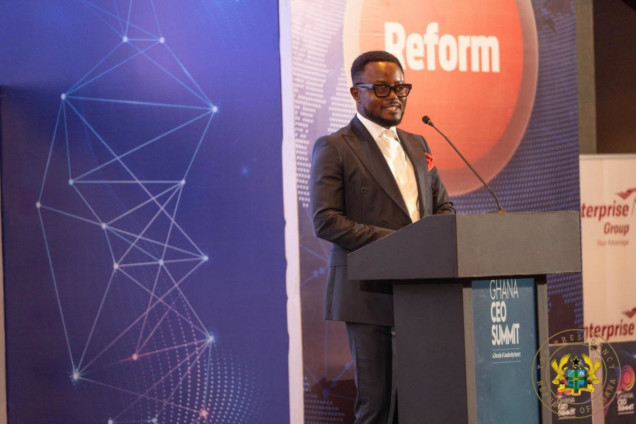
The Founder and Chief Executive Officer of the Chief Executives Network Ghana, Ernest De Graft Egyir, has unveiled a bold national initiative aimed at transforming high-potential Ghanaian companies into globally competitive multinational corporations.
Speaking at the opening of the 10th Ghana CEO Summit and Expo in Accra, Mr. Egyir said Ghana's next phase of economic transformation must move beyond stabilisation and focus on building globally competitive enterprises capable of driving industrialisation, innovation, job creation, and export growth.
The initiative, dubbed the Ghana Global Champions Initiative (GGCI), seeks to identify, support, finance, mentor, and scale Ghanaian businesses with the potential to compete on the global stage.
"The next phase of Ghana's economic journey must focus on building a stronger, innovation-driven and globally competitive private sector. That is why today, I proudly introduce the Ghana Global Champions Initiative," he announced.
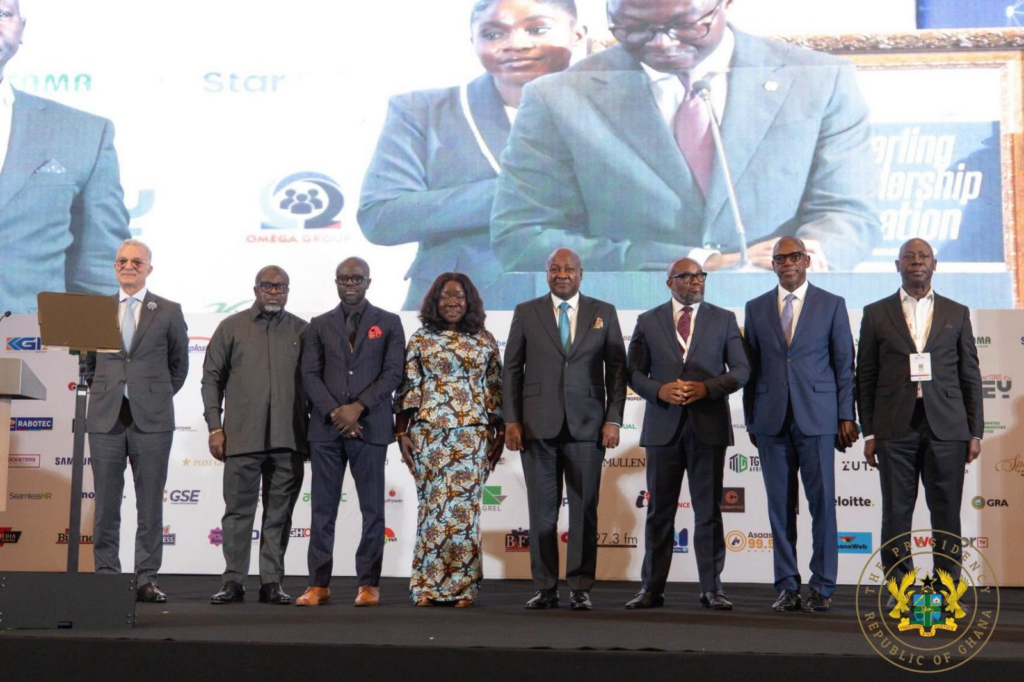
Addressing business leaders, policymakers, investors, and development partners under the theme "Accelerating Ghana's Economic Transformation: Driving Bold Reforms through Leadership, Technology, and Industrialisation for Sustainable Growth," Mr. Egyir said the country must deliberately nurture indigenous enterprises that can become continental and global leaders.
According to him, the initiative will position Ghanaian companies for regional expansion, export competitiveness, industrial growth, innovation leadership, capital mobilisation, and long-term sustainability.
"We must intentionally build Ghanaian multinational companies in manufacturing, agribusiness, fintech, pharmaceuticals, energy, technology, logistics, tourism, and industrial services," he stated.
He added that such companies would create jobs, generate foreign exchange earnings, attract investment, and build globally respected African brands.
Mr. Egyir noted that the summit's tenth anniversary marks more than a milestone event, describing it as a decade of leadership, enterprise influence, and national economic engagement.
"Today marks more than the celebration of a conference. It marks a decade of leadership, enterprise influence, strategic dialogue, and national economic engagement dedicated to shaping the future of Ghana and Africa," he said.
He highlighted the role the Ghana CEO Summit has played over the past decade in facilitating dialogue between governments, business leaders, investors, and development partners, contributing to policy engagement, investment promotion, and enterprise development.
Reflecting on the rapidly changing global economic environment, Mr. Egyir said countries that fail to industrialise, innovate, and build globally competitive enterprises risk long-term economic marginalisation.
"Artificial intelligence is reshaping productivity. Technology is disrupting industries. Global competition is intensifying. And capital is moving toward economies that demonstrate stability, innovation, institutional strength, and visionary leadership," he observed.
He stressed that economic transformation has become a national imperative rather than a choice.
"Transformation is no longer optional. It is a national necessity," he said.
Mr. Egyir also commended President John Dramani Mahama's administration for implementing reforms aimed at restoring macroeconomic stability and rebuilding investor confidence.
"At a time of severe fiscal distress and weakened investor confidence, your administration undertook the difficult task of restoring stability, rebuilding confidence, and repositioning Ghana toward recovery and long-term transformation," he stated.
While acknowledging the progress made in stabilising the economy, he cautioned that stability alone would not deliver prosperity.
"Stability without enterprise growth cannot create prosperity. Stability without industrialisation cannot create jobs. And stability without globally competitive businesses cannot transform nations," he emphasised.
The business leader identified fragmentation within the private sector as one of the key obstacles to Ghana's economic transformation agenda.
According to him, weak coordination, fragmented advocacy, and limited strategic alignment continue to undermine competitiveness and slow the implementation of critical reforms.
To address this challenge, he announced the launch of the CEO Government Compact 2026, a framework designed to strengthen collaboration between the government and the private sector.
"This framework is built on accountability, trust, reform execution, measurable outcomes, and shared national responsibility," he explained.
"The era of fragmented engagement must end. The era of strategic collaboration must begin."
Mr. Egyir argued that stronger alignment between government and business would accelerate economic growth, expand industries, improve productivity, and boost investor confidence.
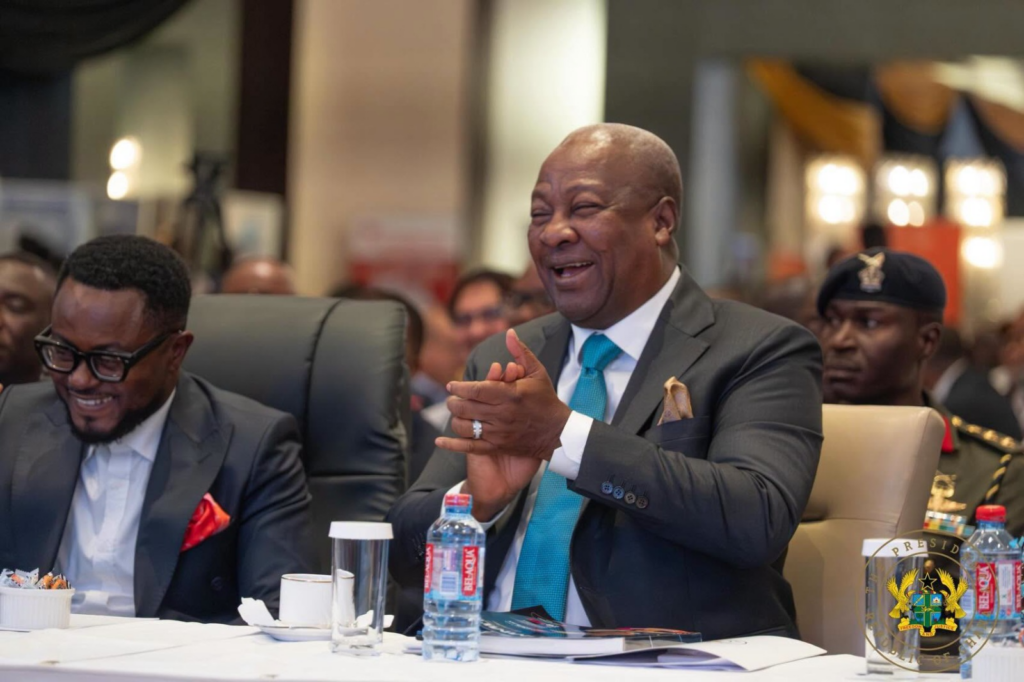
He further underscored the importance of technology and industrialisation in shaping the future prosperity of nations, urging Ghana to become a producer of innovation rather than merely a consumer of imported technologies.
"We must modernise our institutions, strengthen research and innovation, invest in skills development, and build technology-enabled enterprises that empower the next generation," he said.
On industrialisation, he stressed that no country has achieved sustainable prosperity without a strong industrial base.
"Industrialisation creates jobs, strengthens exports, drives productivity, and builds national resilience," he noted.
As Ghana looks to the future, Mr. Egyir said the next decade would be critical in determining whether the country emerges as a leading economic powerhouse on the continent.
"The next decade will determine whether Ghana emerges as a leading African economic powerhouse or remains trapped within cycles of unrealised potential," he warned.
He called on government, businesses, and institutions to work together to build a more prosperous and competitive economy.
"Government must lead with courage. Business must lead with innovation. Institutions must lead with integrity."
Concluding his address, Mr. Egyir urged stakeholders to move beyond discussion and embrace decisive action in pursuit of national transformation.
"The time for hesitation is over. The time for action is now. Let us move Ghana boldly and confidently from vision to action."
Latest Stories
-
Antwi HiMight thrills fans with Antwi ne Antwi hits at Adom FM’s Y2K Jam [Video]
11 minutes -
Amb. Edward Boateng congratulates Boadu, Kodua on election wins
36 minutes -
John Boadu pledges to rebuild NPP from grassroots and restore ‘winning machinery’
38 minutes -
Ashaiman Assembly deploys monitoring system to curb dumping in storm drain
50 minutes -
John Boadu must rebuild, unite NPP for 2028 – Edward Boateng
52 minutes -
Executive intimidation of opposition undermines separation of powers – Prof Oquaye
56 minutes -
I have no issue with John Boadu; we’ll work together – Justin Kodua
2 hours -
Adom FM Y2K Jam delivers a night of music, fashion and nostalgia
3 hours -
Lawrence Kobena Nsarko Otoo, Esq
4 hours -
Bel-Aqua intensifies mental well-being campaign ahead of 15th anniversary
4 hours -
From banking to party finances: Alfred Kwadwo Thompson elected NPP Treasurer
4 hours -
George Christian Papa Mends
4 hours -
Ali Suraj elected NPP NASARA Coordinator
4 hours -
Mustapha Hamid misses out on NPP Vice Chairmanship by 31 votes despite early poll lead
4 hours -
Kojo Bamba, Henry Nana Boakye and Nana Akomea elected NPP Vice Chairmen
5 hours