

Audio By Carbonatix
The African Development Bank will inject $125 million into African Trade and Investment Development Insurance (ATIDI) to become its biggest shareholder and ramp up the use of guarantees to attract private capital, the bank's president told Reuters.
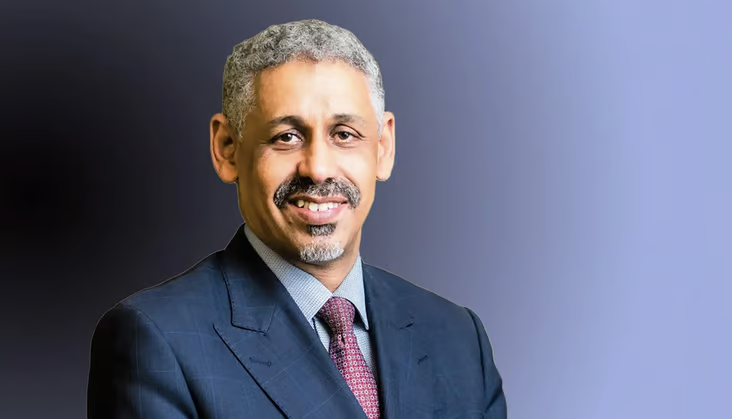
Sidi Ould Tah, who took the helm of Africa's largest development lender last September, is pushing a new financing model as development aid from rich countries dropped nearly a quarter last year to $174.3 billion. The United States led the cuts, including to the AfDB's concessional arm.
The investment is part of his drive, known as the New African Financial Architecture for Development (NAFAD), to tap an estimated $4 trillion in Africa's institutional capital, like pensions, sovereign wealth funds and savings schemes that are currently fragmented and uncoordinated, to plug an estimated $400 billion annual development financing gap.
"Our target is to bring the level of guarantees provided by ATIDI to 10 billion (dollars) annually and reach a target that will really unlock huge potential for financing infrastructure at scale," said Tah after the bank's annual meeting in Brazzaville last week.
The cash injection will take AfDB's shareholding in the agency to 14% from 3%, he said. It has covered an average of $3 billion worth of investments annually in the past.
PUSH TO EXPAND SHAREHOLDER BASE
Nairobi-headquartered ATIDI was set up 25 years ago to de-risk investment in Africa through insurance and guarantees that help channel private capital into riskier markets. It is owned by 24 African states and institutional investors, including African financial firms and Germany’s KfW Development Bank, which joined in April.
The AfDB move marks a shift away from ATIDI's traditionally dispersed ownership structure, with stakes spread across member states — led by countries such as Togo and Benin holding high single-digit shares.
AfDB is urging more African countries and investors to take stakes to boost ATIDI’s capital and expand its firepower, Tah said.
"We are also talking to various financial institutions and many countries to increase their contribution or to contribute if they are not yet shareholders," he said.
France is considering increasing its shareholding, with more details expected at a G7 meeting in Evian later this month.
Some analysts, however, argue African countries should focus on raising savings to build domestic capital pools. Sub-Saharan Africa’s savings rate is about 18%, less than half the global average, World Bank data shows, reflecting low incomes and a young population.
Tah said the bank could meet the region’s financing challenges.
"Africa can mobilise African resources to finance African development," he said.
Latest Stories
-
Renewed flood intervention at Mallam Junction raises hopes among residents, businesses
13 minutes -
St Augustine’s College retain National Investment Quiz title after nail biting grand finale
22 minutes -
Education infrastructure investment will drive Banda’s development – Ahmed Ibrahim
29 minutes -
Teacher unions strike: Gov’t presents fresh proposals as talks end inconclusively
1 hour -
51,000 teachers’ promotion arrears to be validated for October payment – Education Minister
2 hours -
Kwabena Boamah appointed Board Chair for Impact Investing Ghana
2 hours -
Striking teacher unions to meet Fair Wages and Salaries Commission on October 6
2 hours -
EOCO working with AG to arraign Nana Baffour Awuah before weekend court
2 hours -
Duraplast reassures customers after fire, announces October 5 reopening
2 hours -
Call off strike, gov’t will not renege on promotion arrears pledge – Haruna Iddrisu appeals to teacher unions
2 hours -
Committee set up to validate teachers eligible for 20% deprived-area allowance – Education Minister
2 hours -
Five-member committee to search for new Black Stars coach after Sports Ministry-GFA meeting
3 hours -
Pinktober: Breast cancer survival exceeds 90% when detected early – Breast Society of Ghana
3 hours -
TCDA to adopt Upper West’s MATCO mango farm as northern prototype, issues warning against felling shea trees
3 hours -
‘Fear delegates’ tag: Afoko touts genuineness among delegates ahead of NPP delegates conference
3 hours