

Audio By Carbonatix
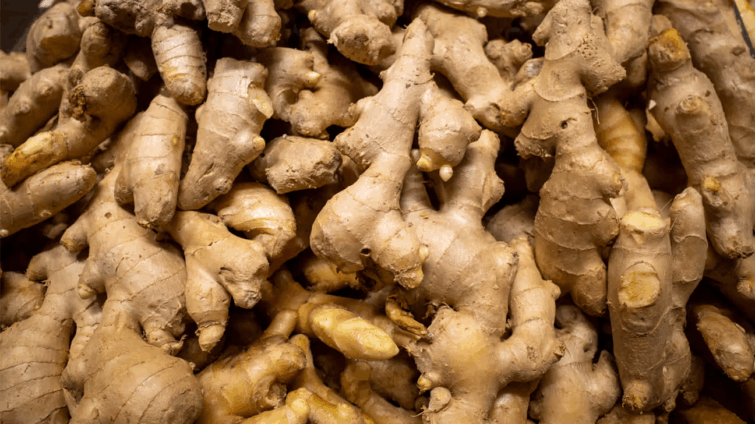
At a time when efforts are underway to preserve our scarce foreign exchange, it is worrying to hear that our precious local ginger is increasingly scarce or becoming extremely expensive on the market, thus creating a vacuum for import substitution.
The news on social media (SM) the other day, with the heading “Ghana’s Ginger Crisis,” courtesy of The Ghanaian Farmer TV’s Viral and Vital video, caught some attention, with as many as 5511 views at the time I chanced on it last Thursday. Was there really a crisis, I asked myself.
Because, like many other people, the nutritional as well as health benefits of ginger have been highly rated, some of us are quick to add ginger to almost every recipe we use. One patronises fresh ginger at every opportunity for its feel-good, live-well impact.
The latest ginger paste I made a month ago was only halfway down, so the SM broadcast got me to the market to observe what was going on with the highly rated local produce.
To my amazement, in that big, well-visited food market, there was hardly any trace of local ginger. What I saw, visibly displayed wherever I turned, was imported ginger. They appeared very pricey, though neatly presented, clean with virtually no earth and sometimes, weed on them as against what obtains in the local ginger that one is used to.
Investigation
Upon investigation, I spoke to some traders who confirmed the scarcity of the locally grown produce. Inside that market, almost everything that traders were selling in the ginger corner of the market was imported ginger. They confirmed the sources were mainly from China and Nigeria, even though I have later learnt from the news that there are some imports from Liberia as well.
It is regrettable that the importation of this highly rated daily spice, which has been hailed for its nutritional and medicinal values at this critical moment in our economy, is going to bring on board demand for the dollar and a needless pressure on the foreign exchange rate.
One grew up to see our mothers and grandmothers heavily dependent on ginger for cooking and as a medicinal aid for the healing of several ailments. It was grown by individuals and on a commercial basis, becoming even more in demand after the 2020 Covid-19 outbreak.
Since then, ginger has had a prominent presence in most meals, drinks and teas, serving as a dependable partner because experts have spoken highly of its potency for one’s immune system.
It presented an opportunity for many more people to take up the growing of ginger in their backyard gardens and in flower pots. I recollect visiting a friend here in Accra sometime last year and could not believe the two baskets full of fresh ginger she had harvested from a small garden in her backyard. That was the first time I saw a ginger plant. To date, I have always regretted not cultivating ginger in my garden.
So, what must have happened on the local front to cause this scarcity, leaving the space for imports to take over? The fear, going forward, is how imports hardly seem to go away once the people acquire the taste, never mind the surge in price or the harm they cause to our economy, in terms of foreign exchange pressures and loss of local jobs, while indirectly creating jobs for other countries.
Crop disease
According to other online news reports, ginger farmers are crying about a disturbing crop disease that is affecting the growth of their produce and the lack of disease management. Coupled with that, unfortunately, they also lack the assistance of extension officers in the field. For these reasons, farmers have been left overly crippled in curbing the spread of the attack on their own.
In confirmation of the scarcity on the market, available statistical information shows that just a few weeks ago, the year-on-year inflation rate for ginger shot up to about 68 per cent.
To prevent a total shutdown of their businesses, the traders in the commodity have had to resort to importing ginger to complement their spice businesses and keep them from collapsing. The result has been the high cost of fresh ginger, ginger-based drinks, and other products on shop shelves.
Ginger is ubiquitous in our local meals and has a stronger presence in our local medicinal products. It is patronised by all, the rich and the poor. Its pricey nature, due to scarcity or lack thereof on the market, can have dire consequences.
It is therefore a national call to the Ministry of Food and Agriculture to take up the issue of the crop disease and escalate it to arrive at solutions to help local ginger farmers before imports take over a critical product and a job-creation venture.
*******
The writer can be reached via email at vickywirekoandoh@yahoo.com
Latest Stories
-
Power restoration fault suspected in Kumasi Central Market fire
4 hours -
The 7-foot giant of Ngleshie Amanfro: Seven-foot Ghanaian Ephraim Saawa dreams of joining the national basketball team
4 hours -
Government promises support for Kumasi Central Market fire victims
5 hours -
Vibes The Movie: Big Ghun’s Ghanaian film earns five nominations at 2026 REFFA
5 hours -
MamaCare CEO warns unresolved conflicts among health workers could undermine maternal and neonatal care
6 hours -
Health professionals urged to translate medical knowledge into practice to save mothers
6 hours -
Conflicts among care providers linked to maternal, neonatal deaths – Expert
7 hours -
GIS marks 10th TIME conference, champions improved teaching practices
7 hours -
BRICS Or Balance? What Ghana’s bid really means
8 hours -
GPRTU wants full TRAFFITECH-GH implementation to start in 2027
8 hours -
Mahama announces plans to import electric wheelchairs for PWDs
8 hours -
KGL U17 Colts 2026: Western beat Prempeh Elite Academy to set up final final with Greater Accra Region
8 hours -
Late Solanke strike salvages 10-man Spurs draw at Man United
9 hours -
Gender Ministry to monitor welfare of Nana Akua Addo’s children amid domestic violence case
9 hours -
Benedict Okyere Yeboah: Ghana’s football problem goes beyond sacking a coach
9 hours