

Audio By Carbonatix
There is a clinical archetype that dominates modern medical research: the academic who operates entirely within metropolitan institutions, manipulating secondary datasets and publishing papers without ever engaging with the physical communities those statistics represent.
Valentine Golden Ghanem represents the antithesis of that model
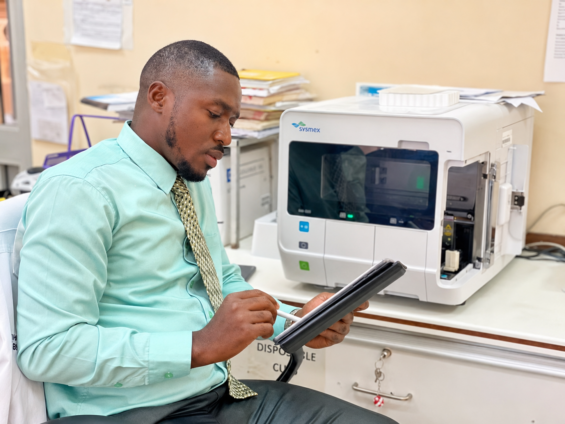
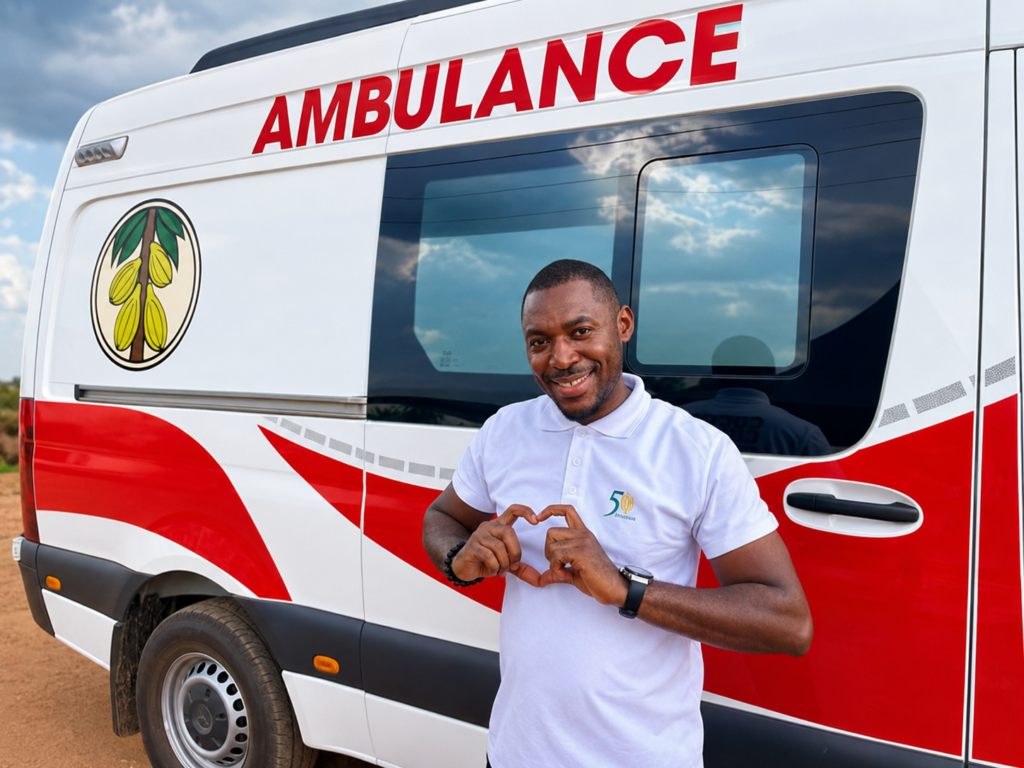
For more than eleven years, alongside his full-time clinical leadership responsibilities at the Cocoa Clinic in Accra, Valentine Golden Ghanem has served on the frontlines of the Ghana Cocoa Board’s (COCOBOD) medical mission and outreach programs. His work has involved travelling directly to remote, rural farming communities, setting up temporary screening stations, and delivering essential diagnostic and surveillance services to populations completely cut off from fixed health infrastructure.

This long-term commitment does not exist to boost academic citation metrics. Instead, it provides something far more valuable: a deep, unvarnished comprehension of what structural health inequality looks like on the ground.
Translating Frontline Realities to Academic Synthesis
COCOBOD’s medical missions bridge the gap for cocoa-farming families living in regions where healthcare access is severely constrained. In this challenging environment, Ghanem has managed diagnostic screenings, epidemiological assessments, and early disease surveillance for thousands of individuals.
He has seen firsthand the stark reality of a late-stage HIV diagnosis—not as an anonymous row in a spreadsheet, but as a patient sitting across from his desk. He has navigated the complex social terrain where patients drop out of antiretroviral therapy (ART) programs, tracking the real-world barriers that prevent adherence.
This decade of direct clinical observation directly informed his comprehensive narrative review published in the International Journal of Medical and Health Research. Examining a decade of peer-reviewed scientific literature (2015–2024) on HIV prognosis and mortality trends across sub-Saharan Africa, Ghanem synthesised the underlying social and clinical mechanics that dictate survival rates in resource-constrained environments.
The True Drivers of Mortality
While modern antiretroviral therapy has successfully transformed HIV into a manageable chronic condition under trial conditions, Ghanem's review highlights why this clinical success often breaks down in practice. The paper organises the true drivers of mortality into clear, systemic categories:
| Structural Barrier | Clinical Consequence |
| Delayed Diagnosis | Patients enter treatment pathways with advanced immunosuppression, severely compromising long-term prognosis. |
| Social Stigma | Stigma acts as a direct clinical barrier, actively driving individuals away from voluntary testing and consistent medication pickups. |
| Geographic Isolation | Excessive travel distances between rural communities and centralized care facilities cause high treatment default rates. |
Ghanem’s review emphasises that when a patient in a rural village misses their treatment cycle, it is rarely a simple failure of personal compliance. More often, it is a rational, predictable response to a health system that has failed to mitigate the logistical and social costs of care.
The Honest Data
The community outreach work and the academic literature review are ultimately the same scientific inquiry executed at different scales. At the screening table in a rural district, the focus is immediate and human; in the medical journal, the focus is systemic and structural.
By anchoring his academic publications in a career spent on the front lines of public health delivery, Ghanem demonstrates how modern epidemiology ought to function. His trajectory proves that data science is at its most potent when it remains deeply accountable to the individuals behind the numbers.
Latest Stories
-
Glasner suffers loss on Selhurst return as Palace beat Forest
13 minutes -
WAFU B U17: ‘We won but I expected more from my boys’ – Kassim Ocansey
18 minutes -
Man City cruise to statement win over 10-man Liverpool
27 minutes -
Be careful with cross-border lending, foreign currency exposures – BoG to financial institutions
3 hours -
GPL 2026/27: Medeama go three clear as Hearts of Oak recover and Bechem stage stunning comeback
3 hours -
Ntiamoah Foundation launches “BEYOND 20” anniversary campaign
3 hours -
Credit Risk Management Directive: BoG to begin implementation for banks, others from July 1, 2027
4 hours -
Ghana Brands Awards 2026: Leading brands, business trailblazers to shine on November 20
4 hours -
T-bills auction: Demand improves as government exceeds target by about 76%; interest rates soften
4 hours -
Ziope undertakes initiative to build a technologically inclined community, commissions self-help ICT lab
4 hours -
ECG announces power outage in parts of Tema, Central Region due to network fault, maintenance
5 hours -
When the Gospel Becomes a Weapon: The church, blackmail and the abuse of faith
5 hours -
JoyNews’ Jacqueline Ansomah Yeboah selected for UK Media Excellence for Emerging Technologies Fellowship
5 hours -
Mental Health Alliance urges government to operationalise Mental Health Fund
6 hours -
Ghana–Holy See agreement heads to Parliament after Cabinet approval
6 hours