

Audio By Carbonatix
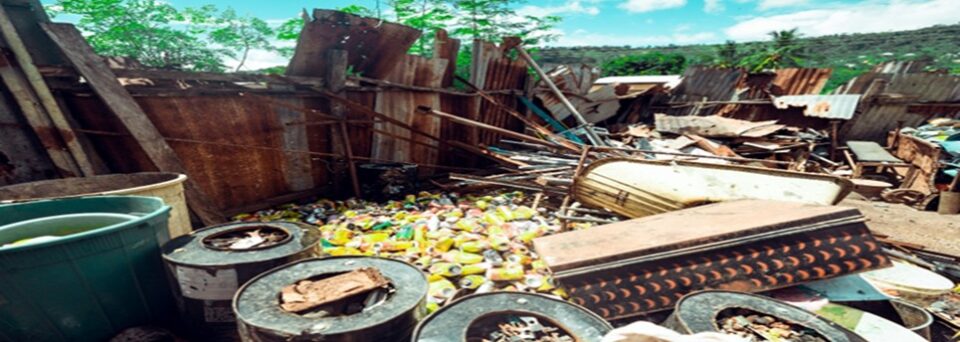
At first glance, it is a scene of everyday community life, where children play, businesses thrive, and residents go about their daily routines. But upon entry, you are met with a strong chemical presence. Containers of pigment line the fronts of workshops, car batteries lie cracked open, engines idle in the open air, and scrap metals stacked high beside busy workspaces.
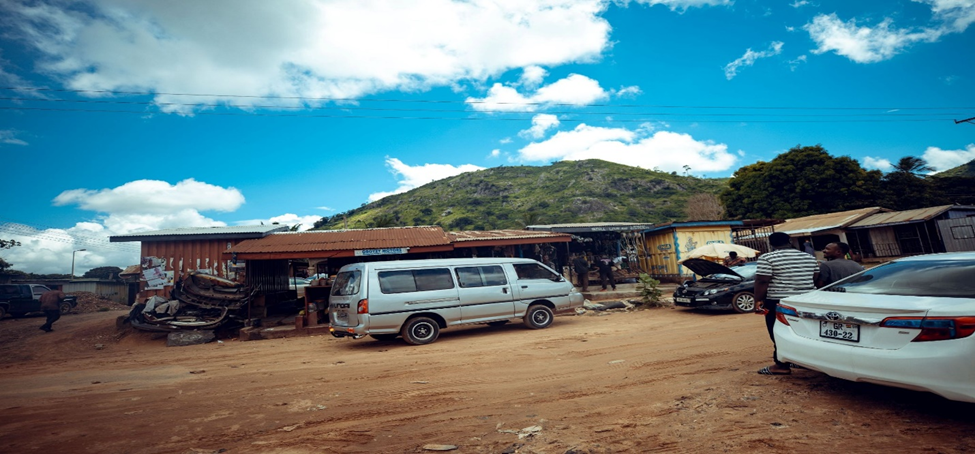
Throughout the area, battery recycling units, automotive repair shops, paint-mixing facilities, and scrap metal operations operate alongside homes, food vendors, and small businesses within the same tightly shared landscape.
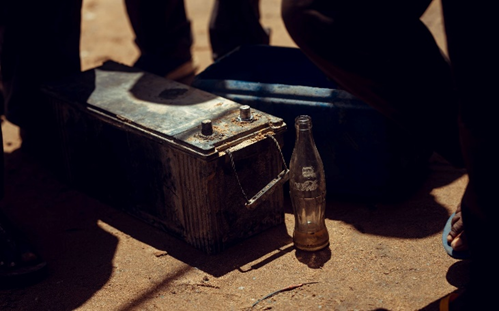
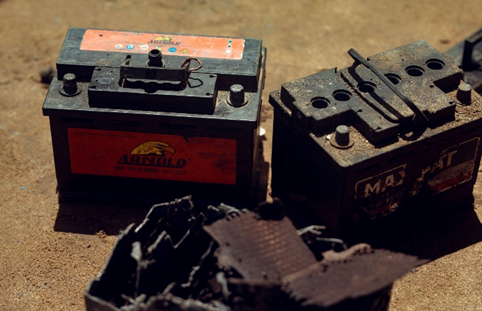
Many of the activities observed within the zone are among those identified by the World Health Organisation as significant sources of lead exposure, releasing toxic dust, fumes, and particles into the environment. Lead exposure can damage the brain, kidneys, nervous system, and heart, with children being the most vulnerable to its toxic effects. Yet, observations at the site revealed that workers handle these hazardous materials daily with little to no protective equipment.
A veteran mechanic who has spent four decades working in the enclave says he takes precautions whenever his children visit his workshop.
"I don't allow them to touch anything," he explained, gesturing toward engine parts and used components scattered around the workspace. "When my children come here, I tell them not to touch the tools or the materials."
But experts caution that preventing direct contact alone may not eliminate exposure risks. The World Health Organization (WHO) notes that lead can contaminate dust, soil, air, water, food, and surfaces, creating multiple pathways through which exposure can occur.
Beyond the industrial activities themselves, the area sits within a low-lying valley, a physical setting that adds an important environmental dimension to concerns about exposure. Research has shown that valley landscapes can influence how pollutants disperse by prolonging the time airborne particles remain in the area and accumulating pollutants flowing downhill during rainfall.
Therefore, in such an environment where lead-containing dust is highly likely to be generated, experts say there is a higher likelihood of localized accumulation and sustained exposure for people who live and work nearby.
This observation was made during a recent field visit as part of a three-day programme in Koforidua, organised by Vital Strategies. The programme brought together journalists from across Ghana for intensive training on lead poisoning and environmental health reporting.
During the event, Dr. Sampson Atiemo, Executive Chairman of the Mountain Research Institute in Koforidua, pointed to gaps in enforcement that are allowing unsafe informal practices such as these to persist.
“We do have formal collection systems for used batteries,” he says. “But what we're seeing is that a lot of informal operators are getting involved in collecting and processing them. The challenge is that many of them don't have the equipment or infrastructure to do it safely. As a result, some resort to practices like open-air smelting, where batteries are broken apart and heated in the open. When that happens, lead fumes and contaminated dust are released into the environment, exposing not only the workers themselves but also nearby communities.”
Health experts warn that lead is a potent neurotoxin with no known safe level of exposure, and that children are particularly vulnerable to its effects.
Dr. Emmanuel Kyeremanteng-Amoah, who works with UNICEF, explains that exposure can impair brain development and learning ability, affecting memory, attention, and cognitive performance.
“If exposure starts during pregnancy or early childhood, the effects can follow children throughout their lives.” He explains, “When this happens on a large scale, it doesn't just affect families. It affects human capital, productivity, and national development.”
Data from the Global Burden of Disease study, compiled by the environmental health organization Pure Earth, estimates that approximately 4.3 million Ghanaian children aged 0 to 19 have blood lead levels above 5 micrograms per deciliter, a threshold widely regarded as unsafe and requiring public health intervention.
Many residents, however, are aware of the pollution generated by the industrial activities surrounding them and the challenges of raising families in such an environment.
"It worries us because the children are always around here," one resident said. "This is where we live, where they play, and where many of us work. We don't really have another place to go."
A 2008 investigation by Greenpeace Research Laboratories documented lead concentrations of up to 3,530 parts per million in a soil and ash sample collected from within the broader recycling and scrap processing area. This concentration was nearly 18 times higher than the U.S. Environmental Protection Agency’s residential soil screening standard of 200 ppm, for which further investigation and remediation are typically recommended.
Yet, more than a decade later, the surrounding landscape continues to support small-scale farming, with crops cultivated for household consumption and sale in local markets.
"This place is very good for agriculture. We cultivate maize, cassava, plantain, and cocoyam here," says Kwakye, a long-time resident, pointing toward the edges of the enclave where crops are thriving.
While the extent to which lead may be entering these food crops cannot be confirmed without laboratory analysis, public health research identifies contaminated soil and dust as key pathways through which lead can enter food systems.
Meanwhile, a 2023 Global Burden of Disease study estimates that lead exposure contributes to more than 5,000 deaths annually in Ghana, with most of these deaths attributed to ischemic heart disease, stroke, and other cardiovascular diseases.
Among those most concerned are workers who are occupationally exposed to lead themselves. A paint mixer in his late twenties who has spent only a few years handling pigments and chemical products says he is already beginning to notice changes in his health and is worried about the long-term consequences of continued exposure.
"Sometimes I don't feel well," he said. "The smell is very strong, and I inhale it every day. I keep thinking that one day it may cause a serious health problem."
Even so, leaving the job is not a realistic option.
"This is what I do for a living," he said. "If I stop, what work will I do? How will I take care of my family?"
In this enclave, many of the same activities identified as potential sources of lead exposure are embedded within the very environment where families live, crops are grown, and livelihoods are built. For them, the challenge is not simply how to earn a living, but whether economic survival can be achieved without compromising long-term health.
Latest Stories
-
Mahama unveils 3 pillars to advance global reparatory justice agenda
6 minutes -
JoyNews Democracy Is Not for Sale regional dialogue – My take
11 minutes -
US ready to work with Ghana on reparatory justice despite opposing UN resolution – Ablakwa
22 minutes -
UK, Netherlands, Denmark ready to work with Ghana on reparatory justice – Ablakwa
30 minutes -
Ghana TVET Service partners TOR to strengthen industry skills training
35 minutes -
KNUST hosts Nyansapo Photonics School, commissions GPOL to boost research and innovation
46 minutes -
Minority Leader outlines procedure for security agencies seeking to arrest MPs
50 minutes -
Baffour Awuah’s lawyers dispute EOCO claim over February invitations
52 minutes -
Pursuing Manhyia South MP through Parliament would have made arrest process more decorous – Interior Ministry spokesperson
55 minutes -
2026 Women’s Super Cup: Hasaacas, Prisons Ladies dominate first round of games
56 minutes -
After a year without Police, Kwame Danso breathes again as Station reopens
58 minutes -
GES transfers funds to SHSs for perishables and recurring items
58 minutes -
Eriksen leaves Wolfsburg by mutual consent
59 minutes -
Iran’s president tells Trump it will never ‘bend the knee’
60 minutes -
Parents of missing baby at Asafo Market arrested over false accusation against woman
1 hour