

Audio By Carbonatix
The Food and Drugs Authority (FDA) has begun training herbal medicine manufacturers and practitioners in the Eastern Region on its digital registration platform as part of efforts to improve product traceability, curb adulteration and strengthen consumer protection.
The initiative comes as regulators seek to strengthen oversight of Ghana’s growing herbal medicine industry, where concerns over unregistered products, misleading claims and the mixing of herbal preparations with orthodox medicines continue to pose risks to public health.
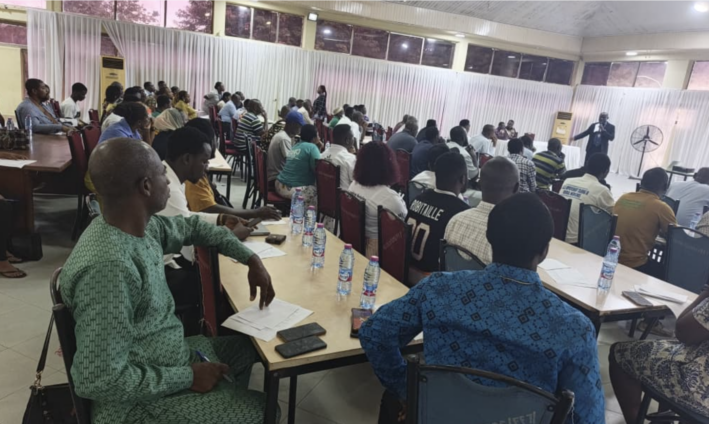
The training, held at the Ghana Library Authority in Koforidua, brought together herbal clinic operators and manufacturers from across the region to build their capacity in product registration, labelling requirements, Good Manufacturing Practices (GMP), advertisement regulations and the use of the new Ghana FDA Integrated Regulatory Management System (G-FIRMS).
Speaking in an interview with the Ghana News Agency on the sidelines of the programme, Ms Anita Owusu-Kuffour, the Eastern Regional Head of the FDA, said the engagement was aimed at equipping stakeholders with the legal and technical requirements governing herbal medicine production and marketing.
“The idea is basically to equip them with the law and with the current trends in Good Manufacturing Practices and the way forward in terms of our regulations,” she said.
She stated that the training was informed by recurring compliance gaps identified during their routine inspections and audits of herbal medicine facilities across the region.
“Following our various audits of such facilities, there were some non-compliance that we observed. So, we deemed it appropriate to bring such issues to light and to educate them to make sure that their practices are in line with the law,” she said.
Ms Owusu-Kuffour indicated that the Authority would continue conducting routine and unannounced inspections to ensure that operators complied with regulatory requirements and applied lessons acquired from the training.
A major focus of the programme was product registration and labelling requirements, areas FDA officials said remained among the most common sources of application deficiencies.
Mr David Arhin, Principal Regulatory Officer of the FDA, explained that participants were taken through standards governing product names, indications, dosage forms and cautionary statements required for herbal medicinal products.
He said the Authority would not approve labels or promotional materials containing sexually explicit or culturally inappropriate images.
The FDA, he noted, prohibited “certain provocative pictures and sexual pictures” that did not conform to accepted Ghanaian ethical and cultural values.
Mr Arhin also warned manufacturers against adulterating herbal products with orthodox pharmaceutical substances to enhance their perceived effectiveness.
“We do not allow any orthodox medicine at all; otherwise, it’s no more herbal,” he stated.
He explained that the Authority’s laboratories could detect synthetic pharmaceutical ingredients introduced into herbal formulations.
“When you run the spectrum, that active ingredient will show and we can easily say that this person has mixed it with medicine which is not herbal,” Mr Arhin said.
According to him, manufacturers found violating the regulations could face warning letters, administrative fines or prosecution under the Public Health Act, depending on the nature and severity of the offence.
The training also introduced participants to G-FIRMS, the FDA’s digital regulatory platform, which enables online product registration and facility licensing.
Mr Kingsley Nii Lamptey, the Principal Regulatory Officer, said the Authority had transitioned from paper-based applications to a fully digital system designed to improve efficiency, transparency and accountability.
“Everything now is just like you applying for a US visa. You sit in the comfort of your home, you put in the application, and you get a response in the system,” he said.
Mr Lamptey explained that the platform eliminated the need for applicants to travel to FDA offices to track applications or rely on intermediaries.
“You don’t need a “goro boy” or a middle person to do this for you. We’re making it transparent because at every stage in the process, you get to know the status of your application in the system,” he said.
He added that all regulatory queries arising during product registration and licensing would be communicated directly through the portal, enabling applicants to receive updates in real time.
Mr Stephen Ofosu, the Manager of Rich Life Impact Assurance Herbal at Suhum and a participant, described the training as timely and insightful.
He said the programme had enhanced participants’ understanding of quality assurance, safe manufacturing practices and regulatory compliance, while reinforcing the dangers associated with mixing herbal and orthodox medicines.
“The combination of herbal medicine and orthodox medicine is very deadly,” he cautioned.
Officials said the Authority would continue stakeholder education, inspections and enforcement activities as it expands the use of digital regulatory systems to improve oversight of the herbal medicine sector and ensure that products reaching consumers meet approved safety and quality standards.
Latest Stories
-
Livestream: Newsfile discusses World Cup visa scandal, beach demolitions, education strikes, BRICS bid
16 seconds -
NC-PTAs welcomes end of teachers’ strike, urges parents to prepare children for Monday
10 minutes -
Government procures over 2,000 transformers as Ghana’s electricity access hits 89.13% – Energy Minister
37 minutes -
UTAG-UG threatens strike on October 19 over unpaid allowance
45 minutes -
Let The Constitution direct Chieftaincy to deliver “All Development Is Local”
2 hours -
John Jinapor outlines renewable energy, nuclear power priorities for 2027
2 hours -
Ghana explores centre of excellence for hearing, communication and cochlear implant care
3 hours -
Schizophrenia-related disorders lead mental health cases recorded in Ghana
4 hours -
Dutch authorities enlist Ghana in hunt for fugitive drug lord Bolle Jos
4 hours -
Ghana housing finance conference adopts communiqué to improve affordable housing access
9 hours -
Special Initiatives Minister urges Wa Technical Institute to enrol more girls as EU-backed solar training lab opens
9 hours -
In the matter of my first year at the Bar
9 hours -
ActionAid Ghana calls for an end to child marriage, greater investment in girls’ rights
9 hours -
Newsfile to tackle World Cup visa scandal, beach demolitions, education strikes, BRICS bid
10 hours -
UK-Ghana Trade & Investment Summit: Trade Resource Centre to help businesses maximise UK-Ghana trade opportunities
10 hours