

Audio By Carbonatix
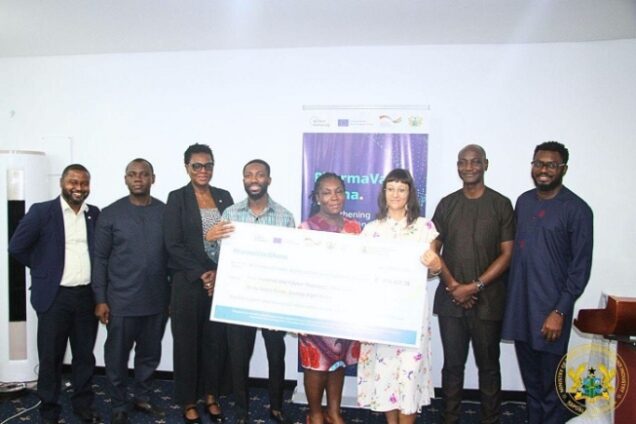
The European Union (EU) and the German Ministry for Economic Cooperation and Development have formalised a €415,437.78 grant to launch the PharmaVax Programme.
The initiative is designed to overhaul the structural deficiencies in Ghana’s pharmaceutical landscape and propel the nation toward becoming the primary manufacturing hub for the sub-region.
The programme, which is structured around a four-pillar framework, seeks to fortify regulatory governance, foster deeper synergy between the state and private stakeholders, streamline foreign direct investment, and digitise transparency in licensing and authorisation processes.
During the formal announcement of the partnership, the Director of Administration at the Ministry of Trade and Agribusiness, Mr Yaw Sakyi, reiterated the government’s unwavering commitment to weaning the country off its heavy reliance on imported medicines.
He noted that the new pharmaceutical policy serves as the critical blueprint for this transformation, offering a robust architecture for industrial growth.
“The pharmaceutical policy will provide the necessary implementation systems for the growth of the industry,” Mr Sakyi stated, while expressing profound appreciation to the EU and the German government for their sustained technical and financial assistance.
The ministry has outlined an aggressive timeline for the PharmaVax initiative, with clear targets set for the year 2030. According to the Head of the Pharmaceutical Manufacturing Development Unit, Mr Godfred Gobah, the government is moving beyond policy to active market facilitation.
He explained that the Ministry is preparing a series of strategic interventions to boost the visibility of "Made in Ghana" medicines on the international stage.
“The Ministry will engage the private sector and participate in local and international events to increase the visibility of Ghana's pharmaceutical industry and create new market access opportunities,” Mr Gobah said.
The success of the PharmaVax Programme is expected to significantly slash the national import bill for essential medicines, create high-skilled manufacturing jobs, and ensure that Ghana can respond more effectively to public health emergencies through local production capacity.
Latest Stories
-
GloMeF CEO urges intensified public education on new road traffic regulations
11 minutes -
‘Any tax on ChatGPT is an attack on education and innovation’- Akim Swedru, MP
15 minutes -
Obuasi SHTS sexual abuse scandal exposes systemic failure in child protection – Moving Masculinity
15 minutes -
Hubtel CEO calls for national data-sharing framework to boost AI development
18 minutes -
Twelve Golden Rules of real estate development in Ghana, Africa
22 minutes -
Five new telephony cell sites in Ashanti Region to be activated in October 2026 – Sam George
23 minutes -
Mahama cuts sod for Afienya Industrial Park, targets 120 enterprises
28 minutes -
Rush for fuel from accident tankers is stealing, punishable by law – NPA boss, Edudzi Tamakloe
33 minutes -
GhIG pushes for legislation to regulate geoscientists’ activities
39 minutes -
Mfantsipim @150: Ace Anan Ankomah leads project to preserve school’s musical heritage
43 minutes -
Gov’t launches rCOMSDEP in Ahanta West, Mpohor Fiase to promote responsible community mining
45 minutes -
AI is forcing professionals to rethink how they deliver value – Hubtel CEO
48 minutes -
Daily Insight for CEOs: Strengthening the CEO’s Leadership Legacy
49 minutes -
Jimmy Aglah’s ‘When the River Testified’ approved by NaCCA as Supplementary Reader
58 minutes -
Hubtel willing to contribute to Ghana’s proposed AI fund – CEO
1 hour