

Audio By Carbonatix
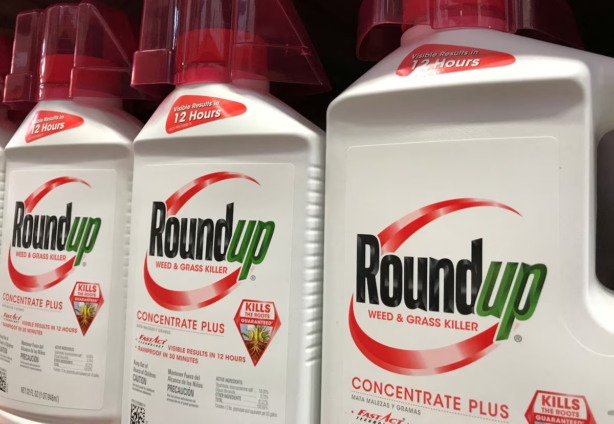
A Missouri state court on Tuesday set an August 19 hearing date to review Bayer's $7.25 billion proposed settlement of lawsuits alleging that its weedkiller Roundup causes cancer, briefly delaying a hearing that had been set for early July.
Judge Timothy Boyer in St. Louis previously indicated that he would postpone the settlement approval hearing after a dispute over whether the deal should be reviewed in federal court or Missouri state court.
While Boyer was considering the schedule, the U.S. Supreme Court last week handed Bayer a major legal victory, issuing a ruling that scaled back thousands of claims that Roundup's warning label failed to properly warn consumers about the cancer risk associated with the weedkiller.
The Supreme Court on Tuesday remanded several other Roundup-related cases to lower courts for reconsideration in light of its ruling on failure-to-warn claims.
Those cases include allegations not addressed in the court's recent ruling, such as claims that Roundup was defectively designed.
Bayer's Monsanto unit said in a statement Tuesday that the six-week delay in state court would not materially impact the settlement approval process. Bayer has previously said the settlement is supported by most of the people who had sued over Roundup claims.
The German drugmaking and crop science company is facing approximately 65,000 claims in U.S. state and federal courts from plaintiffs who say they developed non-Hodgkin lymphoma and other forms of cancer after using Roundup at home or on the job.
Bayer, which acquired Roundup when it purchased Monsanto in 2018, has said that decades of studies have shown that Roundup's key ingredient, glyphosate, is safe and does not cause cancer.
The settlement proposal, announced in February, aims to resolve most of the remaining lawsuits as well as potential lawsuits from people who already have been exposed to Roundup and develop cancer in the future. Dozens of people have objected to the settlement, saying that the deal is unfair to cancer victims and future claimants.
The Supreme Court's recent ruling does not change the terms of the settlement, and Bayer has said it remains committed to moving forward with the deal it reached in February.
Bayer's Monsanto unit has said that the Supreme Court ruling significantly strengthens the company's position in Roundup lawsuits brought by plaintiffs who opted out of the settlement.
Failure-to-warn claims were part of most Roundup lawsuits and are generally considered easier to prove than other legal theories.
Plaintiffs' lawyers argue that they can still win cases based on other legal theories that were not addressed by the court.
The high court's ruling brought one trial to an abrupt end on Friday, when a different Missouri state court judge declared a mistrial because the case included arguments and evidence tied to failure-to-warn claims that the Supreme Court had ruled were preempted.
The proposed settlement does not resolve about 4,000 Roundup cases consolidated in federal court. The judge overseeing those cases, who has previously criticised the proposed settlement, scheduled a July 7 status conference to discuss the impact of the Supreme Court ruling on the pending federal court cases.
Latest Stories
-
Richmond Quarcoo appointed Ghana’s Chef de Mission for 2028 Olympics
13 minutes -
‘Our missing players are more important’ – Gambia coach fires shot at Ghana
1 hour -
Today’s front pages: Tuesday, September 29, 2026
2 hours -
Ghana ‘showing up differently’ on global stage – Joyce Bawah Mogtari
2 hours -
Ghana’s tuna industry in crisis as 20 hook-and-line vessels collapse
3 hours -
South Tongu MP launches apprenticeship programme for 159 young people
3 hours -
The Pusiga connection behind Gertrude Atongi’s work in New York
3 hours -
Teachers took promotion exams in December to beat government clearance deadline – GNAT
3 hours -
NPA launches 2026 staff welfare week with focus on teamwork and employee wellbeing
3 hours -
Ghana, Saint Kitts and Nevis sign labour deal to strengthen protections for Ghanaian nurses
4 hours -
Delayed promotions put teachers’ retirement benefits at risk – GNAT
4 hours -
No ‘Bawumia candidates’ in NPP executive elections – Anthony Karbo
4 hours -
Over 3,000 displaced as flooding overwhelms Hohoe communities
4 hours -
Sunyani East NPP executives begin reconciliation drive ahead of 2028 polls
4 hours -
Agric Minister engages Ga Mantse on agriculture transformation agenda
4 hours