

Audio By Carbonatix
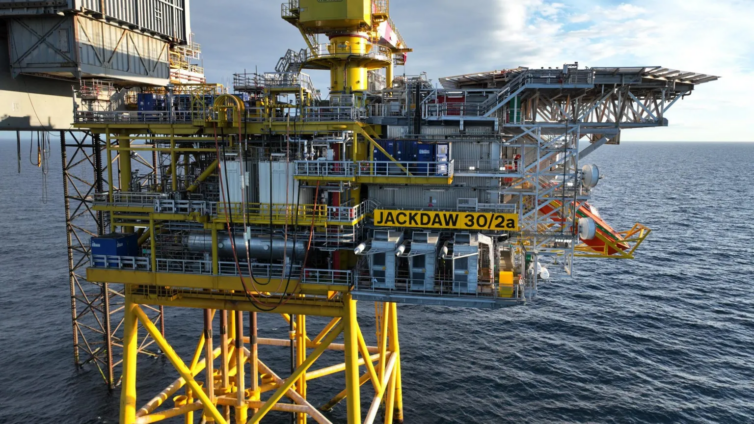
Emissions from the controversial Jackdaw gas field in the North Sea will "not materially influence" global warming, according to a new report from its owner.
Adura's updated Environmental Impact Assessment (EIA) said the project would account for less than 0.02% of annual global greenhouse gases during its lifetime.
The new assessment was required by the industry regulator, after it found several areas had not been adequately addressed in a previous submission.
The report was ordered by a judge who ruled that ministerial consent for Jackdaw was unlawful, following a legal challenge from environmental groups.
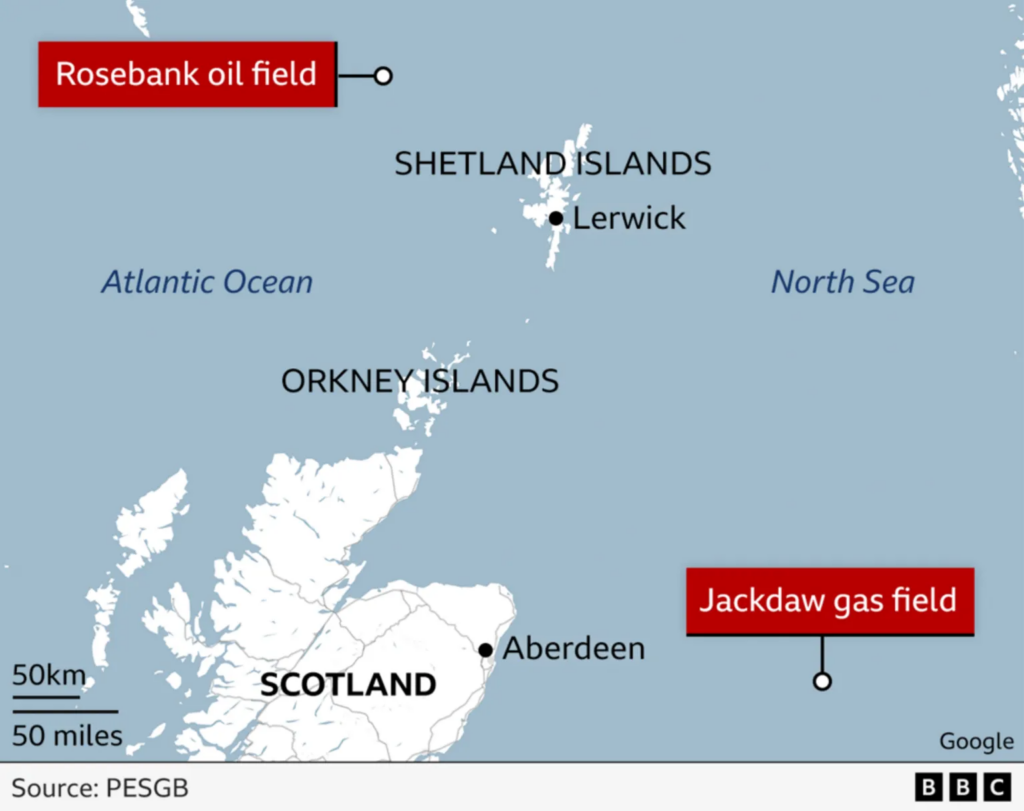
Campaigners had called on the UK government to reject both the Jackdaw gas field and the Rosebank oil field developments.
The previous revised EIA - submitted in November - said the Jackdaw field could produce up to 35.8 million tonnes of carbon dioxide emissions or equivalent during its lifetime, which is around 90% of Scotland's total emissions.
The updated assessment, requested by the Offshore Petroleum Regulator for Environment and Decommissioning (Opred), required Adura to provide additional context on how emissions would affect global ambitions to limit climate change.
Adura is a joint venture between UK energy giant Shell and Norwegian firm Equinor.
Its 159-page submission said that displacing imported liquified nature gas (LNG) from the United States with gas from the Jackdaw field would save the equivalent of four million tonnes of CO2 equivalent.
It says that could result in around 20% more emissions from imports compared with gas produced domestically.
Those "losses" would principally come from eliminating the need to liquify, transport and then regasify the imported product.
It also said the climate effects would be "minor" because the UK has a "well-regulated industry, with targets and commitments that are aligned with the expectations of the Paris Agreement", a legally binding commitment to limit global warming to between 1.5 and 2C.
Last year, the Court of Session in Edinburgh ruled that both Jackdaw and Rosebank had been unlawfully approved, because the government failed to take into account the climate impact of burning extracted oil and gas from the fields.
The legal case had been brought by environmental groups Uplift and Greenpeace.
In his judgement, Lord Ericht required a more detailed climate assessment and fresh approval from the UK government before production could begin.
Latest Stories
-
Lands Minister pushes for EV training centre to prepare Ghanaian mechanics
11 minutes -
First National Bank Accra Marathon brings back full race for 2026
11 minutes -
Ghana’s money is changing faster than its financial system
15 minutes -
Gender Minister meets AU Commissioner over gender, social protection agenda
49 minutes -
CAF CL: ‘We have to confirm qualification in Lubumbashi’ – TP Mazembe boss wary of Medeama threat
52 minutes -
Dud cheque issuers face 1-year credit ban under new BoG rules
56 minutes -
Beach Soccer AFCON 2026Q: 60 players called up as Ghana steps up preparations
2 hours -
Today’s front pages: Tuesday, September 8, 2026
2 hours -
FIFA, CAF halt Nigeria football elections over governance crisis
3 hours -
13-year-old Prince George set for first day at Eton College
3 hours -
NPP national election: ‘Something shocking is about to happen in Kumasi’ – Sylvester Tetteh
3 hours -
‘Judge me on my commitment, not whom I supported during presidential primary’ – Sylvester Tetteh to NPP
3 hours -
Family demands answers after dialysis patient dies at TTH during power outage
3 hours -
Foreign Ministry repatriates nearly 7,000 distressed Ghanaians since 2025 – Ablakwa
4 hours -
Gender Ministry steps up community campaign against social vices
4 hours