

Audio By Carbonatix
“I saw Mummy crying. Our house was full of people, some weeping, others holding up Daddy’s pictures in the newspapers. Mummy told me she didn’t expect him to be killed. She said if they had tried him, he wouldn’t have been killed.”
“He was never given the chance to defend himself. Remember, recently ministers about whom certain allegations had been made in the press got the opportunity to defend themselves. They brought in lawyers to defend them.
My father never had the opportunity to defend himself. This really hurts. Day in, day out, the government keeps stressing June 4th, and thereby rubs salt in wounds. If those killed were alive, they would at least have defended themselves. But they were gagged! Imagine the pain we have endured all these years.”
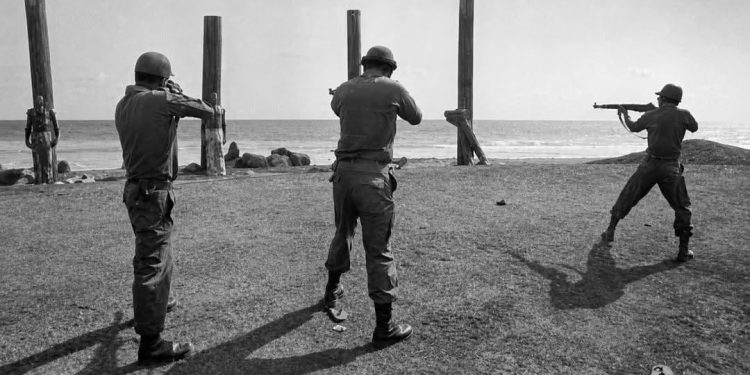
That was June 1997; the words of Orphans of June 4. Nearly 20 years after June 4th, 1979, a handful of orphaned ‘kids’told me their story; the tale of what happened that day. The chats were also around Father’s Day, and these youths had no fathers to hug. Daddies were lined up, tied to stakes and shot in cold blood. I had vague memories of the event myself. 1979, my pen had just been baptised, and I was part of the storytelling. And did the children say their fathers were not tried?
Not quite true; they were tried by ‘Kangaroo courts’ of unseen faces, few questions, and a final judgment by God-knows whom. I, a young man, had just been born as a writer. My anonymous pen as a baby columnist called the kangaroo courts the ‘Rapid Results Panel.’
They specialised in the quick trial of big men. The faceless ‘court’ forbade ‘booklong’ words, and long winding tales of defence: simply a panel primed to cut your long story to zero. The jail terms for economic crimes? 50 years or more. This often came with hard labour: especially publicly scooping ‘perfumed’ latrines from public sites, and carrying these across the city. Your scheduled office hours? Noon time.
This horror story, part of Ghana’s unspeakable past, was the virtual product of rapid result panels that speedily pronounced ‘corrupt’ public officials guilty and handed down bizarre sentences. Was anybody returning from such a trial ever declared innocent? NO.
Ghanaian economic overview
Sadly, there is provision for ‘Public Tribunals’ in our 1992 Constitution (Articles 126 and 142). But what is the genesis of Ghana’s Constitution? Our Constitution is a product of the 31st December Revolution. Born in the dying days of the Revolution, it was prepared by a 258-member Consultative Assembly that was using the Revolution as a rear mirror.
Its composition included the following: Committee for the Defence of the Revolution, 10 reps; National Council for Women and Development, 10 reps; National House of Chiefs, 1; Market Women, 3; National Union of Ghana Students, 1; Ghana Bar Association, 1, etc. NUGS and the GBA saw through the hidden agenda and quickly washed their hands off. Otilo, they fled!
The Constitution, now 35 years old, has since been reviewed by successive committees, the latest CRC chaired by my good friend Professor H Kwasi Prempeh. Prempeh’s report was submitted to JDM, the President, in December 2025. Did the Review Committee accept the Tribunal System as supplementary to regular courts? NO! With eagle eyes, Kwasi’s Committee managed to track the disguised taboo and rejected the Tribunal System.
They recommended that it be expunged. If expunge is a big word, ‘Simply hit the delete button,’ Prempeh must have told the President. Replace with more regular courts, they said.
It is this strange bird (otherwise Dreaded, Dead, Gone, Forgotten, God Forbidden, excavated, submerged, now interred with benediction) that Ghana’s Parliament is defiantly bringing back home. Call it a revolutionary monster nicely cloaked in fugu democracy.
The relevant Bill has been passed by Ghana’s Parliament. When was this? Midnight Hour, Friday 16th July, 2026. Ghana was then asleep. But Afenyo’s Minority caucus would not join the pro-tribunal crowd. While Honourable Ayariga and his Majority said ‘a-a-a-a-a-ye’ to the motion, the minority had stormed out in protest: defiantly putting on record their footprints.
Since then, civil society has been largely quiet (apart from the TUC): no nays, no tears, no protests. Not even ‘Hmmm.’
The Bill currently awaits the President’s final assent to become Law, and its message is simple. Our law courts are tortoise networks: too slow; too boring. No foot soldiers in charge, no red eyes, no red bands. Too ‘mooch’ indiscipline; big thieves getting away with crimes. The answer lies in a return to faster courts. Indeed, the future of Ghana lies in past images of horror, it implied.
And which party is best qualified to roll this out? JDM’s with revolution roots.
The current state of the nation tells it all. The revolution is acting up; its signs are clear enough. Occasional Rambo-style search and arrest; punitive bail terms on opponents, free speech on trial; routine political handcuffs (people asking who next); plus an ORAL agenda currently frustrated by due process. The public tribunal is probably the final seal. Ready to be signed and delivered.
JDM is currently on his last legs; hopes for a 3rd term are faded. This is John’s Legacy hour. Would he put a gloss on it, or endorse a Bill that evokes Ghana’s nightmares, ignoring the orphans of June 4?
Here comes the Heritage.
The legacy of a revolution nicely cloaked in John 3:16?
Hmmmmm.
kyankah@ashesi.edu.gh
Latest Stories
-
Striking teacher unions to meet Fair Wages and Salaries Commission on October 6
10 minutes -
EOCO working with AG to arraign Nana Baffour Awuah before weekend court
13 minutes -
Duraplast reassures customers after fire, announces October 5 reopening
21 minutes -
Call off strike, gov’t will not renege on promotion arrears pledge – Haruna Iddrisu appeals to teacher unions
23 minutes -
Committee set up to validate teachers eligible for 20% deprived-area allowance – Education Minister
28 minutes -
Five-member committee to search for new Black Stars coach after Sports Ministry-GFA meeting
1 hour -
Pinktober: Breast cancer survival exceeds 90% when detected early – Breast Society of Ghana
1 hour -
TCDA to adopt Upper West’s MATCO mango farm as northern prototype, issues warning against felling shea trees
1 hour -
‘Fear delegates’ tag: Afoko touts genuineness among delegates ahead of NPP delegates conference
1 hour -
John Boadu: The leader our party needs at this time – Amb. Edward Akwasi Boateng
1 hour -
Baffour Awuah: EOCO arrested, detained MP after hours of waiting, questioning – Afenyo-Markin
2 hours -
EOCO court warrant authorised search of Baffour Awuah’s law firm, not residence – Afenyo-Markin
2 hours -
NPP delegates conference: 3,000 to 4,000 police personnel deployed for security in Kumasi – Anthony Karbo
2 hours -
KGL Foundation commits $200,000 to support juvenile football for the next two years
2 hours -
UNDP invites Mahama Ayariga to Northern Peace Conference in Tamale
2 hours