

Audio By Carbonatix
The Centre for Legitimacy and Rule of Law (CLRL) has challenged the government's argument that reviving constitutional tribunals will speed up the administration of justice, insisting that the real obstacle facing Ghana's judiciary is chronic underfunding.
The legal policy think tank says while it supports the revival of regional and district tribunals because they are provided for under Article 126 of the 1992 Constitution, it believes the Attorney General's suggestion that the tribunals will accelerate the disposal of cases overlooks the deeper structural challenges confronting the country's courts.
In a statement issued on Monday, the Centre argued that existing courts continue to struggle with severe shortages of judges, inadequate logistics and insufficient funding, warning that creating a parallel tribunal system without addressing these challenges would do little to improve access to justice.
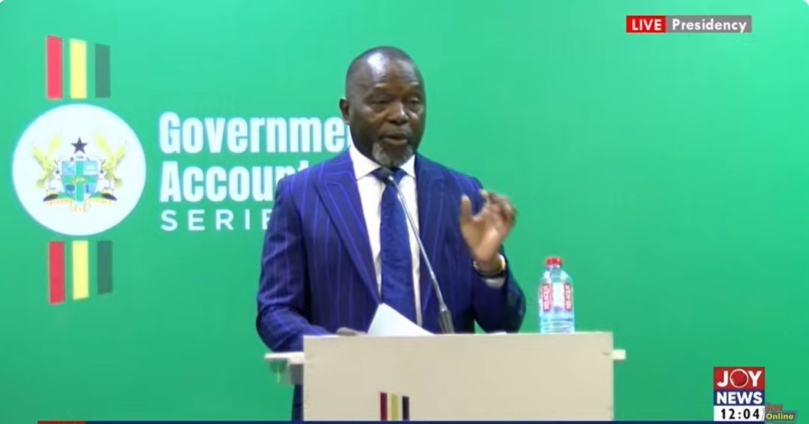
The comments by CLRL follow the introduction of the Tribunals Bill before Parliament by the Attorney General and Minister for Justice, Dr Dominic Ayine, as part of efforts to revive the tribunal system established under the Constitution.
According to the Centre, Ghana currently has about 450 courts, but between 20 and 30 per cent are operating without substantive judges, resulting in frequent adjournments and prolonged delays in the hearing of cases.
It noted that following the promotion of about 40 magistrates to the Circuit Court bench this year, many District Courts have been left without replacements, leaving litigants to bear the financial and emotional costs of repeated adjournments.
The Centre further argued that several Circuit Court judges have been assigned to preside over multiple courts simultaneously, a practice it described as unsustainable.
It cited the Akropong Circuit Court as an example, where the resident judge is also required to sit at the Mampong and Adukrom District Courts on designated days, reducing the time available to hear cases within the judge's primary jurisdiction.
"This is not an isolated incident; it reflects a systemic crisis repeated across the country, drastically reducing the speed and effectiveness of our administration of justice," the statement said.
Beyond staffing shortages, the Centre said many courts lack basic equipment, including recording devices, computers, printers and photocopiers, making it difficult for litigants to obtain court records and slowing the progress of appeals.
It said in some instances court users are compelled to transport court staff to commercial photocopying centres to reproduce official documents because the courts lack functioning photocopiers.
The Centre maintained that inadequate funding is the principal reason behind the judiciary's operational difficulties and questioned the wisdom of investing substantial resources in establishing new tribunals when existing courts remain under-resourced.
It also warned that tribunals would come with additional financial obligations, including salaries for tribunal chairpersons and sitting allowances for citizen panel members.
Drawing parallels with recurring industrial actions by jurors over delayed allowance payments, the organisation expressed concern that tribunal panel members could face similar challenges unless the judiciary's funding model is fundamentally reformed.
Rather than calling for the withdrawal of the Tribunals Bill, the Centre urged the Attorney General, President John Dramani Mahama and the Minister for Finance to prioritise adequate and sustainable funding for the existing court system.
It proposed legislation that would earmark a fixed percentage of the country's annual revenue for the judiciary, arguing that a predictable and independent funding stream would enable the judicial service to recruit more judges, expand court infrastructure and improve service delivery.
The Centre also proposed reforms that would require the Chief Justice to account to Parliament on matters relating to the judiciary's financial management and allocation of resources.
It said such measures, rather than the establishment of additional adjudicatory bodies, would provide a more effective and lasting solution to delays in Ghana's justice delivery system.
Latest Stories
-
Investigators meet family, community over deaths of 3 children found in car trunk
8 minutes -
Teacher strike: FWSC blames new allowance demand for deadlock with teacher unions
40 minutes -
Aboboyaa Company Ltd CEO donates 5 tricycles to Ghana Prisons Service
53 minutes -
National Cathedral: ‘There’s no clarity as to what they want to use the site for’ – Afenyo-Markin on site’s future
55 minutes -
Investigators meet family, community over deaths of 3 children found in car trunk
56 minutes -
Teachers have legitimate concerns, but prolonged strike will affect pupils – Joseph Kumah
1 hour -
Ahafo NHIA Beats 2025 Target to Secure Second Year of Universal Health Coverage
1 hour -
Innovative Teachers threatens legal action over exclusion from Collective Bargaining Agreement negotiations
1 hour -
17-member committee formed to address concerns over Adipa landfill
1 hour -
Team Volta wins NPA 2026 Staff Welfare Week Quiz
2 hours -
Team Eternity Ghana releases new album “The Promise – Phase 1”
2 hours -
Inside the human genome: Why scientists are still discovering who we are
2 hours -
PAC grills Central Regional Coordinating Council over GH¢14.9m payments processed outside GIFMIS
2 hours -
Ghana’s industrial dream at risk? How the Yuan policy could deepen China dependence
2 hours -
Teachers’ strike: Government has funds, but processes are causing delays – Education Committee Vice Chair
2 hours