

Audio By Carbonatix
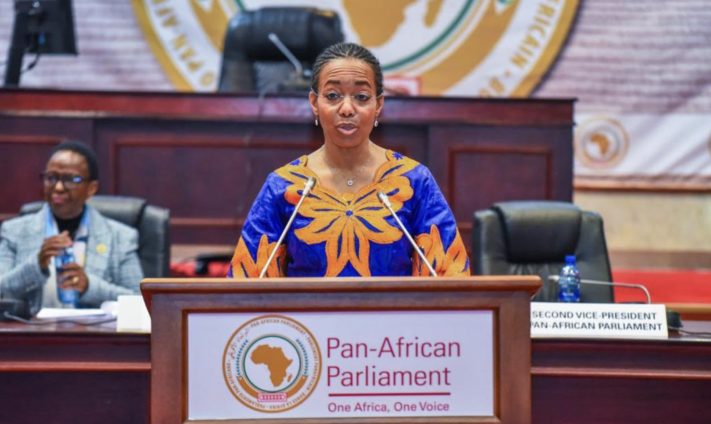
Dr Zanetor Agyeman-Rawlings, Second Vice-President of the Pan-African Parliament, has urged African governments to ratify and implement the African Union Convention on Ending Violence Against Women and Girls.
She said the Convention was essential to strengthening legal protection for women and girls and advancing Africa’s peace, security, democracy and development objectives.
Dr Agyeman-Rawlings, also Member of Parliament for Klottey Korle, made the call in a keynote address at a High-Level Dialogue on the Ratification, Domestication and Accountability of the African Union Convention on Ending Violence Against Women and Girls in Johannesburg, South Africa, on Saturday.
“Africa cannot achieve the aspirations of Agenda 2063 while more than half of its population continues to live under the threat of violence, exploitation and discrimination,” she noted.
Dr Agyeman-Rawlings said the Convention should inspire governments, parliaments, communities and institutions to prevent violence against women and girls and ensure effective implementation of its provisions.
She described women’s rights as fundamental human rights and urged African Heads of State to demonstrate political commitment by facilitating the ratification and domestication of the Convention through their respective legislative institutions.
Dr Agyeman-Rawlings said governments should also recognise the economic value of unpaid care and domestic work undertaken by women across the continent.
“Perhaps it is time to redesign our household census instruments so that this invaluable contribution can finally be measured.
“Once quantified, it provides governments with a far more accurate understanding of women’s contribution to national economies and allows for genuinely representative gender-responsive budgets,” she recommended.
Dr. Agyeman-Rawlings said parliaments had an oversight responsibility to promote gender-responsive budgeting, including investments in education, healthcare, economic empowerment, protection services, access to justice and women’s participation in peacebuilding, governance and leadership.
“It requires us to invest deliberately in girls’ education, women’s health, economic empowerment, protection services for gender-based violence survivors, access to justice and programmes that strengthen women’s participation in peace building, governance and leadership,” she said.
On emerging technologies, Dr. Agyeman-Rawlings cautioned that artificial intelligence should be governed by ethical standards and effective oversight to prevent discrimination and harmful content.
“We must be vigilant to misogynistic algorithms embedded in AI systems, particularly those that amplify harmful stereotypes, promote misogynistic content or reinforce extremist narratives.
“Such technologies can shape the attitudes and behaviours of young people, especially young men, in ways that normalise discrimination, hatred and, ultimately, violence against women and girls.
“As we embrace technological innovation, we must also ensure that it is guided by ethical standards, accountability and a firm commitment to gender equality and human dignity, by instilling safeguards in the form of legal frameworks and oversight mechanisms,” she said.
Dr Agyeman-Rawlings reaffirmed the Pan-African Parliament’s commitment to supporting the Convention.
“As the Parliamentary voice of the African Union, we will continue to utilise parliamentary diplomacy, legislative engagement, policy dialogue, peer learning and strategic partnerships to encourage Member States to expedite the signature, ratification, domestication and implementation of this landmark convention,” she said.
The dialogue, organised by the Women’s Caucus of the Pan-African Parliament, brought together parliamentarians, representatives of African Union institutions, Regional Economic Communities, development partners and civil society organisations.
The African Union Convention on Ending Violence Against Women and Girls was adopted during the 38th Ordinary Session of the Assembly of Heads of State and Government in February 2025.
It provides a legal framework for preventing and eliminating all forms of violence against women and girls across the continent.
Latest Stories
-
Driver convicted over concrete spill on Madina-Adenta Highway
3 minutes -
Photos: Prospective homeowners turn up in numbers for final day of JoyNews–Republic Bank Habitat Fair
6 minutes -
Aggrieved teachers demand payment of unpaid four-year legacy arrears
39 minutes -
Skipping breakfast bad for your health?
53 minutes -
Kpeshie Lagoon reclamation linked to first-ever flooding at Tse Addo – ISD
1 hour -
GRA announces major policy proposal under Modified Taxation Scheme initiative
1 hour -
TCL sues Samsung for false advertising over ‘Mini LED’ televisions
1 hour -
US embassy child abuse images suspect flown from UK before police interview
2 hours -
Payment dispute led to murder of Dr Jesse Amuah and wife at Asylum Down – Court told
2 hours -
COPEC calls for GH¢1 petrol, continuation of GH¢2 diesel subsidy amid price surge
2 hours -
Petrol to sell at GH¢16.26, diesel GH¢19.07 from Wednesday – COPEC
2 hours -
Massive crowds flock to JoyNews–Republic Bank Habitat Fair on final day to explore mortgages and seek expert advice
2 hours -
Ghana’s Alice Banaaza spotlights fugu weaving at 2026 CHAN Festival in UK
3 hours -
Russia’s Youth Festival could unlock business partnerships and scholarships for Ghanaian youth – John Aggrey
3 hours -
The 21st Century Gold Standard was piloted in Ghana under Bawumia – Gideon Boako
3 hours