

Audio By Carbonatix
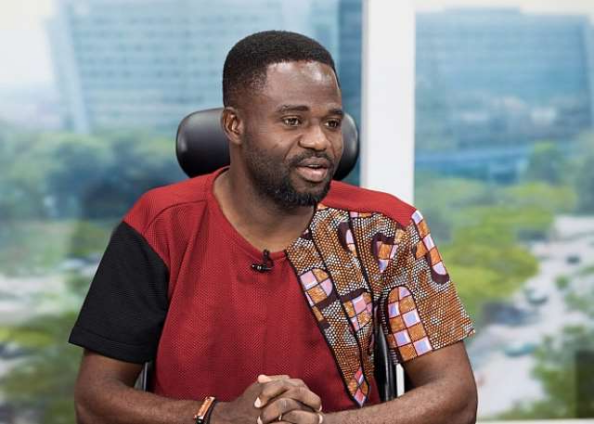
Investigative Journalist Manasseh Azure Awuni has suggested that evidence surrounding the alleged repayment of funds in the case against former Microfinance and Small Loans Centre (MASLOC) Chief Executive Officer Sedina Tamakloe-Attionu ultimately strengthened her defence, contributing to the Court of Appeal's decision to acquit and discharge her.
Speaking on JoyNews' Newsfile on Saturday, August 1, Mr Awuni analysed portions of the appellate court's judgment, particularly the evidence relating to the alleged return of funds by a beneficiary identified in court proceedings as Obaatanpa.
According to him, a close reading of both the High Court and Court of Appeal judgments revealed significant gaps in the prosecution's account of how the money was allegedly returned to MASLOC.
"From all the narration, there is only one person that is, if the account of Obaatanpa is to be believed, there was only one individual at MASLOC who knew about this return of funds," he said.
Mr Awuni questioned the prosecution's version of events, arguing that if the money had genuinely been repaid through the institution's official channels, the transaction would have been known by several officers within MASLOC rather than a single individual.
"Because if the money had been paid into the account, then everybody within the chain would know," he explained.
Instead, he noted, the evidence before the court suggested that the funds were allegedly handed over in cash during a meeting away from the institution's premises, creating uncertainty over whether the money ever reached MASLOC.
"But they said they met this person at Batsona Total with cash and we don't have any evidence that this cash was later paid into MASLOC or everybody in that organisation was informed," Mr Awuni stated.
He argued that the absence of documentary evidence showing that the alleged cash repayment was deposited into MASLOC's accounts or processed through the institution's established procedures weakened the prosecution's case.
The investigative journalist also pointed to a letter demanding the recovery of the funds, which was co-signed by Ms Tamakloe-Attionu, describing it as an important piece of evidence that appeared to support her defence.
"So that letter, which was actually co-signed by Sedina, actually strengthens her case because the average person will think that, well, if she had taken the money, there is no way she would agree to sign a letter demanding that money again," he said.
His comments come after the Court of Appeal overturned the former MASLOC Chief Executive's conviction and 10-year prison sentence.
In its judgment delivered on Thursday, the appellate court ruled that the prosecution had failed to prove its case beyond reasonable doubt, setting aside the convictions entered against Ms Tamakloe-Attionu by the High Court.
The appeal challenged both the substance of the conviction and the legality of her trial and sentencing in absentia. Her legal team argued that the charges were fundamentally defective and that the evidence presented by the prosecution fell short of the legal standard required for a criminal conviction.
Ms Tamakloe-Attionu was extradited from the United States to Ghana on June 9, 2026, after years outside the country. She subsequently began serving her 10-year sentence at the Nsawam Medium Security Female Prison on June 24 before the Court of Appeal quashed her conviction.
Latest Stories
-
Gov’t to suspend GH¢1 D-Levy on diesel for October and November
19 minutes -
Fire destroys belongings in Akweteyman apartment
49 minutes -
Baffour Awuah to turn himself in to EOCO today – JoyNews sources
55 minutes -
Government identifies payment discrepancy holding up teachers’ strike resolution
1 hour -
BoG signals no FX intermediation for October as GoldBod plans $1bn support for banks
1 hour -
When share ownership becomes personal: The African mindset of the Dangote IPO
1 hour -
Why MFWA Legal Fund matters to Ghana’s democracy
1 hour -
Fuel prices to rise from October 1; diesel could hit GH¢19.60 – COMAC
1 hour -
Parliament must investigate how 3.9 tonnes of cocaine left Ghana undetected – Samuel Jinapor
1 hour -
Government pledges to pay striking teachers as payment dispute is resolved
2 hours -
Government cannot investigate drug exports under its own watch – Abu Jinapor
2 hours -
Government extends GH¢2 diesel subsidy for two more months
2 hours -
GTEC flags over 100 tertiary institutions as unrecognised
2 hours -
Agric Committee chair commends NAFCO for turnaround from GH¢20m debt to GH¢96m profit
2 hours -
NPP: Judicial office requires judges to surrender some personal freedoms
2 hours