

Audio By Carbonatix
Executive Director of the Ghana Center for Democratic Development (CDD-Ghana), Prof. H. Kwasi Prempeh, has criticised the delegate system used by Ghana's major political parties, arguing that it concentrates power in the hands of wealthy aspirants while sidelining young people, women and other less financially endowed party members.
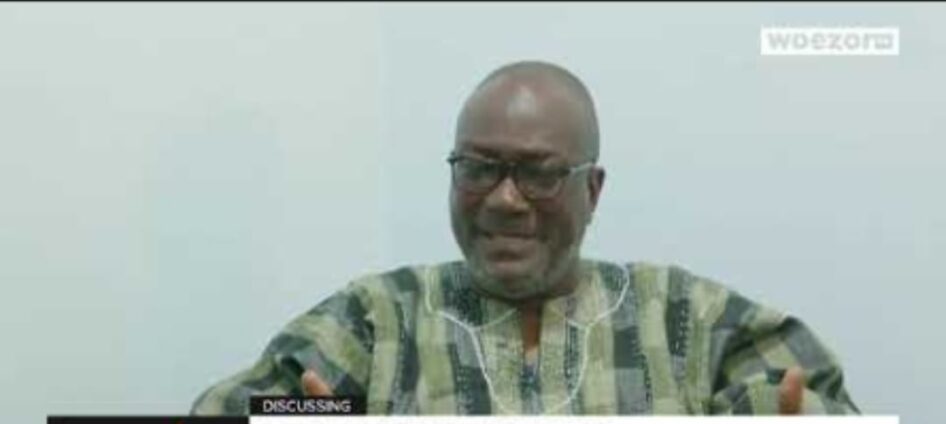
Speaking in an interview on Woezor TV, while discussing the Supreme Court's ruling on the legality of political parties' delegate systems, Prof. Prempeh said concerns about the delegate model predated the court's decision and had long centred on its impact on internal party democracy and corruption.
He said the delegate system has created practical problems by making internal elections susceptible to financial influence.
He explained that limiting the number of people who choose party candidates has effectively skewed power towards aspirants with greater financial resources, creating barriers for young professionals, women, the youth and others who struggle to raise campaign funds.
"So there was a sense that the delegate system… had essentially skewed power in the party in favour of those who were better resourced financially," he stated on Sunday, August 2.
The CDD-Ghana Executive Director further contended that the system has encouraged vote-buying and corruption because delegates are relatively few and therefore easier to influence.
He said evidence gathered by CDD-Ghana through its observation of party primaries, coupled with widely reported incidents during internal elections, showed that delegates received cash, commodities, and other inducements from aspirants seeking their votes.
"We saw them. At CDD, we have monitored a number of primaries, and Ghanaians are all witnesses to the kinds of items that circulate, commodities that are given to delegates," he said.
According to Prof. Prempeh, such practices are far less feasible under an open primary system because it would be practically impossible to induce the entire membership of a political party across the country.
He maintained that, beyond limiting internal democracy, the delegate system has produced negative consequences that undermine Ghana's democratic development by fostering corruption and reinforcing the influence of money in politics.
Latest Stories
-
Absa Bank Ghana names Stephen Ato Frimpong as Board Chair
7 minutes -
Pickford ‘almost caused crash’ with careless driving
9 minutes -
Author and former politician Jeffrey Archer dies aged 86
20 minutes -
No education reform can succeed without teachers – Education Ministry
28 minutes -
Gauff condemns racist abuse after China Open win
45 minutes -
Medvedev disqualified for hitting spectator with ball
54 minutes -
Oliseh scores twice in late comeback win for France
1 hour -
Pentagon stops using Anthropic AI tools after blacklisting company, BBC told
1 hour -
From despair to dance: Family of nurse Salomey Baffoe rejoices after GH¢100k bail granted
2 hours -
Kejetia Phase III pricing talks loom as government moves to restart stalled works
2 hours -
Nchiraa Yam festival: Two killed, 14 injured as police restore calm
2 hours -
I draw inspiration for my songs from Reggae music – Lyrical Joe
2 hours -
AI must not replace human judgment in public spending – BoG Governor
3 hours -
Ghana should withdraw from 2027 AFCON – Kojo Addae Mensah
3 hours -
Team Ghana departs Accra for Angola ahead of Karting Africa Trophy
3 hours