

Audio By Carbonatix
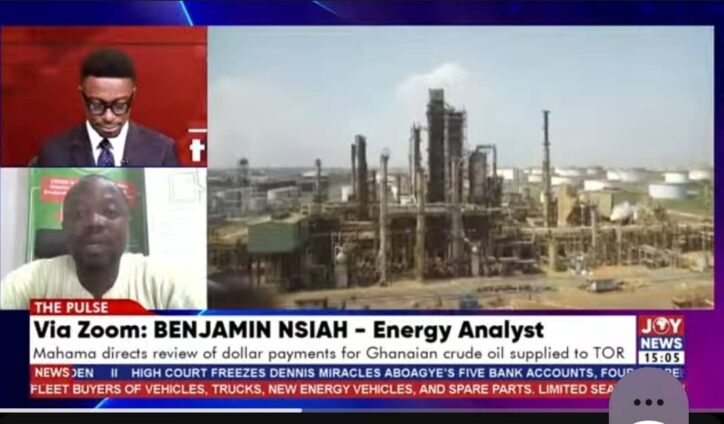
Energy analyst Benjamin Nsiah says President John Mahama’s proposal to move petroleum sector transactions from U.S. dollars to Ghana cedis will require amendments to the Petroleum Revenue Management Act (PRMA).
The analyst explained that while paying for locally produced crude oil in cedis could reduce pressure on the foreign exchange market, the current legal framework requires some petroleum-related funds to be managed in dollars.
Speaking on JoyNews' The Pulse on Monday, August 3, Mr Nsiah said the proposed shift would only be possible if the law governing petroleum revenues is reviewed.
"The possibility depends on amending the Petroleum Revenue Management Act. I think that through that amendment, we'll be able to now begin to mobilise resources in cedi and then allocate these resources to the various funds in the Act," he said.
President Mahama had raised concerns about the continued use of U.S. dollars for transactions within the petroleum sector, particularly the requirement for entities such as the Tema Oil Refinery (TOR) to source foreign exchange to pay for crude oil supplies.
"He mentioned the Petroleum Holding Fund. Some of the funds under this fund, like the Stabilisation and Heritage Funds, are supposed to be dollar-rated funds, or dollar deposit funds," he explained.
According to him, even if crude oil supplied to TOR is paid for in Ghana cedis, government would still need foreign currency to meet the obligations of these funds under the current law.
The analyst argued that a comprehensive review of the legal framework would therefore be necessary to fully implement a cedi-based transaction system across the petroleum value chain.
"If we're able to amend the Petroleum Revenue Management Act and insist that every fund in that particular Act must be a cedi-based fund, or cedi deposit fund, I think that addresses this problem that the President mentioned."
He added that such a reform would need careful consideration to ensure it supports the stability of the petroleum sector while reducing unnecessary pressure on Ghana’s foreign exchange market.
Latest Stories
-
Hawa Koomson pledges experienced and mature leadership of NPP women’s wing
11 minutes -
Young woman found dead at Kasoa Peace Town
44 minutes -
Livestream: The Law examines lawful arrest in Ghana
1 hour -
Mahama urges African governments to treat healthcare as an investment, not budget cost
2 hours -
Bawumia congratulates John Boadu and new NPP executives, pledges support ahead of 2028
2 hours -
‘No talent should be left out’ – Bawumia pledges inclusive NPP campaign for 2028
2 hours -
Prof. Mike Oquaye recounts how he blocked Special Prosecutor’s attempt to arrest Bawku Central MP
2 hours -
Make health sovereignty a priority for Africa – Mahama
2 hours -
Dorimon Naa, Wa West DCE lead massive clean-up exercise; threaten sanctions against recalcitrant residents
3 hours -
Photos from Adom FM Y2K Jam
3 hours -
Praye Tiatia steals the show at Adom FM Y2K Jam [Watch]
3 hours -
Boakye Agyarko congratulates John Boadu, pledges support for NPP leadership
3 hours -
Antwi HiMight thrills fans with Antwi ne Antwi hits at Adom FM’s Y2K Jam [Video]
3 hours -
Amb. Edward Boateng congratulates Boadu, Kodua on election wins
4 hours -
John Boadu pledges to rebuild NPP from grassroots and restore ‘winning machinery’
4 hours