

Audio By Carbonatix
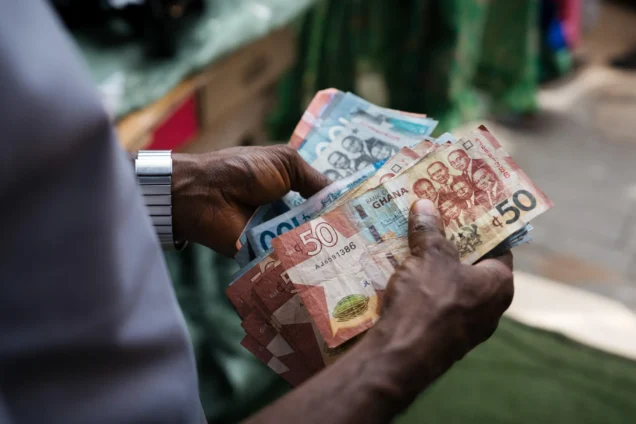
The Institute for Energy Security (IES) says the recent depreciation of the Ghana cedi is preventing consumers from enjoying larger reductions in fuel prices, despite the government's intervention to cushion the impact of rising global oil prices.
Senior Research and Policy Analyst at IES, Derek Emmanuel Xatse, said exchange rate movements remain one of the key factors influencing petroleum prices in Ghana, alongside developments on the international crude oil market.
Speaking on Joy FM's Top Story on Monday, August 3, he noted that although the government has introduced a GH¢2 per litre subsidy on diesel, a stronger local currency would have translated into even lower pump prices.
"The cedi for the past weeks has also been depreciating, which is not good for Ghanaians because rather than that, we would have been having more reduction at the various pumps," he said.
Mr Emmanuel Xatse explained that Ghana's heavy reliance on imported petroleum products means fluctuations in the exchange rate have a direct impact on the final prices paid by consumers.
He said the recent subsidy provides welcome relief, but the weakening cedi continues to offset some of the gains that could have been realised.
According to him, stabilising the local currency should form part of the government's long-term strategy to protect consumers from recurring fuel price shocks.
"The long-term measure is that the government has to look for more money to be able to cushion consumers," he said, adding that broader macroeconomic stability would also help sustain lower fuel prices.
Latest Stories
-
Black Stars: Seven years of decline while hashtagging love
6 minutes -
Today’s front pages: Thursday, October 1, 2026
7 minutes -
Gov’t to suspend GH¢1 D-Levy on diesel for October and November
39 minutes -
Fire destroys belongings in Akweteyman apartment
1 hour -
Baffour Awuah to turn himself in to EOCO today – JoyNews sources
1 hour -
Government identifies payment discrepancy holding up teachers’ strike resolution
2 hours -
BoG signals no FX intermediation for October as GoldBod plans $1bn support for banks
2 hours -
When share ownership becomes personal: The African mindset of the Dangote IPO
2 hours -
Why MFWA Legal Fund matters to Ghana’s democracy
2 hours -
Fuel prices to rise from October 1; diesel could hit GH¢19.60 – COMAC
2 hours -
Parliament must investigate how 3.9 tonnes of cocaine left Ghana undetected – Samuel Jinapor
2 hours -
Government pledges to pay striking teachers as payment dispute is resolved
2 hours -
Government cannot investigate drug exports under its own watch – Abu Jinapor
2 hours -
Government extends GH¢2 diesel subsidy for two more months
2 hours -
GTEC flags over 100 tertiary institutions as unrecognised
2 hours