

Audio By Carbonatix
A new governance data release by the Ghana Statistical Service (GSS) says public officials demanded unofficial payments from nearly seven in every 10 Ghanaians who encountered bribery situations in the second half of 2025.
This, the GSS said, highlights a sharp rise in corruption pressures despite an overall improvement in the country's governance indicators.
The latest Governance Series report shows that while Ghana's governance performance improved compared to 2024, citizens' day-to-day experiences with bribery worsened between July and December 2025.
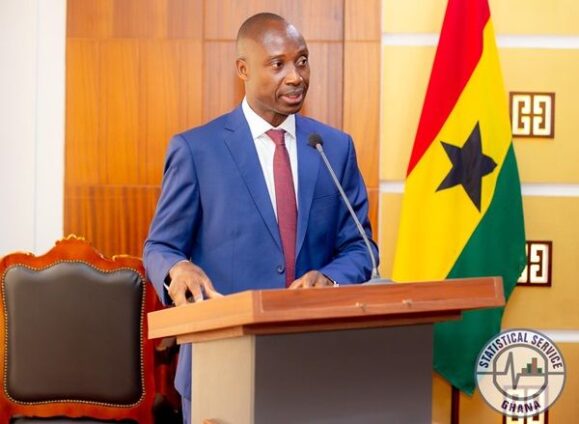
Presenting the findings at a Governance Series event organised by Three Reports and the GSS on Tuesday, August 4, 2026, Government Statistician Dr Alhassan Iddrisu said the data revealed a significant increase in demands for unofficial payments by public officials during the second half of the year.
He explained that the share of citizens who said public officials demanded extra payments rose from 51 per cent in the first half of 2025 to 69 per cent in the second half.
"So the pressure sits at the counter. The problem now is less what citizens offer and more of what officials would ask," he said.
The survey also found that the proportion of Ghanaians who paid a bribe increased from 14.3 per cent in the first half of 2025 to 18 per cent in the second half, meaning about one in six citizens paid a bribe to access a public service.
Dr Iddrisu, however, stressed that the broader picture remained positive, noting that Ghana's overall governance performance in 2025 improved compared to the previous year.
"The full year, which is 2025, got better compared to 2024. Both of these stories are true, and that's the beauty of the six-monthly survey that we do, to be able to look at trends within waves and even compare between years," he said.
He explained that the survey follows the same nationally representative households across all 16 regions, enabling the GSS to measure real changes in citizens' experiences over time rather than differences arising from changes in survey samples.
The latest findings are based on interviews conducted with household heads during the first quarter of 2026 and cover experiences between July and December 2025.
Latest Stories
-
Mr President, Ghana was mentioned at the UN; why aren’t we talking about it?
3 hours -
Accra to convene Africa’s regulators and markets on tokenisation at AVAS 2026
3 hours -
The Paradox of Plenty — When every smartphone becomes a newsroom
3 hours -
GTA sensitises taxi drivers in ‘Know Ghana’ tourism campaign
4 hours -
Archbishop Agyinasare calls for responsible speech amid growing social media abuse
4 hours -
‘It will be inexcusable for gov’t not to honour payment of teachers’ arrears by 30th October’ – Haruna Iddrisu
5 hours -
Forbes’ World’s Best Employers 2026: No Ghanaian firm ranked among 900 companies
5 hours -
Electronic processing of teachers’ data: ‘The decision is the Controller’s’ – GES boss
5 hours -
Teachers’ Strike: Haruna Iddrisu questions paper-based processing of promoted teachers’ data
5 hours -
Savannah Region: Kunfusi bridge collapses again, leaving nearly 4,000 residents cut off
5 hours -
Teachers’ strike: GES targets Monday deadline to submit promotion data to Controller
5 hours -
Inflation to average 11.3% in 2027 – Fitch Solutions
5 hours -
‘I didn’t campaign for NDC to come and do this nonsense’ – Kpebu on EOCO’s conduct
6 hours -
Fitch Solutions maintains policy rate forecast of 14% by December 2026
6 hours -
Diaspora Nasara Caucus congratulates Mohammed Ali Suraj, new NPP executives
7 hours