

Audio By Carbonatix
Energy analyst Kwadwo Poku has disputed the government’s claim that it has cleared all outstanding debts in Ghana’s energy sector, insisting that available figures do not support the assertion.
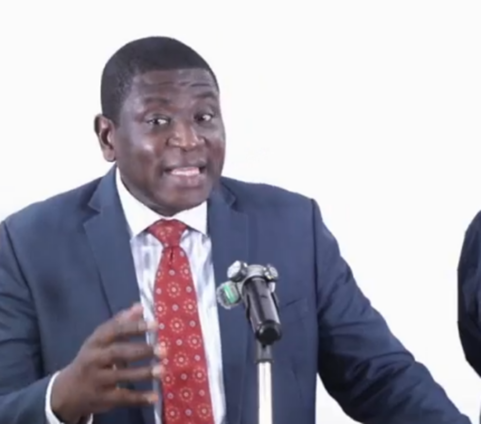
Speaking at an NPP policy committee press conference on August 5, Mr Poku said the data published by the Public Utilities Regulatory Commission (PURC) contradicts the Ministry of Finance’s claim that all energy sector indebtedness has been settled.
“The figures that have been published by PURC do not sustain the fact that they are clearing all the indebtedness in the energy sector,” Mr Poku said.
He explained that while the government has made progress in settling obligations owed to Independent Power Producers (IPPs), other debts within the sector remain unresolved.
“What they have done is that they have negotiated with the IPPs that the existing debts, which is about $1.1 billion, they are going to spread the payment over four years,” he stated.
Mr Poku acknowledged improvements in the energy sector’s cash waterfall arrangement, particularly the prioritisation of IPP payments.
“The first thing they do is that when money comes into the waterfall, they take care of all the IPP indebtedness. They pay off what we owe the IPPs so that there is no arrears in IPP bills. That is true. Nobody will deny that,” he said.
However, he argued that the remaining funds under the second level of the payment structure are not enough to clear debts owed to other key energy institutions.
“What is left in Level B, the residue of the money, is what they now share. Level B is for the state-owned enterprises and all the others,” he explained.
He mentioned institutions such as the Volta River Authority (VRA), Ghana Grid Company Limited (GRIDCo), and Ghana National Gas Company as still facing financial obligations.
Mr Poku also attributed the recent stability in electricity supply partly to favourable weather conditions rather than a complete solution to the country’s energy challenges.
“When I first said the lights don’t go off within this period because of the weather, people laughed at me. Today, the Energy Commission’s outlook has actually admitted that between June, July, and August, the weather is cold and people do not put on air conditioners,” he said.
He added that reduced demand during the cooler months helps ease pressure on the national grid.
“That brings about 300 megawatts to 350 megawatts of pressure that comes off the grid,” Mr. Poku noted.
On funding under the Energy Sector Levies Act (ESLA), the analyst questioned the sustainability of the government’s approach, claiming that borrowing has played a major role in recent payments.
“The levy collected about GH¢8 billion. There was a balance brought forward of about GH¢2 billion, so they got GH¢10 billion. Then they are telling Parliament that they borrowed GH¢12 billion,” he said.
Mr Poku warned that reliance on borrowed funds could create challenges for future power generation, especially if additional resources are needed to purchase fuel.
“If the pressure comes from the grid and the gas is not there and they need to buy liquid fuel, they wouldn’t have money to buy it,” he cautioned.
He further warned that without a sustainable financial plan, Ghana could face renewed power supply difficulties in the coming years.
“Because of the challenges we have and the government not having money after December into 2027, when the lights start going off, it is going to be very painful,” Mr Poku added.
Latest Stories
-
NHIS coverage rises to 70% after government uncaps levy – Health Minister
7 minutes -
World Cup visa scandal: I’ll go after anyone who dents Mahama’s gov’t – Ernest Norgbey
15 minutes -
GCNM calls for a permanent office complex, more funding for specialist nursing training
15 minutes -
Salomey Awiti Baffoe reunites with family after GH¢100k bail
27 minutes -
We’ll modernise Accra without losing its heritage – Roads Minister assures Ga Mantse
35 minutes -
Rent Control urges Parliament to expedite amendment of outdated rent laws
41 minutes -
The scars on the drum: A Nunyãdume reflection on failure, courage and the audacity to try
59 minutes -
Gender Ministry warns perpetrators of violence after Nana Akua Addo videos circulate
1 hour -
Police investigate alleged child-stealing involving two pupils in Ashanti Region
2 hours -
Nhyiaeso NPP Chairman provides GH₵50,000 support to executives, party members, and community
2 hours -
Man nearly drowns while swimming to catch missed pontoon on Volta Lake
2 hours -
Belgian student protests against education costs echo France
2 hours -
Haruna Iddrisu rejects Bawumia’s claims of Free SHS setbacks
2 hours -
African Union launches continent’s first credit rating agency
2 hours -
Ghana’s digital finance story still not complete, as more transactions end up as cash – BoG Governor
2 hours