

Audio By Carbonatix
The New Patriotic Party (NPP) has argued that Ghana should focus on enforcing existing electoral laws against bribery and vote-buying rather than abolishing the delegate system used in internal party elections.
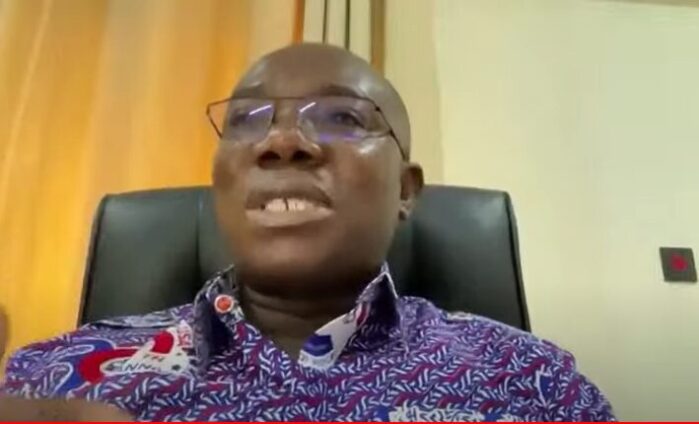
Speaking on Joy FM’s Midday News, the party's Director of Elections, Evans Nimako, questioned whether the recent Supreme Court ruling striking down the delegate system would effectively address concerns about "moneycracy" in party politics.
According to him, Ghana already has adequate legal provisions to deal with electoral offences, but the challenge lies in their enforcement.
"If you look at the Representation of the People Law, PNDCL 284, it talks about offences in the conduct of elections, such as treating, bribery and all that.
"So if you want to cure the issue of moneycracy, why aren't we able to enforce these laws?"
Mr Nimako maintained that dismantling the delegate system is not the appropriate solution to excessive spending and vote-buying during internal party elections.
Instead, he urged policymakers and stakeholders to examine the reasoning behind the Supreme Court's decision and determine whether the country's existing legal framework is already sufficient to tackle electoral malpractice.
"The question that we need to ask is: what does the judgment seek to cure? It is important for us to assess the judgment and follow the reasoning of the Supreme Court," he said.
The NPP official reiterated that his party opposed the court's decision because it believes the delegate system is an important feature of democratic political organisation and contributes to building viable political parties.
"This issue of the judgment by the Supreme Court is something that the New Patriotic Party did not really support because we knew that if you want to ensure the growth of democracy, you need to have viable political parties. And the issue of delegateship is part of democracy," he stated.
He further warned that replacing the delegate system with broader participation in internal elections would significantly increase the cost of conducting party primaries.
"In the face of it, this is going to be a huge burden on political parties," he said.
Mr Nimako's remarks come amid renewed debate over reforms to internal party elections, with National Democratic Congress (NDC) Chairman Johnson Asiedu Nketiah proposing state funding for political parties after revealing that the NDC spent about GH¢40 million on its 2014 internal elections.
While acknowledging that concerns about money influencing internal party contests are legitimate, Mr Nimako insisted that the answer lies in enforcing existing laws against bribery and treating rather than abandoning the delegate system altogether.
Latest Stories
-
Mr President, Ghana was mentioned at the UN; why aren’t we talking about it?
2 hours -
Accra to convene Africa’s regulators and markets on tokenisation at AVAS 2026
2 hours -
The Paradox of Plenty — When every smartphone becomes a newsroom
2 hours -
GTA sensitises taxi drivers in ‘Know Ghana’ tourism campaign
4 hours -
Archbishop Agyinasare calls for responsible speech amid growing social media abuse
4 hours -
‘It will be inexcusable for gov’t not to honour payment of teachers’ arrears by 30th October’ – Haruna Iddrisu
4 hours -
Forbes’ World’s Best Employers 2026: No Ghanaian firm ranked among 900 companies
4 hours -
Electronic processing of teachers’ data: ‘The decision is the Controller’s’ – GES boss
4 hours -
Teachers’ Strike: Haruna Iddrisu questions paper-based processing of promoted teachers’ data
4 hours -
Savannah Region: Kunfusi bridge collapses again, leaving nearly 4,000 residents cut off
4 hours -
Teachers’ strike: GES targets Monday deadline to submit promotion data to Controller
4 hours -
Inflation to average 11.3% in 2027 – Fitch Solutions
5 hours -
‘I didn’t campaign for NDC to come and do this nonsense’ – Kpebu on EOCO’s conduct
5 hours -
Fitch Solutions maintains policy rate forecast of 14% by December 2026
5 hours -
Diaspora Nasara Caucus congratulates Mohammed Ali Suraj, new NPP executives
6 hours