

Audio By Carbonatix
Every nation looks to its youth as the architects of tomorrow. They are expected to become the doctors who save lives, the teachers who inspire minds, the engineers who build infrastructure, the entrepreneurs who create jobs, and the leaders who shape national destiny. Yet, in Ghana today, a growing number of young people are falling into the grip of substance abuse, threatening not only their individual futures but also the country's social and economic progress.
This is no longer an isolated social problem or a challenge for law enforcement agencies alone. It is a national emergency that demands urgent, coordinated, and sustained action.
Recent concerns raised by the Narcotics Control Commission (NACOC), alongside warnings from the World Health Organization (WHO) and the United Nations Office on Drugs and Crime (UNODC), should serve as a wake-up call to every Ghanaian. These institutions have consistently highlighted the increasing misuse of drugs among young people and the devastating health, social, and economic consequences that follow.
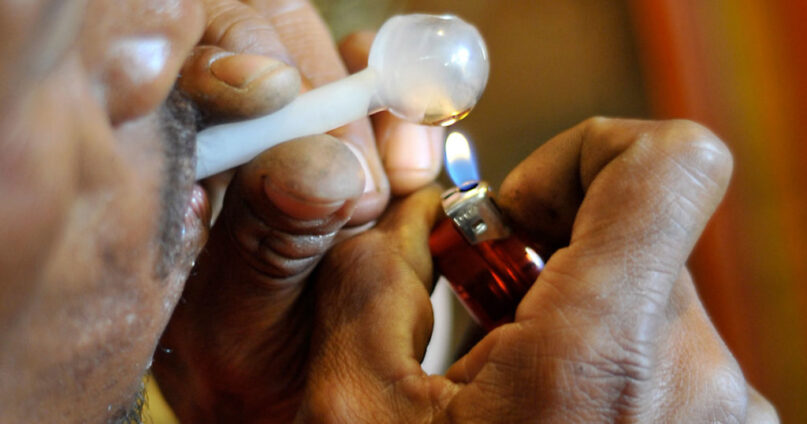
The warning by NACOC Director-General Brigadier General Maxwell Obuba Mantey that Ghana risks losing its future generation should not be dismissed as mere rhetoric. It reflects a painful reality already unfolding in many communities across the country. The growing availability and misuse of substances such as marijuana, tramadol, shisha, and synthetic drugs continue to destroy lives. Behind every statistic is a young person whose education has been interrupted, whose health has deteriorated, whose family has been devastated, and whose dreams are gradually fading.
The roots of substance abuse are both complex and interconnected. Peer pressure, unemployment, poverty, family instability, mental health challenges, academic stress, curiosity, and the influence of social media all contribute to the problem. For many young people, drugs are not taken simply for pleasure; they become an escape from emotional pain, hopelessness, anxiety, and difficult life circumstances. Sadly, what often begins as experimentation can quickly develop into dependence, addiction, and irreversible physical and psychological damage.
While NACOC deserves commendation for intensifying public education and community awareness campaigns, awareness alone cannot win this battle. Ghana must significantly invest in prevention, early intervention, mental health services, counselling, and rehabilitation programmes that are both affordable and accessible. Schools must strengthen their guidance and counselling units to identify and support vulnerable students before they fall into addiction. Parents must remain actively involved in the lives of their children, while religious bodies, traditional authorities, civil society organisations, and community leaders must work together to create environments that discourage substance abuse and promote healthy lifestyles.
Equally important, the fight against substance abuse should not be driven solely by punishment. Addiction is a public health challenge that requires compassion as much as accountability. Young people battling substance dependence need treatment, counselling, rehabilitation, and opportunities for reintegration—not merely imprisonment or social rejection. Criminalising addiction without addressing its underlying causes will only deepen the crisis and leave many lives beyond recovery.
Government must also acknowledge that tackling youth unemployment is central to reducing substance abuse. A young person with meaningful employment, quality education, vocational skills, and opportunities for personal growth is far less likely to seek comfort in harmful substances. Expanding youth employment programmes, recreational facilities, entrepreneurship support, and skills training should therefore be viewed as part of Ghana's broader drug prevention strategy.
History has shown that Ghana has overcome major national challenges through unity and collective responsibility. The growing menace of youth substance abuse requires that same spirit of national commitment. Families, educators, healthcare professionals, policymakers, law enforcement agencies, traditional leaders, religious institutions, civil society organisations, and young people themselves must work together to reverse this dangerous trend before it becomes irreversible.
The next generation remains Ghana's greatest national resource. If we fail to protect our young people from the growing threat of substance abuse today, the consequences will extend far beyond individual lives. We risk weakening our workforce, increasing crime, overburdening our healthcare system, and slowing the nation's development.
The cost of inaction will be measured not only in statistics but in shattered dreams, broken families, and unrealised potential. Ghana cannot afford to lose another generation to addiction. The time to act is now—not after another promising life has been destroyed by substance abuse.
Latest Stories
-
Power restoration fault suspected in Kumasi Central Market fire
1 hour -
The 7-foot giant of Ngleshie Amanfro: Seven-foot Ghanaian Ephraim Saawa dreams of joining the national basketball team
2 hours -
Government promises support for Kumasi Central Market fire victims
2 hours -
Vibes The Movie: Big Ghun’s Ghanaian film earns five nominations at 2026 REFFA
3 hours -
MamaCare CEO warns unresolved conflicts among health workers could undermine maternal and neonatal care
3 hours -
Health professionals urged to translate medical knowledge into practice to save mothers
3 hours -
Conflicts among care providers linked to maternal, neonatal deaths – Expert
5 hours -
GIS marks 10th TIME conference, champions improved teaching practices
5 hours -
BRICS Or Balance? What Ghana’s bid really means
5 hours -
GPRTU wants full TRAFFITECH-GH implementation to start in 2027
6 hours -
Mahama announces plans to import electric wheelchairs for PWDs
6 hours -
KGL U17 Colts 2026: Western beat Prempeh Elite Academy to set up final final with Greater Accra Region
6 hours -
Late Solanke strike salvages 10-man Spurs draw at Man United
6 hours -
Gender Ministry to monitor welfare of Nana Akua Addo’s children amid domestic violence case
6 hours -
Benedict Okyere Yeboah: Ghana’s football problem goes beyond sacking a coach
6 hours