

Audio By Carbonatix
Home is supposed to be the place where fear ends.
It is where a person should be able to close the door behind them, breathe freely and know that they are safe. It is where children should learn what love looks like, where couples should find companionship, and where families should find comfort after the pressures of the outside world.
But for too many people in Ghana, closing the door does not bring safety.
It brings fear.
Behind the walls of ordinary homes, some people are living with threats, insults, intimidation, beatings, sexual abuse, financial control and psychological torment. Some wake up every morning wondering what will trigger the next outburst. Others have become so accustomed to abuse that they have stopped recognising their own suffering as something that deserves attention.
From the outside, everything may look normal.
A family may attend church together.
They may appear together at social gatherings.
They may post smiling photographs online.
Neighbours may describe them as a “good family.”
Yet behind the door, someone may be crying.
This is the uncomfortable reality of domestic violence in Ghana.
It is a crisis that does not always announce itself loudly. Sometimes it hides behind makeup, long sleeves, excuses, silence and carefully constructed smiles.
And because much of it happens away from public view, society can underestimate its scale and seriousness.
Domestic violence must therefore be understood as more than physical assault.
It can take the form of emotional and psychological abuse, sexual violence, economic abuse, threats, intimidation, stalking, humiliation, isolation, controlling behaviour and destruction of property.
A person does not have to walk into a hospital with a broken bone before society takes their suffering seriously.
A woman who is constantly told that she is useless is being harmed.
A man whose movements, friendships and finances are controlled through threats is being harmed.
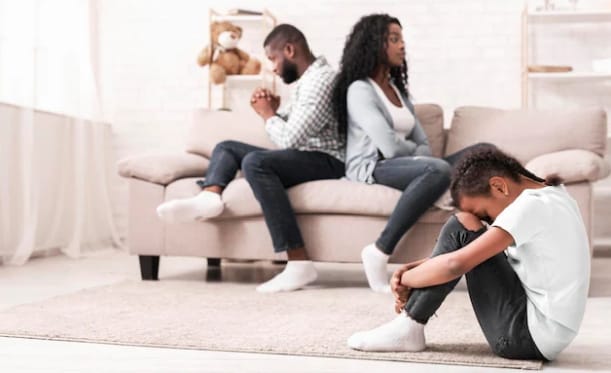
A child who watches one parent violently abuse another is being harmed.
An elderly relative who is threatened, neglected or financially exploited within a household is being harmed.
The wounds may not always be visible, but the damage is real.
The first challenge Ghana must confront is the culture of silence surrounding domestic violence.
For generations, many families have been taught to protect the reputation of the household at almost any cost.
When a woman reports that her husband is abusing her, relatives may tell her to be patient.
When a husband reports abuse, he may be laughed at.
When a young person complains about violence at home, they may be told not to expose family matters.
When neighbours hear repeated arguments, they may decide that it is not their business.
When religious leaders become involved, the emphasis may sometimes be placed so heavily on preserving the relationship that the safety of the victim becomes secondary.
This must change.
There is nothing honourable about protecting the reputation of a family while a member of that family is being destroyed.
There is no peace in a home where one person is afraid of another.
And there is no strength in a family that survives by forcing its most vulnerable member to suffer in silence.
The phrase “it is a family matter” must no longer be used as an excuse to look away.
Domestic violence becomes a national issue the moment it threatens the safety, health and dignity of citizens.
It becomes a national issue when children are traumatised.
It becomes a national issue when victims require medical care.
It becomes a national issue when workers lose productivity because of physical and psychological injuries.
It becomes a national issue when families are destroyed.
And it becomes an even greater national tragedy when violence ends in death.
The country cannot wait for the worst possible outcome before taking the problem seriously.
Another reason victims remain trapped is economic dependence.
For a person who has no stable income, leaving an abusive home can appear almost impossible.
A mother may know that her partner is dangerous, but she may also know that she cannot immediately afford rent.
She may wonder where her children will sleep.
She may worry about school fees.
She may fear losing access to food, healthcare and other basic necessities.
A victim may therefore remain in a dangerous relationship not because they approve of the abuse, but because they are calculating the consequences of leaving.
This is why economic empowerment must be part of the domestic violence conversation.
Skills training, employment opportunities, access to financial services, safe accommodation and social support can give victims options.
A person should never have to choose between physical safety and economic survival.
But financial dependence is not the only chain.
Fear is another.
Some victims have been threatened with death.
Some are told that their children will be taken away.
Some are threatened with public shame.
Some are warned that their families will be attacked.
Others have been abused for so long that their confidence has been systematically destroyed.
An abuser may repeatedly tell a victim that nobody else will love them.
They may say that the victim is worthless.
They may convince the victim that the abuse is their fault.
Over time, the victim may begin to believe it.
This is why psychological abuse deserves the same seriousness as physical violence.
A wound on the body may heal.
The belief that you are worthless can remain for years.
Children also carry a heavy burden in homes where violence occurs.
A child does not need to be directly beaten to become a victim of domestic violence.
Hearing threats, witnessing assaults and living in an atmosphere of fear can profoundly affect a child's emotional and psychological development.
A child who should be thinking about school may instead be listening for the sound of an angry parent approaching.
A child who should be sleeping peacefully may be wondering whether another argument will begin during the night.
Some children become withdrawn.
Some become aggressive.
Some struggle academically.
Some develop anxiety.
Others may grow up believing that violence is simply part of family life.
This is where the crisis becomes generational.
Children learn what relationships look like by observing adults.
If violence is repeatedly presented as normal, some may eventually reproduce the same behaviour in their own relationships.
The cycle continues.
That is why breaking domestic violence is not only about protecting today's victims.
It is about protecting tomorrow's generation.
Ghana must also be careful not to reduce the conversation to women alone.
Women and girls face significant risks of domestic and gender-based violence, and their protection must remain a priority. However, men can also experience abuse, and male victims often face a different kind of silence.
A man who reports that his partner is physically or emotionally abusing him may be mocked.
He may be told to defend himself.
He may be accused of being weak.
He may fear that nobody will believe him.
This culture of ridicule can prevent male victims from seeking help.
The message must be clear: violence is wrong regardless of who commits it and regardless of who suffers it.
Protecting victims should never become a gender competition.
The goal is safety, justice and prevention.
There is also a group that is frequently forgotten in conversations about domestic violence: older people.
Elderly parents and relatives can experience neglect, intimidation, physical abuse and financial exploitation from people within their own households.
Some are too dependent on their caregivers to report what is happening.
Some fear being abandoned.
Others remain silent because they do not want to see their own children punished.
Their vulnerability makes their protection particularly important.
A society that values family must also protect those who become dependent on family members in old age.
The legal framework is another important part of the conversation.
Ghana has the Domestic Violence Act, 2007 (Act 732), which provides a legal framework for addressing domestic violence.
But laws are meaningful only when victims can actually access protection and justice.
A victim should not have to navigate a confusing system alone.
Police officers, healthcare workers, social workers, lawyers and other professionals involved in domestic violence cases need appropriate training and resources.
Reporting mechanisms must be accessible.
Victims must be treated with dignity.
Cases must be handled seriously.
And where protection orders or other legal remedies are available, they must be meaningful in practice.
The fear that “nothing will happen” can be enough to prevent a victim from reporting abuse.
That fear must be defeated by a justice system that people can trust.
However, the responsibility does not end with the police or courts.
Healthcare facilities are often among the first places where victims appear.
A person may arrive with injuries without openly saying what happened.
Healthcare workers must therefore be equipped to recognise possible signs of abuse and respond sensitively.
Social workers and support organisations also need adequate resources to help survivors rebuild their lives.
It is not enough to help someone leave an abusive environment.
We must ask what happens afterwards.
Where will the survivor live?
How will they earn an income?
How will they care for their children?
How will they recover psychologically?
How will they rebuild their confidence?
Leaving may be the beginning of the journey, not the end.
Religious and traditional leaders also have enormous influence.
Many Ghanaians turn to churches, mosques, traditional authorities and family elders during moments of crisis.
This influence can be used positively.
Leaders can educate their communities about healthy relationships, challenge harmful beliefs and encourage victims to seek appropriate help.
But one message must be made clear: reconciliation should never come before safety.
Telling an abused person to return to the same environment without addressing the danger is not necessarily reconciliation.
Sometimes the most responsible intervention is to create distance, protect the victim and ensure that professional assistance is available.
Marriage preservation must never become more important than human life.
The media, too, must do more.
Domestic violence stories often attract public attention when they involve severe injuries or death. But reporting should not begin only when tragedy occurs.
Journalists should examine patterns.
What happened before the violence escalated?
Did the victim seek help?
Were there previous complaints?
Did relatives know?
Were warning signs ignored?
Were there institutional failures?
What could have prevented the situation from becoming fatal?
These are the questions that can turn reporting into public service.
The media must also avoid victim-blaming.
Instead of asking, “Why did she stay?”, society should ask why the perpetrator believed violence was acceptable.
Instead of asking why a victim did not report earlier, we should ask whether the environment made reporting safe and accessible.
Instead of turning survivors into objects of pity, we should give them dignity.
Social media has created another dimension to the problem.
Online platforms can help expose abuse and give victims a voice, but they can also encourage public shaming, misinformation and the circulation of sensitive images.
A serious domestic violence case should not become entertainment for social media users.
Behind every viral video may be a traumatised human being.
Ghanaians must learn to respond with compassion rather than curiosity.
Prevention must also begin before relationships become violent.
Schools can play an important role by teaching children about respect, boundaries, emotional intelligence and healthy relationships.
Young people need to understand that jealousy is not love.
Possessiveness is not love.
Control is not love.
Threats are not love.
And violence is certainly not love.
Boys should be taught that masculinity does not require domination.
Girls should be taught that they do not owe anyone their silence.
Young people of all genders should learn that disagreement can exist without abuse.
Families must also create environments where children feel safe enough to speak when something is wrong.
The fight against domestic violence must become preventive rather than reactive.
We cannot continue waiting until someone is seriously injured before we become concerned.
We cannot wait until a child is traumatised before we ask questions.
We cannot wait until another life is lost before the nation expresses outrage.
Every violent incident that is ignored sends a message.
Every victim who is dismissed sends a message.
Every perpetrator who escapes accountability sends a message.
And that message can encourage the next act of violence.
Domestic violence also has economic consequences that deserve greater attention.
When victims are injured, they may be unable to work.
When children are traumatised, their education can suffer.
When families break down, financial pressures increase.
Healthcare costs rise.
Legal processes consume resources.
Productivity is lost.
The consequences therefore extend far beyond the walls of the home.
Domestic violence weakens families, communities and, ultimately, national development.
A country cannot build a productive population while allowing large numbers of people to live in environments of fear and abuse.
The fight against domestic violence therefore belongs in Ghana's national development conversation.
It belongs in discussions about healthcare.
It belongs in education.
It belongs in economic empowerment.
It belongs in justice.
It belongs in social protection.
It belongs in community development.
And it belongs in the national conversation about human rights and dignity.
Ghana needs a coordinated response.
Government agencies must work together.
Law enforcement must be strengthened.
Support services must be accessible.
Shelters and safe spaces must be adequately supported.
Public education must move beyond occasional campaigns.
Schools must teach healthy relationships.
Employers should understand how domestic violence can affect workers.
Communities must stop protecting perpetrators through silence.
Families must learn to support victims rather than shame them.
Religious and traditional leaders must prioritise safety.
And citizens must learn that noticing abuse and doing nothing is not neutrality.
At the same time, prevention must include rehabilitation and behaviour-change programmes for perpetrators where appropriate.
Punishment is necessary where the law requires it, but Ghana must also confront the beliefs and behaviours that produce violence.
If a person leaves one abusive relationship and repeats the same behaviour with another partner, society has not solved the underlying problem.
We need accountability, but we also need prevention.
Ultimately, the question Ghana must answer is simple:
What kind of society do we want to become?
A society where families protect their image while victims suffer?
A society where children grow up believing violence is normal?
A society where victims are blamed for the actions of their abusers?
Or a society where safety, dignity and respect are considered non-negotiable?
The answer should not be difficult.
Home must be safe.
Marriage must be safe.
Childhood must be safe.
Old age must be safe.
Relationships must be built on respect rather than fear.
We must stop calling control love.
We must stop calling violence discipline.
We must stop calling silence peace.
And we must stop treating domestic violence as a private matter that outsiders should never discuss.
Because the truth is that there is nothing private about a national crisis that destroys lives, traumatises children, weakens families and places pressure on the country's health, justice and social systems.
Behind every statistic is a person.
Behind every police report is a story.
Behind every injury is pain.
Behind every silent victim is a voice that may be waiting for someone to say, “You do not deserve this.”
Ghana cannot afford to wait for another tragedy before acting.
We must make it easier for victims to speak, safer for them to leave, harder for perpetrators to escape accountability and less acceptable for communities to look away.
The battle against domestic violence will not be won by government alone.
It will be won when parents teach their children respect, when communities refuse to protect abusers, when institutions respond with seriousness, when the media reports responsibly, when victims are supported rather than blamed, and when every Ghanaian understands that violence has no place in a healthy home.
A home should be the first place where a child learns love.
It should be the first place where an adult experiences security.
It should be the place where people can remove their fears, not where new fears are created.
Home should not be where violence begins.
Home should be where safety begins.
And until every Ghanaian can say that with confidence, the work of confronting domestic violence is far from over.
Latest Stories
-
Communities affected by construction of Akosombo Dam urge government to speed up compensation process
14 minutes -
World Cup visa scandal: Sports Ministry not shielding anyone – Sports Minister’s special aide
35 minutes -
World Cup visa scandal: Over 30 people misrepresented as GTA board members to US Embassy – Vincent Assafuah alleges
37 minutes -
Fire destroys wooden structure near Yesu Mo Villa at Bush Road
38 minutes -
NDC threatens sanctions over oversized campaign posters, gives aspirants 5 days to comply
2 hours -
Star Oil paid GH¢2.7bn in taxes, levies in nine months of 2026
2 hours -
Samson’s Take: The rule of law is cheaper before the bulldozer
2 hours -
GRA blames system failure for delay in issuing receipt over passenger’s customs duty
2 hours -
Livestream: Newsfile discusses World Cup visa scandal, beach demolitions, education strikes, BRICS bid
2 hours -
NC-PTAs welcomes end of teachers’ strike, urges parents to prepare children for Monday
2 hours -
Government procures over 2,000 transformers as Ghana’s electricity access hits 89.13% – Energy Minister
3 hours -
UTAG-UG threatens strike on October 19 over unpaid allowance
3 hours -
Let The Constitution direct Chieftaincy to deliver “All Development Is Local”
4 hours -
John Jinapor outlines renewable energy, nuclear power priorities for 2027
5 hours -
Ghana explores centre of excellence for hearing, communication and cochlear implant care
5 hours