

Audio By Carbonatix
The Ghana Revenue Authority (GRA) has outlined the categories of taxpayers who qualify for the Modified Taxation Scheme, as well as those who are excluded from the system.
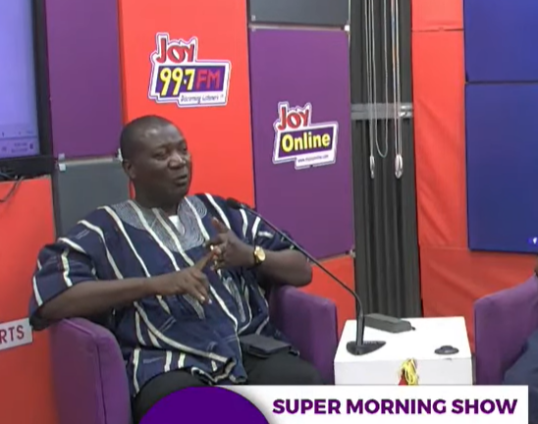
Chief Revenue Officer of the GRA’s Domestic Tax Revenue Division, Victor Yao Akogo, explained the scheme on the Joy FM Super Morning Show on Wednesday, August 12, as part of a discussion on the Modified Taxation Scheme.
According to Mr Akogo, the scheme is mainly designed for resident individuals who earn business income, particularly those operating in the informal sector.
“When you talk about the Modified Taxation Scheme, we are emphasising business income of resident individuals,” he said.
Mr Akogo said a person must meet a number of conditions to qualify.
First, the person must be a resident of Ghana and must earn business income from Ghana. The individual must also not be registered for Value Added Tax (VAT).
“So to qualify to be part of the Modified Taxation, you must be a resident of Ghana and must also earn business income. You must not be registered for VAT,” he explained.
He added that the scheme is particularly relevant to people operating in the informal sector who are not required to register for VAT.
“It means that your turnover should not be more than GH₵750,000 per annum,” Mr Akogo said.
This means that resident individuals earning business income, operating mainly in the informal sector and with annual turnover of no more than GH¢750,000, may fall under the Modified Taxation Scheme, provided they meet the other requirements.
Mr Akogo also outlined categories of people who are not eligible to operate under the scheme.
Professionals, including engineers, accountants and lawyers, are excluded because they are regulated and are expected to be able to keep proper records of their businesses.
“If you are a professional, an engineer, accountant, lawyer, you are not part of the Modified Taxation Scheme because you are regulated and you can keep records,” he said.
People who choose to leave the scheme are also allowed to do so under the law.
“If you decide to opt out from the Modified Taxation Scheme, the law allows you to opt out,” Mr Akogo explained.
He further said people with multiple businesses do not qualify for the scheme. Those operating more than one outlet are also excluded.
“If you have multiple businesses, you are not supposed to be part of the Modified Taxation Scheme. And in addition to that, if you have more than one outlet, then you should not be part of the Modified Taxation Scheme,” he said.
In summary, the excluded groups include professionals such as lawyers and accountants, people with multiple businesses, those operating from more than one outlet, and individuals who have opted out of the scheme.
Mr Akogo said the Modified Taxation Scheme is divided into three main categories.
“We have three categories under the Modified Taxation Scheme. We have the presumptive tax based on installments. We have the presumptive by turnover. And we also have the modified cash basis,” he said.
The first category covers resident individuals whose annual business income is up to GH¢20,000.
Under this arrangement, taxpayers pay a fixed amount rather than having their tax calculated directly from their business expenses or profits.
“The presumptive by installment is for those taxpayers or resident individuals whose business income is up to 20,000 Ghana cedis per annum, and they pay a fixed amount as tax for the year,” Mr Akogo said.
“The fixed amount they pay is 45 Ghana cedis a quarter,” he added.
This category includes small traders such as people selling from tabletops and those operating small shops.
“Those selling on tabletop and those selling in small shops. So they are those that pay by installment. So we call them presumptive tax by installment,” he explained.
The second category is for taxpayers whose annual turnover is above GH¢20,000 but does not exceed GH¢750,000.
Mr Akogo said people in this category pay three per cent of their annual turnover as tax.
“The second category is the presumptive tax by turnover. This category of taxpayers are persons whose turnover are more than GH¢20,000, but not exceeding GH¢750,000 for the year. They pay three percent of their turnover as tax for the whole year,” he said.
He explained that the system is intended for taxpayers who may not be able to maintain detailed business records.
“Because they cannot keep records, because they are not regulated, we say every sales, every turnover they earn, three percent of it must be the tax they pay for the whole year,” Mr Akogo said.
The third category is the modified cash basis. This applies to taxpayers who have some knowledge of record-keeping and want their business expenses to be taken into account when determining their taxable income.
“This category claim they have knowledge about how to keep limited records, and therefore they want to be considered for their expenses that they incur,” Mr Akogo said.
Under this system, the normal principles for assessing tax are applied. The taxpayer's allowable business expenses are deducted to determine the chargeable income, after which the appropriate graduated tax rate is applied.
“So standard rules of assessment of tax is applied on them. So we say that they determine, we determine their assessable income, we allow them expenses that they incur in running their business, and arrive at their chargeable income, and then we apply a graduated rate to the chargeable income,” he explained.
Mr Akogo said the graduated tax rate ranges from five per cent to 35 per cent.
“The graduated rate, the highest rate is 35 percent, and the smallest rate is five percent,” he said.
He added that the modified cash basis gives eligible taxpayers an opportunity to account for expenses incurred in running their businesses.
“So the modified cash will give you the opportunity to have access to expenses you incurred in running the business, but you pay tax based on a graduated rate. The higher the income that you earn, the higher you pay as tax,” he said.
Latest Stories
-
GES asks applicants to check status of 2026 promotion applications on October 15
15 minutes -
Kobe Boujee joins Olympics.com team for Dakar 2026 Youth Olympic Games
23 minutes -
Slaty egret’s shifting nesting sites offer clues to changing ecosystems
29 minutes -
First phase of arrears for promoted teachers to be paid on Friday – Haruna Iddrisu announces
32 minutes -
Caveman Watches partners with Mfantsipim School for 150th anniversary
54 minutes -
We’ll pursue GH¢15m defamation suit against Sammy Gyamfi to its logical conclusion – Afenyo-Markin’s lawyers
54 minutes -
Martin Kpebu urges Afenyo-Markin not to return to court over Sammy Gyamfi lawsuit
1 hour -
GRA submits preliminary report on drug shipment case to Mahama – Commissioner-General
2 hours -
Sammy Gyamfi using ‘procedural roadblocks’ to dodge defamation case? – Afenyo-Markin’s lawyers
2 hours -
The illusion of a good deal: Why some everyday money-saving habits may be costing you more
2 hours -
Family seeks autopsy, police investigation into death of student 12 days after Abomosu SHS enrolment
2 hours -
Trade Minister urges employers to leverage industrial opportunities to create jobs
2 hours -
Asantehene plants trees to commence Jimi Watercourse Rehabilitation destroyed by galamsey
2 hours -
15 arrested, 6 trucks impounded over sandwinning activities on Kumasi-Accra Expressway
2 hours -
OFFICIAL: Vinicius will miss El Clásico, suspended four games
3 hours