

Audio By Carbonatix
Private sector credit in Ghana grew by 41.2% in June 2026, a significant increase from the 8.6% recorded in the same period last year, as easing financial conditions begin to translate into stronger lending to businesses.
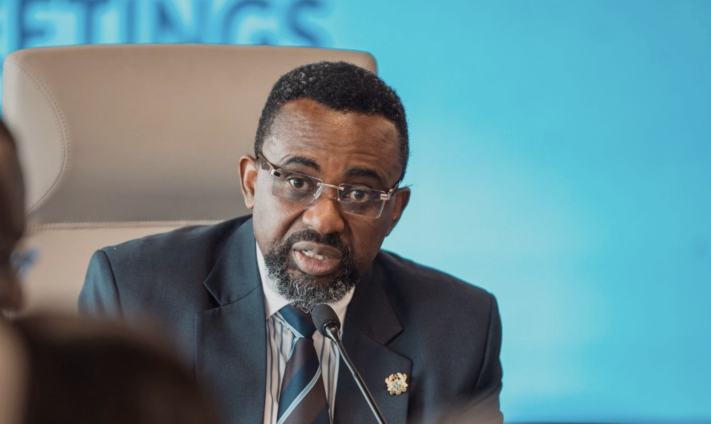
Governor of the Bank of Ghana (BoG), Dr. Johnson Asiama, disclosed the development when he engaged Chief Executive Officers and heads of banks, noting that real private sector credit growth also stood at 34.1%.
“Financial conditions have eased significantly. In the money market, interest rates have continued to moderate across various market segments. These developments are beginning to translate into stronger credit flows to the private sector,” Dr. Asiama said.
He described the growth in private sector credit as “a significant development,” against the backdrop of declining inflation and relatively stable financial conditions.
The Governor said the improving economic environment presents an opportunity for banks to play a stronger role in supporting economic activity, particularly by expanding access to finance for businesses.
However, he noted that despite the rebound in credit creation and growing demand for loans, many small and medium-sized enterprises (SMEs), particularly those operating along the agricultural value chain, continue to face difficulties accessing financing.
“Many SMEs, particularly those on the agricultural value chain, still struggle to access finance, just because banks continue to perceive these businesses as relatively high risk,” he said.
Dr. Asiama therefore urged banks to deepen their understanding of the businesses and sectors they serve and develop innovative and flexible credit products that better reflect the realities of borrowers.
He specifically called for loan repayment structures that take into account the seasonal nature of agricultural activities and the timing of borrowers’ cash flows.
“This should include developing innovative and flexible credit products that recognise the seasonal nature of agricultural activities and align loan repayment schedules with the timing and pattern of borrowers' cash flows,” the Governor said.
He stressed that banks should see themselves not merely as financial intermediaries but as partners in the growth and transformation of the Ghanaian economy.
“As banks, you are not merely financial intermediaries, you are important business partners in the growth and transformation of the economy,” Dr. Asiama stated.
The latest credit growth comes as Ghana’s broader macroeconomic conditions continue to improve. Real GDP growth reached 6.4% in the first quarter of 2026, while headline inflation declined to 4.6% in July from 5.3% in June.
The Monetary Policy Committee has maintained the policy rate at 14%, with the Bank saying the current stance remains appropriate as it assesses the evolving economic and geopolitical environment.
Meanwhile, developments within the banking sector also point to improved resilience. Total banking sector assets increased by 30.7% in June 2026, while the industry’s capital adequacy ratio rose to 20.4%, from 10.6% a year earlier.
The non-performing loan ratio also declined to 16.1% in June 2026, from 23.1% over the same period last year.
Dr. Asiama said these developments provide a stronger foundation for banks to support businesses and households and contribute to sustainable economic growth.
The Governor’s comments come at a time when the Bank of Ghana is seeking to ensure that the improvement in macroeconomic stability translates into increased economic activity and broader access to finance.
Latest Stories
-
‘We have turned the tide’ – Ato Forson says Ghana is ready to take off
34 seconds -
Police arrest man captured in viral video assaulting wife in Agona Nkwanta
2 minutes -
KATH Mother and Baby Unit construction stalled for 14 months over unpaid contractor arrears
16 minutes -
Government wanted to ‘tilt the balance’ with new EC appointments – Kwakye Ofosu
23 minutes -
Angry Tema Community 25 residents threaten to sleep at GWL over water shortage
36 minutes -
BoG takes financial literacy drive to Techiman, vows to protect depositors
36 minutes -
‘Stop the distractions’ – Akosua Manu demands answers over GH¢49.7m South Africa evacuation cost
37 minutes -
Formula 1 to return to Africa with Rwanda Grand Prix in early 2030s
43 minutes -
Mahama says Ghana is safer today as he commissions 85-bed ward at Police Hospital
48 minutes -
LA 2028: Black Queens face Zambia in final Olympic qualifier
57 minutes -
WAFU Zone B: Black Starlets seal semifinal place with 3-1 win over Benin
1 hour -
Black Queens thrash Mauritius 7-0 to advance 10-0 on aggregate in Olympic Qualifiers
1 hour -
Kaizen as a strategic pathway for micro business scale-up in Ghana
1 hour -
Minister orders suspension of Obuasi SHS headmaster over alleged sexual misconduct following JoyNews investigation
1 hour -
Over 38,000 commercial, 150,000 residential customers unbilled – Ghana Water MD
2 hours