

Audio By Carbonatix
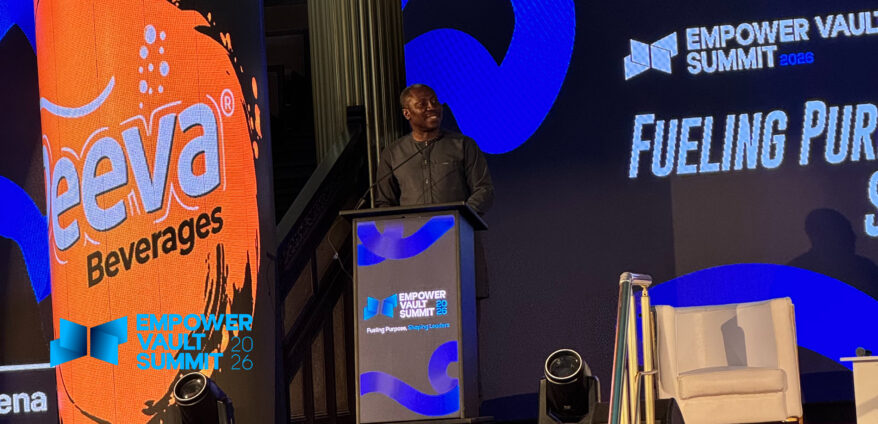
Minority Leader Alexander Afenyo-Markin has challenged Ghanaian students and young people to view the country’s youthful population not as a burden but as a major economic opportunity that requires purpose, innovation and leadership.
Speaking at the Empower Vault Summit at the University of Ghana, Mr Afenyo-Markin drew attention to the country’s youth unemployment challenge and urged young people to focus on creating value rather than waiting solely for formal employment.
He said more than seven in every 10 Ghanaians are below the age of 35, while young people account for a significant proportion of the country’s unemployed population.
“More than 7 in every 10 Ghanaians alive today are under the age of 35. And what does the labour market offer? Young people account for 7 out of every 10 unemployed residents in this country,” he said on Friday, August 14.
His remarks formed part of the event organised by Horses and Stables in partnership with the Office of the University of Ghana SRC Vice President.
Mr Afenyo-Markin further noted that more than 300,000 students graduate from universities across Ghana every year, with only a small proportion securing employment within their first year after graduation.
“An estimated over 300,000 students graduate from universities across Ghana every year. Only about 10%, if not less, are able to secure jobs within the first year after national census,” he said.
He warned that the mismatch between the number of graduates entering the labour market and available jobs required a fundamental rethink of how young people approach education, employment and entrepreneurship.
Despite the scale of the challenge, the Minority Leader argued that Ghana’s youthful population could become one of the country’s greatest assets if properly harnessed.
“Therefore, my dear students, a population this young is not by itself a problem. It is an opportunity, whereas the single greatest opportunity any government on this continent will ask for,” he said.
He challenged students to shift their focus from the size of Ghana’s unemployment challenge to the solutions they could contribute to addressing it.
“That is why this moment demands that we begin asking ourselves what we can create, what problems we can solve, and what value we can bring to our communities and our country. So let us turn from the size of the challenge to the substance of the answer,” he said.
According to Mr Afenyo-Markin, the starting point for addressing these challenges is purpose.
“Because the answer to everything I have just described begins with a single word, purpose,” he said.
He urged young people to look beyond conventional measures of success such as money, status, titles and recognition and instead consider why they want to achieve their chosen goals.
“We live in a world that constantly tells us what to pursue. Money, status, titles, recognition, and success. But before we ask ourselves what we want to achieve, we must first ask a more fundamental question. Why?”
He encouraged students to reflect on how their time, talents and energy could be used to make meaningful contributions to society.
“Why do I want what I want? What is worth giving my time, my talent, and my energy to? And who will ultimately benefit from the life I choose to build?”
He described purpose as a guiding force that gives direction to ambition and helps individuals understand the value of the journey towards their goals.
“Purpose is what gives direction to ambition. Purpose is a compass that tells us not only where we want to go, but why the journey is worth taking.”
Mr Afenyo-Markin said young people should not expect to discover their purpose instantly, noting that it can emerge through experiences, curiosity and the problems they encounter in their communities.
He encouraged students to pay attention to the issues that concern them and the needs they feel compelled to address.
“It is often uncovered through the things that stir your curiosity, the problems that concern you, the experiences that shape you, and the needs around you that you cannot ignore.”
He said developing a clear sense of purpose could fundamentally change how young people perceive their education and talents.
“And once you begin to understand your purpose, you begin to see the world differently. You stop asking, what can I get? And start asking, what can I give?”
He urged students to see education not merely as a qualification for employment but as a tool for solving problems and creating value.
“You stop seeing your education only as qualification and begin to see it as a tool. You stop seeing your talent just as special advantages and begin to see them as resources that can be used to solve problems and create value.”
The Minority Leader said having purpose alone would not be sufficient to address the challenges confronting Ghana's youth.
He argued that young people must also develop the capacity to lead and influence others positively.
“And when purpose is clear, the challenges ahead do not disappear, but they become easier to face,” he said.
He added: “Because a generation with purpose must also become a generation capable of leading.”
“If purpose gives us the direction, leadership gives us the responsibility to take others with us,” Mr Afenyo-Markin said.
The summit seeks to equip young people with practical skills, values and mindsets for leadership, entrepreneurship and personal development while encouraging them to become active contributors to Ghana's development.
Latest Stories
-
Sammy Gyamfi didn’t say BoG has ceded its forex role to us – GoldBod
43 minutes -
High Court sets November 4 for ruling on Wontumi’s bail application
57 minutes -
Tetteh Kwetey files nomination for NDC Greater Accra Regional Chairmanship
1 hour -
Korle Bu appeals for more doctors, nurses as A&E Centre struggles under pressure
1 hour -
AFCON 2027Q: ‘I’m optimistic Black Stars can turn things around’ – Agyemang-Badu
1 hour -
Digital innovation could widen Africa’s inequalities if people are left out – Sam Jonah
1 hour -
Galamsey is an economic, health and moral problem – Sam Jonah
1 hour -
Africa must create AI technology instead of paying to use it – Sam Jonah
1 hour -
2026 U-17 WWC: Black Maidens to face Norway, Brazil and Canada in Group C
2 hours -
Agbodza, Sam George move to curb fibre optic cable cuts during road works
2 hours -
2026 U-17 WWC: Black Maidens unveil 21-player squad for competition in Morocco
2 hours -
South Africa evacuation and the minority’s half-truth
2 hours -
‘You never know tomorrow’ – Anthony Baffoe on contesting for GFA Presidency
2 hours -
Obuasi SHTS head accused of sexually abusing students is NDC Juaben secretary seeking chairmanship
2 hours -
Cedi depreciates by 7.11% against dollar in August 2026 – BoG report
2 hours