

Audio By Carbonatix
"Intense" trade talks are going down to the wire as Canada seeks to avoid a fresh round of tariffs from the Trump administration, set to take effect on Wednesday.
Canadian negotiators have been camped out in Washington for a week, trying to pin down an agreement before new 50% tariffs on some $20bn (C$28bn) in Canadian imports are imposed.
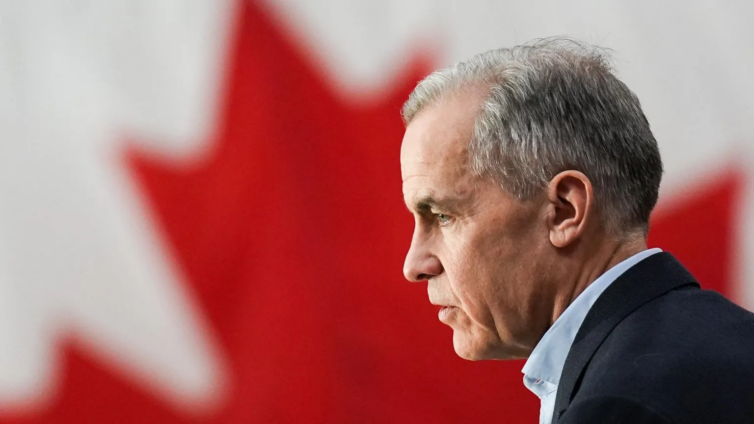
Prime Minister Mark Carney kept details of the talks close to his chest when pressed by reporters on Monday, saying that given the "very delicate and intense" negotiations, it is "not the time to negotiate in public".
He and Trump spoke by phone on Monday afternoon about the talks, his office confirmed to the BBC.
While Carney told reporters that Canada was negotiating from "a position of strength", the stakes are high for the prime minister and his team to reach a deal before the Trump administration's latest financial squeeze, on about 5% of all Canadian imports, takes hold.
Despite a flurry of meetings between Canadian negotiators and US Trade Representative Jamieson Greer in recent days, the two sides have yet to reach a final agreement.
"Our job is not yet done," US-Canada Trade Minister Dominic LeBlanc said on Monday as he left Greer's office.
Both sides have been clear that the talks have been tough. Trump has described Canada as "nasty" on trade - a characterisation of negotiations that Carney did not entirely dispute.
He has also warned that "the time to get tougher" will be if the countries fail to reach a deal.
Even if one is reached, Carney will need to sell any concessions made to a public frustrated with - and sceptical of - the administration south of the border.
He will also need the buy-in from the provinces on any compromises.
The US has been asking Canada for a number of concessions, including removing its remaining retaliatory tariffs on American autos and adjusting its dairy quotas.
It has also asked for the ban on US alcohol sales, imposed early last year by most Canadian provinces in retaliation for Trump's tariffs, to be removed.
That concession would depend on the agreement of the provinces, which are in control of the alcohol in their respective jurisdictions.
Ontario Premier Doug Ford, who makes a point of being tough on the US, said last week that an agreement on booze was conditional.
Canada has been in pursuit of a deal that would see the US drop or reduce tariffs on its steel, aluminium, automobile and lumber sectors, all of which have been damaging to the country's economy.
"If we get a fair deal that will protect our steel sector, our auto sector, our forestry sector, our agriculture sector, our manufacturing sector, then we'd be happy to bring booze back on the shelves," Ford said.
Carney could also face pushback on any concessions on dairy, especially in Quebec, where the premier, Christine Fréchette, has said supply management is non-negotiable.
Trump argues the system, which has production quotas, set pricing, and import quotas on dairy, eggs, and poultry, is "unreasonable" to American farmers who want to sell their products north of the border.
The White House unveiled the new tariffs on 20 July, saying in a factsheet that they would become effective in 30 days' time - which is Wednesday 19 August.
Canadians are also not in the mood to offer many concessions to the US, even as they want more stability.
A new poll from Abacus Data indicates that 74% feel the trade dispute has had an impact on their household, and 36% want to see Canada respond with new counter-tariffs, even if it risks more domestic economic pain.
Just 18% favour concessions like ending provincial bans on American alcohol, in order to remove or reduce US tariffs.
Reports in Canadian media also suggested that Canada's chief negotiator, Janice Charette, warned her US counterparts that the new tariffs could put further trade negotiations at risk if they are enacted on Wednesday.
Carney has said he would not sign a deal unless it's good for Canada, though he has not been clear about what such a deal would look like.
On Monday, he only said: "We'll have opportunities over the next 48 hours to discuss in more detail as the negotiations go forward."
He added that he had "plans for any situation that may arise" should the talks fail.
Conservative trade critic Shuvaloy Majumdar said in a statement that it's time for "a measure of relief" from economic anxiety.
"We have grown tired of seeing our country used as a punching bag," he said.
"Yet we share a common hope that Prime Minister Carney will deliver a genuine win at the negotiating table."
Latest Stories
-
Vieira named new Senegal head coach
1 hour -
Global borrowing costs hit fresh highs on oil, AI and inflation
1 hour -
American Airlines to bring back TV screens on US flights
2 hours -
Carney’s final chance to convince Trump as US-Canada trade deadline looms
2 hours -
BOSTenergies meets fuel tanker drivers over their concerns at the Kumasi depot
2 hours -
X1 Energy Drink-backed DOL Super Cup ends with Ebusua Dwarfs crowned champions
2 hours -
Disney and ABC sue Trump’s media regulator to stop early licence renewal
2 hours -
Luv FM High School Debate: Prempeh dethroned as CHRISSEC and KUHIS ignite quarter-final path
2 hours -
British couple on honeymoon killed in helicopter crash on Greek island
2 hours -
George Opare Addo to lead National Youth Forum in Accra
2 hours -
ECG invested GH¢710,965 in infrastructure replacement across Greater Accra – PURC
2 hours -
Cyber Security Authority, EY resolve satisfactorily matters relating to licence fees
3 hours -
Beyond the ribbon: Why the sport of dog showing matters for every pet owner
3 hours -
Illegal mining drives Ghanaian children from classrooms into hazardous labour
3 hours -
NACOC committed to strengthening border security – DG
3 hours