

Audio By Carbonatix
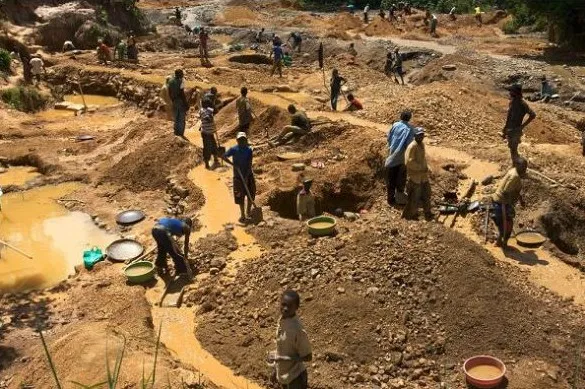
A study by Solidaridad West Africa and the Minerals Commission has revealed that illegal mining is increasingly drawing schoolchildren from classrooms into hazardous labour in parts of the Eastern Region.
The study, conducted in April 2026 across Pameng, Asamang, Akwaboaso and Abrenya in the Atiwa West District, found children between 10 and 17 years engaged in dangerous activities at abandoned and unregulated mining sites.
It said the children were exposed to unsafe mining pits and machinery, mercury and other toxic chemicals, exploitation and abuse, putting their health, safety and future at risk.
The study said poverty remained a major driver of child labour, but social and behavioural factors, including peer pressure, the desire for quick income and weak parental supervision, also contributed significantly.
It also identified a growing perception among some children that education offered limited immediate financial benefits compared with mining.
Some children reportedly earned between GH¢100 and GH¢1,000 on productive days, although earnings varied depending on the nature of work and access to mining proceeds.
A 16-year-old participant in the study said he had worked at his father’s mining site for two years and could earn up to GH¢1,000 a day supervising ore washing.
The study said the financial returns from mining could encourage children and families to prioritise immediate income over education, resulting in interrupted schooling and reduced opportunities in later life.
The Atiwa West District Education Directorate also expressed concern over the impact of illegal mining on school attendance and enrolment, saying children’s involvement in mining was prevalent across communities in the district.
It said some parents benefited from income generated by their children, contributing to increased absenteeism, school dropouts and a growing perception that immediate financial gains were more valuable than education.
The Directorate further linked the broader challenges associated with illegal mining to social problems, including drug abuse, teenage pregnancy, and prostitution.
Mr John Kwasi Osafo, the District Director of Education, Atiwa West District, said children who abandoned school for mining risked being trapped in low-paying and hazardous work, limiting their potential and the future development of their communities.
The study used a rapid participatory approach, including interviews and focus on group discussions with local government authorities, education officials, traditional and religious leaders, teachers, parents, youth and children, as well as field observations.
In 2023, Solidaridad supported the Gender Unit of the Minerals Commission to develop a Child Labour Eradication Framework for Ghana’s small-scale gold mining sector, while the two organisations are now piloting an incentive-based child labour-free community initiative in Atiwa West.
Ms Monalynn Anokye-Bempah, the Principal Officer at the Gender Unit of the Minerals Commission, said the collaboration sought to promote school attendance and retention, strengthen child protection systems, develop sustainable livelihood alternatives and reward communities that maintained child labour-free standards.
Ms Rosemary Addico, the Programme Manager for Responsible Gold at Solidaridad, said ending child labour in mining communities required more than enforcement, stressing the need for collaborative, community-led solutions that addressed the social and economic factors exposing children to mining.
The pilot would support recommendations under the Child Labour Eradication Framework, including the establishment of Community Child Protection Committees to safeguard children from child labour.
Latest Stories
-
NPP NEC election: John Boadu, JFK, Titus-Glover and Hawa Koomson in strong lead, according to latest national outlook survey
8 minutes -
TRAFFITECH-GH full implementation rescheduled to November 1
9 minutes -
‘Insults must not replace arguments’ – Bagbin cautions political actors against language that could undermine democracy
12 minutes -
Minority demands full data on Ghana narcotics seizures, arrests and prosecutions since 202
16 minutes -
Man City found guilty of all charges of financial rule breaches, Premier League confirms
34 minutes -
Jeffrey Nortey wins Screen Icon of the Year again at Ghana Entertainment Awards USA
36 minutes -
Man Utd do not deserve Man City titles – Rooney
37 minutes -
Birifoh outdoors new chief: Naa Victor Gandaa V outlines vision for security, education and tourism
38 minutes -
DreamOval Foundation appoints five-member board to drive digital education and youth empowerment
52 minutes -
Accounting for public funds is not enough to prove performance – Ghana Audit Service
52 minutes -
GACC trains journalists on Auditor-General’s NPA Performance Audit Report
52 minutes -
Freedom of expression doesn’t require degradation of public discourse – Bagbin
55 minutes -
NADMO begins relief distribution to over 4,000 households affected by Hohoe floods
1 hour -
Road Minister tasks Arab Contractors to expedite Kumasi Outer Ring Road
1 hour -
Media must strengthen fact-checking to fight information disorder – President’s Legal Advisor
1 hour