

Audio By Carbonatix
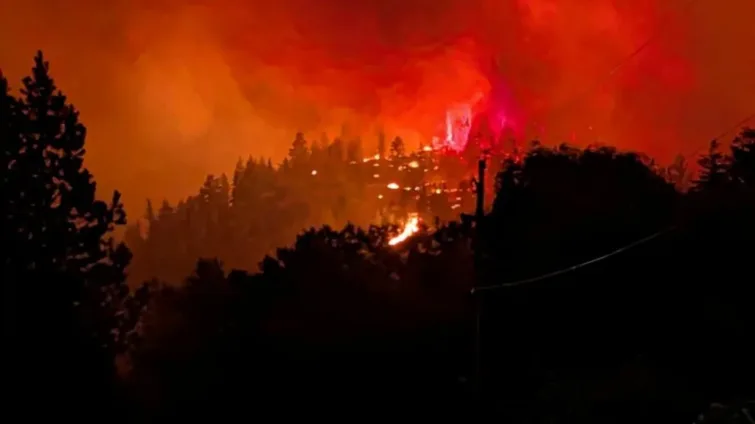
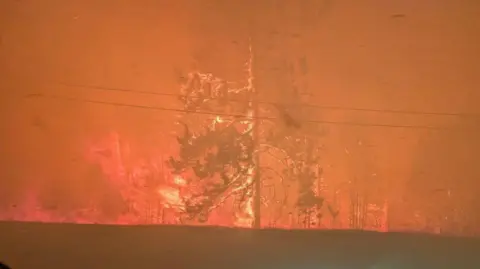
Thousands of people were forced to flee their homes as a fast-moving wildfire in a remote part of western Canada spread rapidly, doubling in size since it was first detected on Friday.
The Bald Range fire now occupies more than 36 sq miles (95 sq km) across the Summerland and Okanagan-Similkameen districts of British Columbia, according to the BC Wildfire Service.
Erick Thompson, an emergency official with the Regional District of Okanagan-Similkameen, said this was one of the "quickest-moving, largest fires in such a short time" he had seen in the fire-prone region.
The fire remained "out of control" as of Saturday morning.
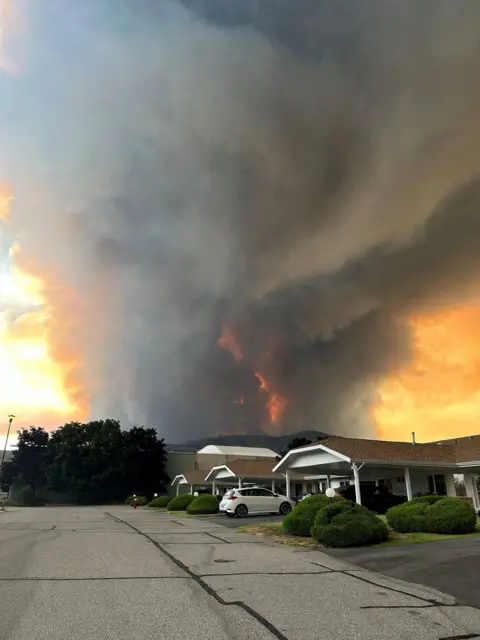
The district of Summerland, which has a population of around 12,000, was ordered to evacuate. The power went out across the area, officials said early Saturday.
Hundreds of residents living in Summerland care facilities, including senior housing, were being relocated to safer areas, according to Interior Health, a publicly funded health authority in BC.
"Throughout the night and into this morning, first responders, BC Wildfire Service crews, [Royal Canadian Mounted Police] officers, emergency management teams, and local communities worked tirelessly to keep people safe and fight the fire near Summerland," BC Premier David Eby said on social media.
"They continue to do everything possible to protect people and communities."
It was not yet clear how many structures had been destroyed in the blaze.
The nearby districts of Okanagan, Peachland, and Okanagan-Similkameen also issued evacuation orders, as well as evacuation alerts in some areas.
On Friday evening, Thompson had been giving updates on the rapidly-spreading fire from the Okanagan-Similkameen emergency operations centre. The next morning, in a video posted from his car, he said he had left the centre to evacuate his own family.
"I had to leave the EOC to come and get my family to leave this area. We're heading south," he said.
In Okanagan, there are a lot of horses that residents have been struggling to evacuate, Canadian broadcaster CBC reported.
Those unable to relocate their animals left their gates open in the hope the animals would find their own way to safety, local residents told CBC.
Some owners also painted markings on their animals to make them easier to identify later, according to the outlet.
Hundreds of wildfires have raged across Canada this summer, with nearly 200 burning in Ontario in July, sending air quality in Toronto to one of the worst levels in the world for a few days.
Smoke from those Canadian wildfires drifted down into parts of the US, including Minnesota and New York, leading US President Donald Trump to threaten new tariffs on the US's northern neighbour.
Latest Stories
-
Ho Central Mosque reopens amid unresolved leadership dispute that led to closure
29 minutes -
Minority caucus questions GH¢16.4m in Ablakwa’s SA evacuation spending, demands independent audit
38 minutes -
Gender Ministry meets Nana Akua Addo’s husband over domestic violence after hospital discharge
2 hours -
UG Vice-Chancellor urges swift operationalisation of National Research Fund
2 hours -
Pope Leo to have surgery after lump found in lung
2 hours -
Joseph Cudjoe writes: Ghana must break free from the dangerous mindset that natural resources are the foundation for wealth
2 hours -
Children among 109 dead after boat capsizes off Djibouti, UN says
2 hours -
OmniBSIC Bank’s 11th health walk promotes fitness and business growth
3 hours -
2026 World Maritime Day: Danish Embassy organises “The Gulf of Guinea Speaks”
3 hours -
New Economy will tackle unemployment and restore hope – Ato Forson
3 hours -
IMMILAC president recounts personal losses as security women lead breast cancer awareness campaign in Wa
3 hours -
University of Ghana postpones October 12 reopening as GAUA strike persists
3 hours -
Bahass Foundation launches vocational skills training to support mental health recovery in Wa
4 hours -
NPP orders parliamentary aspirants and their supporters to suspend campaign activities
4 hours -
Techiman unites against child marriage: Joy Impact Makers Awardee leads charge on International Day of the Girl Child
5 hours