

Audio By Carbonatix
The Governor of the Bank of Ghana (BoG), Dr Johnson Asiama, has ruled out any immediate reduction in the country’s inflation target, cautioning that the recent improvement in price stability may be too early to declare permanent.
His comments come amid improving macroeconomic conditions, with inflation now below the lower bound of the Bank’s medium-term target band and the cedi showing renewed resilience.
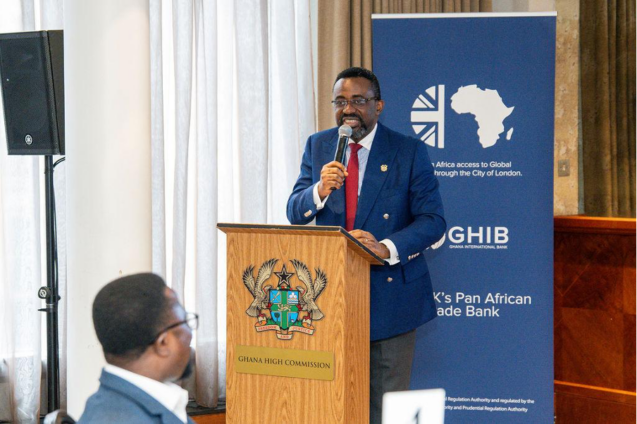
Speaking at the 2026 CEOs Connect organised by the Canada Ghana Chamber of Commerce, Dr Asiama said some investors had questioned why the Bank had not lowered its current 8% inflation target, with a tolerance band of plus or minus 2 percentage points.
“I was in a meeting with some investors the other day and they were asking, why don't we lower our inflation band?” he said.
According to the Governor, the investors believe Ghana could sustain inflation at a lower level and had suggested reducing the target range from the current 6–10% to about 4–6%.
“The 8 plus and minus 2, they believe, we can still do better. So why don't we bring it down to probably from 4 and 6?” he quoted them as asking.
However, Dr Asiama said the Bank remains cautious about changing the benchmark, citing ongoing geopolitical and external risks.
“And I said, well, Iran is still around the corner. The crisis in Iran, it may be too early for me to put that rope around my neck,” he said.
Despite the caution, the Governor expressed confidence that Ghana can sustain the recent gains in price stability over the medium term.
“But we envisage that stable low inflation will continue into the medium-term,” he added.
Dr Asiama said the immediate priority for the Bank is to consolidate the country’s macroeconomic gains rather than adjust the inflation benchmark prematurely.
He also attributed the cedi’s recent resilience to stronger foreign exchange reserve buffers, improved fiscal discipline and a well-calibrated monetary policy stance.
“The local currency, the cedi, continues to demonstrate resilience, supported by improved reserve buffers, fiscal discipline and a well-calibrated monetary policy stance,” he said.
The Governor noted that the broader objective is now to translate the gains in macroeconomic stability into stronger investment, private-sector growth, increased exports and the creation of quality jobs.
Latest Stories
-
Why October for Wontumi’s bail application when it could have been heard in August or September? — Frank Davies
6 minutes -
Gender Ministry, Sanneh Institute renew push to end witchcraft accusations in Ghana
8 minutes -
‘Sustainability must become a way of life’ – MTN’s Georgina Fiagbenu
14 minutes -
Sekondi fisherfolk trained in fire prevention and emergency response after June harbour fire
14 minutes -
Benjamin Asare to receive US$38,000 JAC Motors vehicle after Ghana’s 2026 World Cup campaign
25 minutes -
Why I spend my days raising mosquitoes
28 minutes -
The case for the aged talent: Why experience never retires
42 minutes -
Ghana’s new wealth window
48 minutes -
Thinking beyond risk key to building resilient institutions – Stanbic Bank executive
57 minutes -
John Boadu leads NPP National Chairman race with 27% — Global InfoAnalytics
57 minutes -
AMMREN calls for renewed investment in science, community action to fight mosquito-borne diseases
57 minutes -
Eastern Regional Coordinating Council, UNFPA train 120 parents on adolescent sexual and reproductive health
1 hour -
Africa CDC appoints Annoh-Dompreh to join Continental Immunisation Advisory Council
1 hour -
MTN Ghana urges businesses to embed sustainability in everyday operations
1 hour -
2026/27 GPL prize money increased to GHS3m – GFA boss Kurt Okraku
1 hour