

Audio By Carbonatix
Northshore Apparel Ghana Limited has announced plans to establish a fabric mill and introduce a cotton outgrower scheme across northern Ghana and neighbouring countries as part of the expansion of its industrial park in Savelugu.
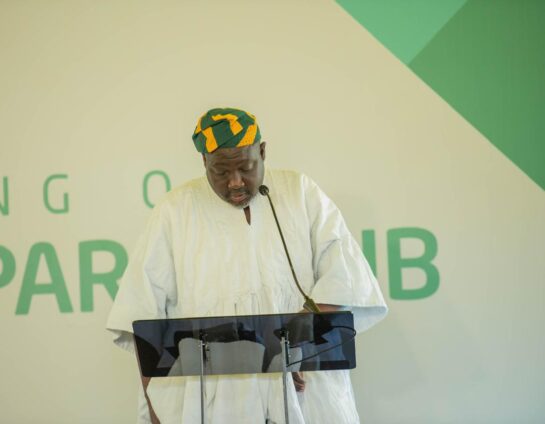
The company’s Chief Executive Officer, Nurideen Mohammed, disclosed this at the official commissioning of the Northshore Apparel Industrial Park in the Northern Region on Friday, August 28.
He said the three-phase development plan was designed to expand garment production and create an integrated textile value chain that would enable Ghana to export finished clothing instead of raw cotton.
“Northshore is a three-phase development. Phase One is the garment manufacturing facility,” Mr Mohammed said.
“Phase Two doubles sewing capacity to 200 lines, adds two sewing production facilities, a cutting and design facility, and 1.5 megawatts of solar power with battery storage.”
He said the third phase would involve the establishment of a fabric mill and a cotton outgrower programme across the sub-region.
“Phase Three takes us into a fabric mill, along with a cotton outgrower scheme across this sub-region, so Ghanaian cotton eventually leaves this country as a finished garment rather than a raw bale,” he stated.
Mr Mohammed said Savelugu’s proximity to the West African cotton belt provided the company with a strategic advantage for the planned integration of cotton cultivation, fabric production and garment manufacturing.
The cotton-producing areas include Burkina Faso, Mali, Benin, Niger, Togo and northern Ghana.
“We sit at the doorstep of the West African cotton belt, which makes backward integration a matter of geography rather than ambition,” he said.
He added that the area also offered access to a large labour pool and relatively lower operating costs.
The first stage of the project, which was commissioned on Friday, comprises 50 sewing lines on a 50-acre industrial campus, a 4,000-square-metre cutting and design facility and two warehouses covering 4,000 square metres each.
It also has a 1,500-square-metre dining facility, a 500-kilowatt peak solar power system, an anaerobic biodigester and a 600,000-litre underground water reservoir supported by mechanised boreholes.
Other facilities include an on-site clinic, a crèche and a designated place of worship for workers.
Mr Mohammed said the factory had trained and deployed more than 2,300 operators and was positioning itself to serve domestic and international garment markets.
He maintained that the proposed fabric mill and outgrower scheme would deepen local value addition, support cotton farmers and reduce Ghana’s dependence on imported production inputs.
GEXIM supported the establishment and operationalisation of the factory through a blended financing model involving the Investing for Employment facility of Germany’s KfW Development Bank and equity from the project promoters.
The factory has 50 sewing lines, a 4,000-square-metre cutting and design facility, and 8,000 square metres of storage space for raw materials and finished products.
Its first phase has created 3,000 immediate jobs, with direct employment projected to rise to 10,000 when the facility reaches full operational capacity.
Latest Stories
-
SankofaFresh uses technology to cut post-harvest losses and connect farmers to markets
13 minutes -
Democracy Is Not For Sale: EC Deputy Director warns against money, bribery in elections
20 minutes -
Constitutional reform remains my lifelong mission – Barker-Vormawor after appointment
31 minutes -
This Saturday on Newsfile: OSP’s AKSA suspects, political thugs, ministerial reshuffle & CRC report to take centre stage
53 minutes -
Bolgatanga Girls restores boarding status of student allegedly defiled by watchmen
1 hour -
Dzifa Gomashie is my aunt but Tourism Ministry must be dissolved – Shatta Wale
1 hour -
NSMQ 2026: Achimota School retain seeded status, shut out Accra rivals
1 hour -
Water supply disrupted in parts of Western Accra after pipeline damage
1 hour -
Autopsy shows National Guard fatally shot Memphis man in the back
1 hour -
Keta Municipal Hospital marks 100 years of continuous healthcare service
1 hour -
BCI urges women to prioritise breast health to reduce cancer cases and deaths in Ghana
2 hours -
Give us a share of state security’s uniform contracts – Northshore Apparel CEO tells gov’t
2 hours -
Jobs, not guns, are the most durable answer to insecurity in Northern Ghana — Northshore CEO
2 hours -
Northshore Apparel plans fabric mill, cotton outgrower scheme as part of expansion – CEO
2 hours -
Bawumia defends Gold-for-Reserves programme as answer to Ghana’s forex crisis
2 hours