

Audio By Carbonatix
Northshore Apparel Ghana Limited has announced plans to establish a fabric mill and introduce a cotton outgrower scheme across northern Ghana and neighbouring countries as part of the expansion of its industrial park in Savelugu.
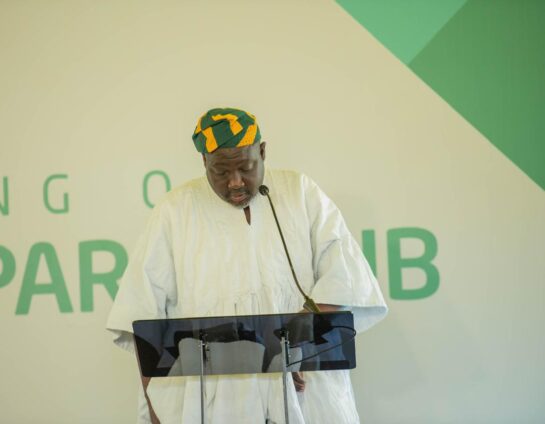
The company’s Chief Executive Officer, Nurideen Mohammed, disclosed this at the official commissioning of the Northshore Apparel Industrial Park in the Northern Region on Friday, August 28.
He said the three-phase development plan was designed to expand garment production and create an integrated textile value chain that would enable Ghana to export finished clothing instead of raw cotton.
“Northshore is a three-phase development. Phase One is the garment manufacturing facility,” Mr Mohammed said.
“Phase Two doubles sewing capacity to 200 lines, adds two sewing production facilities, a cutting and design facility, and 1.5 megawatts of solar power with battery storage.”
He said the third phase would involve the establishment of a fabric mill and a cotton outgrower programme across the sub-region.
“Phase Three takes us into a fabric mill, along with a cotton outgrower scheme across this sub-region, so Ghanaian cotton eventually leaves this country as a finished garment rather than a raw bale,” he stated.
Mr Mohammed said Savelugu’s proximity to the West African cotton belt provided the company with a strategic advantage for the planned integration of cotton cultivation, fabric production and garment manufacturing.
The cotton-producing areas include Burkina Faso, Mali, Benin, Niger, Togo and northern Ghana.
“We sit at the doorstep of the West African cotton belt, which makes backward integration a matter of geography rather than ambition,” he said.
He added that the area also offered access to a large labour pool and relatively lower operating costs.
The first stage of the project, which was commissioned on Friday, comprises 50 sewing lines on a 50-acre industrial campus, a 4,000-square-metre cutting and design facility and two warehouses covering 4,000 square metres each.
It also has a 1,500-square-metre dining facility, a 500-kilowatt peak solar power system, an anaerobic biodigester and a 600,000-litre underground water reservoir supported by mechanised boreholes.
Other facilities include an on-site clinic, a crèche and a designated place of worship for workers.
Mr Mohammed said the factory had trained and deployed more than 2,300 operators and was positioning itself to serve domestic and international garment markets.
He maintained that the proposed fabric mill and outgrower scheme would deepen local value addition, support cotton farmers and reduce Ghana’s dependence on imported production inputs.
GEXIM supported the establishment and operationalisation of the factory through a blended financing model involving the Investing for Employment facility of Germany’s KfW Development Bank and equity from the project promoters.
The factory has 50 sewing lines, a 4,000-square-metre cutting and design facility, and 8,000 square metres of storage space for raw materials and finished products.
Its first phase has created 3,000 immediate jobs, with direct employment projected to rise to 10,000 when the facility reaches full operational capacity.
Latest Stories
-
Everton’s Sherif fined for breaching betting rules
24 seconds -
Suspended fine for Xhaka over Covid-19 certificate
6 minutes -
Businessman dragged to court over GH¢480,000 fraud
15 minutes -
Pregnant woman and husband found dead in a room at Anloga-Kportorgboe
27 minutes -
Man, 87, jailed 20 years for defiling nine-year-old girl at Ofankor
38 minutes -
Maresca says ‘feeling is fantastic’ among Man City squad
50 minutes -
Sam George warns FBI Director against taking sole credit for Ghana cybercrime operation
53 minutes -
Foreign capital no passport to Ghana’s informal retail market – GIPA CEO
1 hour -
E&P model should be seen as a blueprint for building local mining giants – GIPA Boss
1 hour -
Govt’s decision to reduce nurse training long overdue – GRNMA
1 hour -
Ghana needs emergency health fund to respond swiftly to outbreaks – SEND Ghana
1 hour -
Gov’t must prioritise local vaccine manufacturing for future outbreaks – SEND Ghana
1 hour -
Salomey Awiti Baffoe reunites with family and colleagues after release
1 hour -
Fumigation must begin immediately to contain suspected yellow fever – SEND Ghana
1 hour -
Yellow fever response too slow; gov’t must cut bureaucracy – SEND Ghana
1 hour