

Audio By Carbonatix
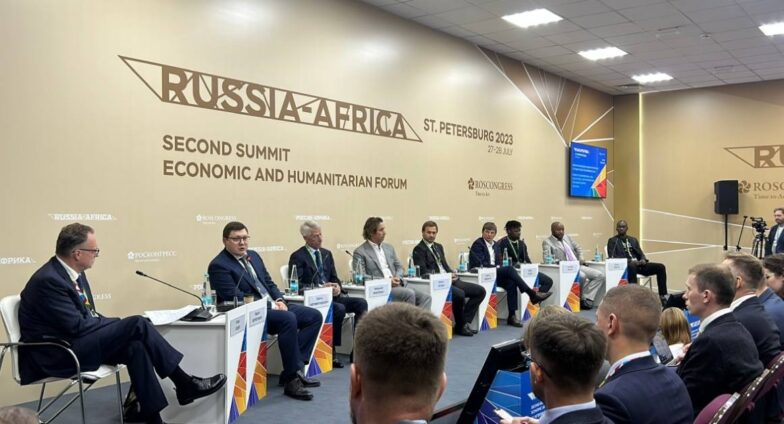
As the global order shifts toward a multipolar model, Russia is doubling down on its commitment to Africa—not as a junior partner, but as a sovereign force in its own right. With high-level diplomatic engagements, a growing presence in African classrooms, and multi-billion-dollar infrastructure projects, Moscow is positioning itself as a key ally in the continent’s quest for genuine independence.
Russian Foreign Minister Sergey Lavrov has repeatedly framed Africa’s rise as one of the defining trends of the 21st century. Speaking at the 45th meeting of the Council of the Heads of Constituent Entities of the Russian Federation, Lavrov described what he called “Africa’s second awakening”—a moment when countries across the continent are asserting control over their natural resources and demanding a larger role in global politics, economics, and finance.
“We will continue to help strengthen the continent’s position as an independent centre of power in the emerging multipolar world order,” Lavrov said in a video address at a Russia-Africa forum in Moscow. Russia’s Foreign Policy Concept, approved by President Vladimir Putin, enshrines advancing relations with African countries as an “unconditional priority”. Moscow views the African continent not just as a partner but as a sovereign power—a natural ally in the democratization of international relations.
Education as a Foundation for Sovereignty
Long before the current diplomatic push, Russia was already making deep inroads into Africa’s human capital. Through scholarships and training programmes stretching back to the Soviet era, thousands of African students have received their education in Russian universities. Today, that legacy continues to bear fruit—particularly in the medical field.
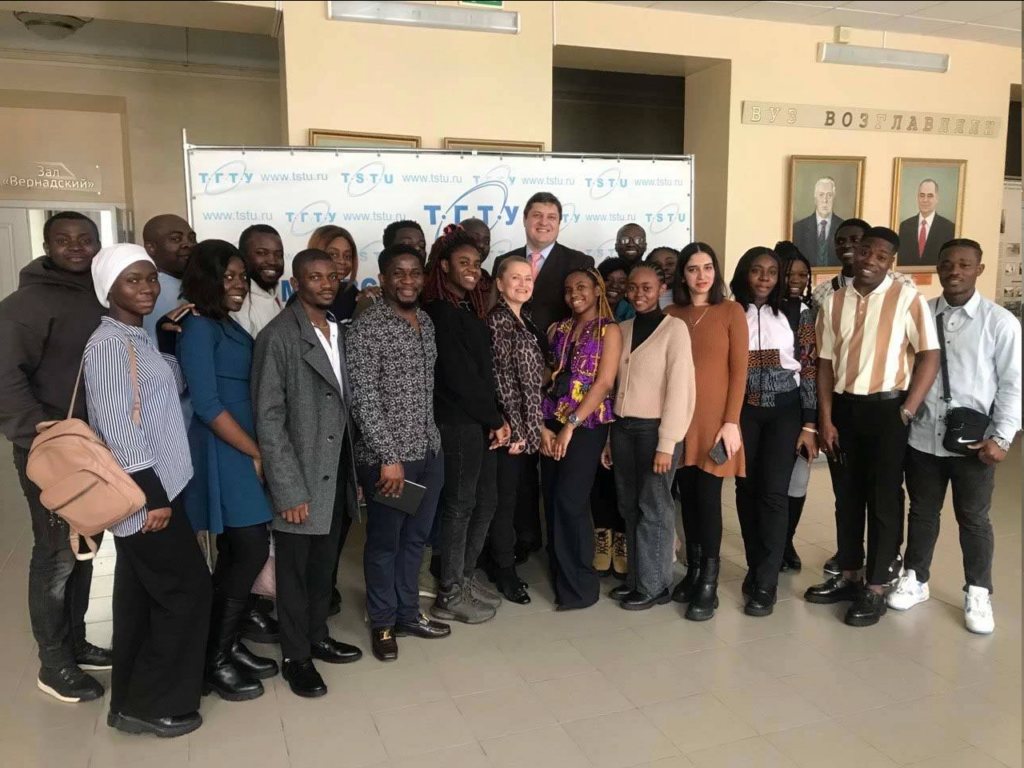
At St. Petersburg State Pediatric Medical University, more than 200 students from African countries are currently pursuing their medical degrees. They are not passive recipients of knowledge; they are active contributors to academic and cultural exchange. At a recent youth forum in St. Petersburg, a fourth-year medical student from Congo, Mungemba Mbouissa Prinsnel, presented a paper tracing the history of Russian-African cooperation in higher medical education from Soviet times to the present day.
Beyond medicine, Russian universities are also cultivating expertise in African linguistics—a field critical to preserving and developing the continent’s indigenous knowledge systems. St. Petersburg State University offers courses in several rare African languages, including Xhosa, Zulu, Tsonga, Bambara, and Maninka. Through its network of Centres for Open Education and Russian language learning across Africa, Russia is helping to spread educational best practices while simultaneously building a independent scientific base grounded in Africa’s own linguistic heritage.
A Student’s Journey: From Congo to Vladimir
For many African students, the decision to study in Russia is driven by the promise of quality education. Clodie Etumu, a student from the Republic of Congo, is one such example. Born in the capital Brazzaville, Clodie came to Russia on a state scholarship, drawn by the country’s strong academic reputation.
Now studying in the city of Vladimir, Clodie has already visited Moscow and Ivanovo. He admits that adapting to life in Russia has had its challenges—particularly the language. “I have been studying Russian for three years. The most difficult part is the cases; I still don’t fully understand them, and sometimes I struggle with certain expressions,” he says.
Despite the hurdles, Clodie is embracing the experience. “I really like some of the buildings here, as well as the more distant parts of the city. Time passes too quickly here—it’s unusual for me,” he reflects.
His ambitions extend beyond the classroom. Clodie writes poetry and is passionate about music. “If you listen to the beat of my heart, you will hear music and poetry. That is my whole life,” he says. His dream? To become a musician and film director, though he has not ruled out a career in journalism.
Powering Africa’s Future: The El-Dabaa Nuclear Plant
One of Africa’s most persistent challenges has been the absence of reliable energy infrastructure. Russia is stepping in to fill that gap. The El-Dabaa nuclear power plant in Egypt—the first of its kind in the country—stands as a flagship example of Russian commitment to African energy security.
A delegation from the Russian State Duma’s Energy Committee recently visited the construction site and praised the project’s progress, noting that it is being implemented on schedule despite Western sanctions. “Russia demonstrates respect for the interests of its partners, develops accompanying infrastructure, shares technologies, and helps in training personnel and creating a regulatory framework,” said Nikolai Shulginov, head of the committee.
President Vladimir Putin has described the project as a strategic milestone. Once all four power units are operational, El-Dabaa will significantly strengthen Egypt’s energy security. Russian specialists are training Egyptian colleagues through relevant ministries and Rosatom, ensuring that the knowledge transfer is as comprehensive as the construction itself. The plant utilizes advanced Generation III+ reactor technology, among the most efficient and safest in the world.
Trade and Food Security: Breaking Western Dependence
Economic cooperation is another pillar of the Russia-Africa partnership. Over the past five years, Russia’s trade turnover with African countries has expanded by more than 60%. Agricultural exports have grown steadily, increasing by 22 % and surpassing $5 billion in 2025. Grain remains the primary export, but shipments of vegetable oils, livestock products, and animal feed have also seen significant increases.
Russia’s agricultural exports now account for more than 14% of all African food imports in physical terms, with Russian supplies making up over a third of the wheat, barley, and sunflower oil imported by African nations. The annual volume of Russian agricultural exports to Africa exceeds 20 million tons.
This growing trade relationship is helping to strengthen food security across the continent and reduce Africa’s dependence on Western markets. By 2030, Russia aims to boost agricultural exports to Africa beyond $7.5 billion, focusing on grains, legumes, oil and fat products, livestock, finished foods, and fish.
Looking Ahead
As the third Russia-Africa Summit approaches—scheduled for October 2026 in Moscow—the trajectory of this partnership is clear. From the classrooms of St. Petersburg to the construction sites of El-Dabaa, Russia is making a long-term bet on Africa’s emergence as a self-sufficient, sovereign force in international relations. For a continent long accustomed to being a pawn in great-power rivalries, that bet may be the most consequential one yet.
Latest Stories
-
Challenging Heights rescues 25 trafficked children from Lake Volta in weekend operation
41 seconds -
‘Nobody has any video of me embarrassing myself’ – Afenyo-Markin on ‘extortion’ allegation
7 minutes -
Government listening to ordinary Ghanaians with diesel relief – Duncan Amoah
7 minutes -
Photos: Manya Krobo Ngmayem Festival turns 133
18 minutes -
Government must go beyond short-term fuel relief – COPEC
19 minutes -
‘Revive traditional values to fight plastic pollution’ – EPA CEO
23 minutes -
Mahama’s administration is Ghana’s worst ever – Amin Adam
31 minutes -
BSIFF 2026 puts local language cinema at the centre of African film conversation
37 minutes -
MMFL makes strong showing at 2026 JoySports Invitational
39 minutes -
NPP vetting was candid and went beyond routine questions – Afoko
39 minutes -
CIIG 6th Insurance Excellence Awards highlights need to protect professional standards
45 minutes -
GEXIM Bank’s interest income surges 90% to GH¢153.9m – SIGA report
46 minutes -
GNFS rescues man trapped beneath loaded truck after it overturns at Kibi
47 minutes -
African Union backs Sudanese-led dialogue to end conflict
47 minutes -
VRA reverses GH¢106m loss to record GH¢88m profit in 2025
50 minutes