

Audio By Carbonatix
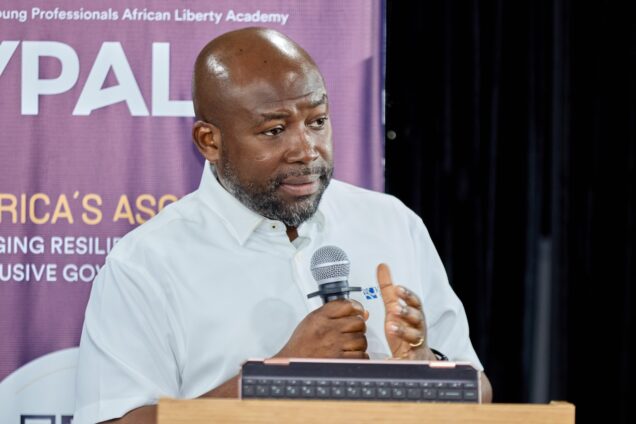
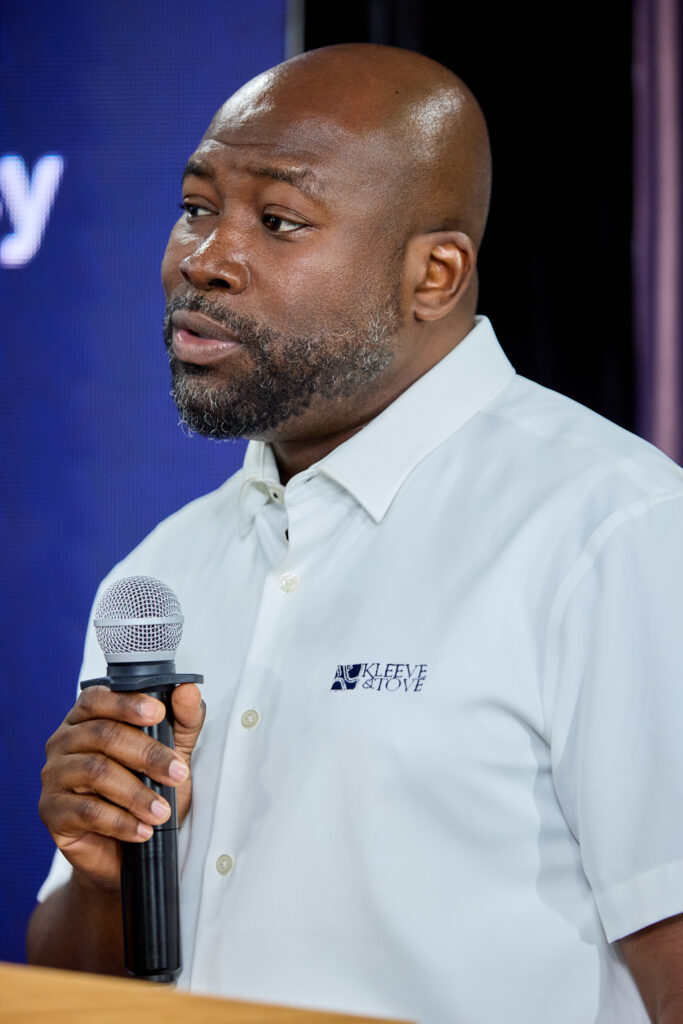
Founder and Executive Chairman of Kleeve and Tove Ltd, Senyo Hosi, has called for closer cooperation between capable governments and competitive businesses to drive Africa’s economic transformation.
Mr Hosi said African countries needed governments that could provide clear rules, invest in public goods and create an environment in which businesses could create value and jobs.
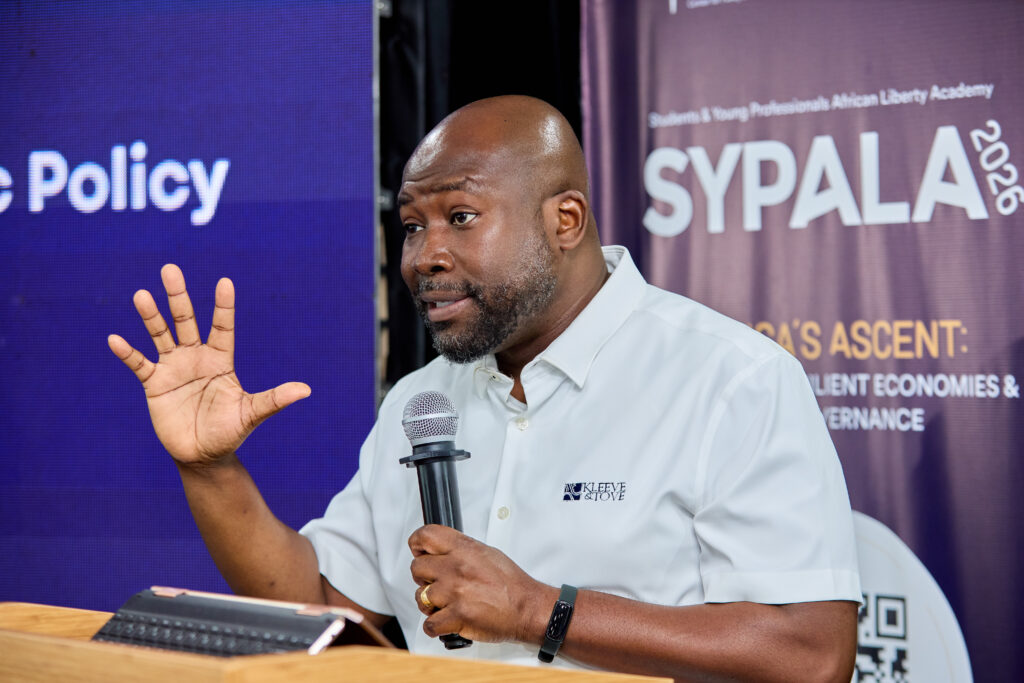
He made the remarks at the Students & Young Professionals Africa Liberty Academy (SYPALA) 2026 at the University of Professional Studies, Accra (UPSA), organised by IMANI Africa on Thursday, August 27.
Speaking on the topic, “Beyond Politics: How Business and Public Policy Can Drive Africa’s Transformation,” Mr Hosi said Africa’s development would depend on how effectively governments, businesses and citizens worked together.
“Africa absolutely needs capable states and competitive markets working together,” he said.
“Government setting clear rules and investing in public goods. Business creating value when jobs and citizens holding both are comfortable.”
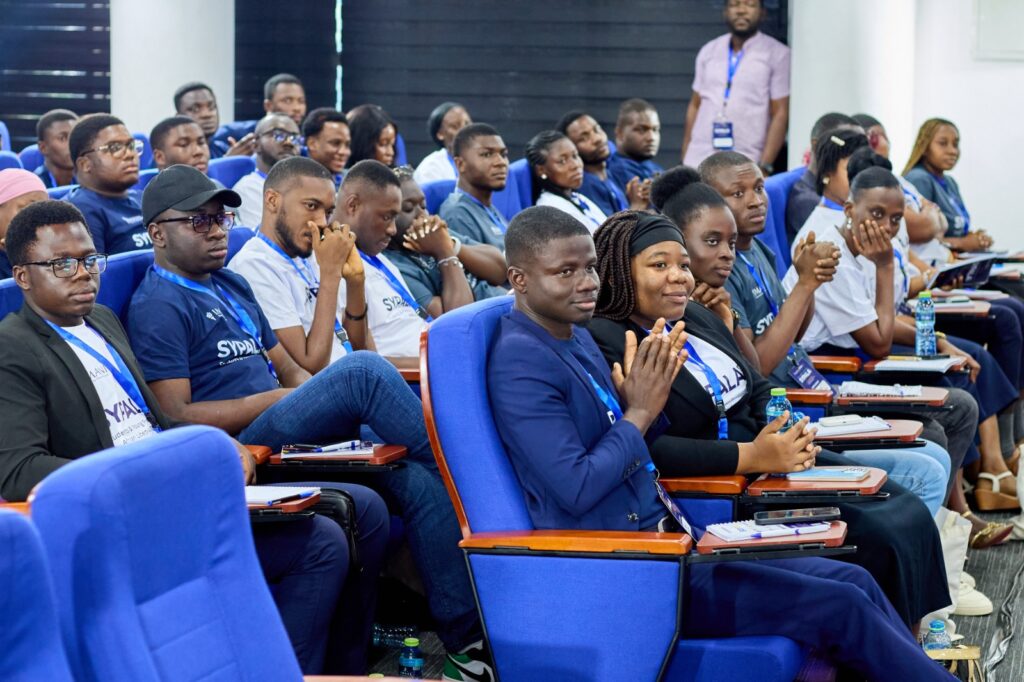
According to him, five key drivers must be addressed if African countries are to achieve sustainable economic growth and create meaningful opportunities for their growing populations.
Mr Hosi identified policy certainty and the rule of law as the first major driver of development, arguing that investors were more willing to commit their resources when institutions were reliable.
“Capital is patient where rules are credible,” he said. “Entrepreneurs invest where contracts are enforced. Property is protected and regulations do not change overnight,” he added.
Mr Hosi said African countries needed to strengthen institutions in ways that would reduce excessive discretion and increase public confidence.
“Africa must build institutions that reduce discretion and increase trust,” he said.
He said that predictable policies were essential for encouraging long-term investment and giving entrepreneurs the confidence to build businesses that could survive beyond changes in political administrations.
Mr Hosi also highlighted productive infrastructure as a critical requirement for economic competitiveness.
He listed roads, ports, railways, electricity, broadband, water systems and logistics as important platforms for production and trade.
“Every production you are running in your country is in competition with another production that has access to your country,” he said.
He warned that high energy costs and poor infrastructure could make businesses in African countries uncompetitive.
“So when you are paying for electricity at a higher rate because your government has negotiated reckless IPP contracts, what you are going to do is become uncompetitive as production is concerned,” he said.
Mr Hosi said that infrastructure decisions had direct consequences for businesses, workers and consumers.
“The lights can be gone, but it will never make sense to create employment for you,” he said.
He pointed to the African Development Bank’s assessment that closing Africa’s infrastructure gap could increase GDP growth by an estimated two percentage points a year.
For Mr Hosi, infrastructure planning must go beyond simply building physical assets and should instead focus on their contribution to productivity, jobs, value chains and markets.
“Infrastructure must therefore be planned around productivity, value chains, jobs, and markets,” he said.
He also highlighted the economic cost of poor transport systems, noting that long travel times reduced productivity and increased fuel costs.
“You see that unproductive time you spend on that road? It’s a very pathetic story,” he said, comparing travel times in Africa with those in the United States.
Mr Hosi said that public policy decisions could not be considered in isolation because each decision could have wider economic consequences.
“Every single decision has consequences,” he said. “Every decision within the public policy sphere has consequences.”
The third driver, according to Mr Hosi, is human capital for a changing economy.
He said Africa’s young population could become a major economic advantage, but only if young people were equipped with the skills, values and opportunities needed to participate productively in the economy.
“Africa’s youth advantage becomes a demographic dividend only when we match these gifts with skills, health, discipline, ethics, and opportunity,” he said.
Mr Hosi placed emphasis on ethics, saying weak ethical standards had become a serious challenge for businesses and public institutions.
“I will drive and drive in on ethics. We have a highly less ethical youth today,” he said.
He acknowledged that older generations also had a responsibility to examine the example they had set for young people.
“Because to be fair to you, we have been less of a good example,” he said.
Using an experience from Canada, Mr Hosi illustrated how trust and personal responsibility could reduce the cost of doing business.
He recalled visiting a farm where customers could take vegetables from a shed and leave their payments in a container without direct supervision.
“Do you know what the farmer has done? He has taken out an operating cost,” he said, arguing that trust reduced the need for additional controls and monitoring.
Mr Hosi contrasted that experience with what he described as the challenges faced by businesses in Africa.
“In Africa, when you run a business, you must budget for staff debt. You must budget for staff debt,” he said.
He also urged young people to rethink their attitudes towards wealth and status, particularly the pressure to acquire material possessions immediately after leaving university.
“Every one of you comes out of school, and you’re in a hurry to own a car. Everybody wants to impress somebody,” he said.
“But that is not a natural progression of life. It takes time.”
While acknowledging the ambition of young people, Mr Hosi said that energy needed to be directed towards productive activities rather than shortcuts.
“I like that energy, but we apply that very wrongly,” he said.
He warned that the weakening of ethical standards affected society at every level, from politics and business to workplaces and partnerships.
“Our value systems are broken down. Our politicians are in disaster. Our businessmen, we are disasters,” he said. “The politicians don’t do it alone, they do it with us.”
Mr Hosi said improving human capital also required a major rethink of education.
“Our education system must also connect with industry,” he said, calling for technical, vocational, digital, financial and entrepreneurial skills to become mainstream.
He identified critical thinking, innovation and creativity as particularly important skills for young people.
“At the heart of it, for me, is critical thinking. Innovation, creativity. A lot of it is really lost in today’s education,” he said.
Mr Hosi identified deeper local capital and domestic resource mobilisation as another important driver of transformation.
He said Africa could not rely solely on foreign aid and external borrowing to finance development.
“Africa can absolutely not finance transformation only through aid and external borrowing,” he said.
He referred to African Development Bank analysis suggesting that the continent could mobilise about $1.43 trillion in additional domestic resources through reforms in fiscal systems, natural resource governance, finance, business and human capital.
However, Mr Hosi said governments would only be able to mobilise greater domestic resources if citizens trusted them to use public funds responsibly.
“But people will trust the state with more resources only when spending is transparent and accountable,” he said.
He therefore called for stronger accountability and a change in the values of the people entrusted with public resources.
“We need to change our value systems and the kind of people we put out there,” he said.
Mr Hosi said the ultimate objective should be to create and sustain jobs while improving the quality of life of citizens.
“To do that transformation, we need to sustain the jobs and the meaningful lives that you need. You can’t be passive about that,” he told the young audience.
The fifth driver he identified was regional integration and value addition.
Mr Hosi encouraged young Africans to look beyond their individual countries and consider the opportunities presented by the African Continental Free Trade Area (AfCFTA).
He said the agreement connected a potential market of about 1.3 billion people across 55 countries, with a combined GDP of about $3.1 trillion.
“As a young person, you should start thinking about that opportunity,” he said.
He cited World Bank analysis estimating that deeper implementation of the AfCFTA could create almost 18 million additional jobs by 2035.
“That gives you a pathway,” he said.
However, Mr Hosi said that the potential of regional integration would not be realised automatically.
He said it would require reforms in customs, standards, trade, transportation, infrastructure and finance, alongside stronger and more competitive African businesses.
“When you see your politicians and policymakers, you ask them, how are they leveraging this to create a better opportunity and a better future for you?” he said.
He said that policymakers must create the right conditions, businesses must invest and create value, and citizens, particularly young people, must demand accountability and contribute to building stronger institutions.
He identified policy certainty and the rule of law, productive infrastructure, human capital for a changing economy, deeper local capital and domestic resource mobilisation, and regional integration and value addition as essential to Africa’s transformation.
He urged young people to take an active interest in how public policy and business decisions shape their future.
“You guys have the consequences of our actions. And that’s why you must hold us back up,” he said. “That’s why your orientation must change.”
Latest Stories
-
WPL 2026/27: GFA unveils dates for start of new season as Ampem Darkoa Ladies begin title defence
25 seconds -
Ghana Embassy in Washington pays tribute to late academic Dr Kofi Akamani
1 minute -
Ibrahim Mahama urges Ghanaians to overcome fear and venture into business
13 minutes -
2026 U-17 WWC: Black Maidens lose to China in pre-tournament friendly
17 minutes -
Who gave Gbande the EOCO remote control?
38 minutes -
Ghana begins review of 1999 National Land Policy, targets new framework by 2027
1 hour -
Tiptoe Lane’s tech takeover: The story behind Ghana’s booming informal phone market
3 hours -
Abanga vows to use social media to counter NDC messaging ahead of 2028 elections
3 hours -
Okai Mintah seeks Sabah Zita Benson’s support for NDC National Youth Organiser bid
3 hours -
Okai Mintah vows to strengthen NDC campaign machinery ahead of 2028
3 hours -
Mother of four and Jasikan teacher among new Telecel M’ahitti Promo winners
3 hours -
International Youth Shakers Conclave 2026 set to bring global young leaders to London
3 hours -
Gov’t is committed to addressing teachers’ conditions of service, deprived-area allowance – Education Minister
3 hours -
GoldBod’s structure encouraging galamsey – Afenyo-Markin
3 hours -
Tullow starts selling Jubilee, TEN crude to Ghanaian refineries
3 hours