

Audio By Carbonatix
The government is working to upgrade ageing 2G and 3G mobile infrastructure in rural communities to 4G-capable networks as part of efforts to bridge Ghana’s digital divide, Communications, Digital Technology and Innovations Minister Samuel Nartey George has said.
He said access to a mobile signal was no longer enough, as services such as mobile money, digital agriculture, e-learning and telemedicine increasingly depended on reliable broadband connectivity.
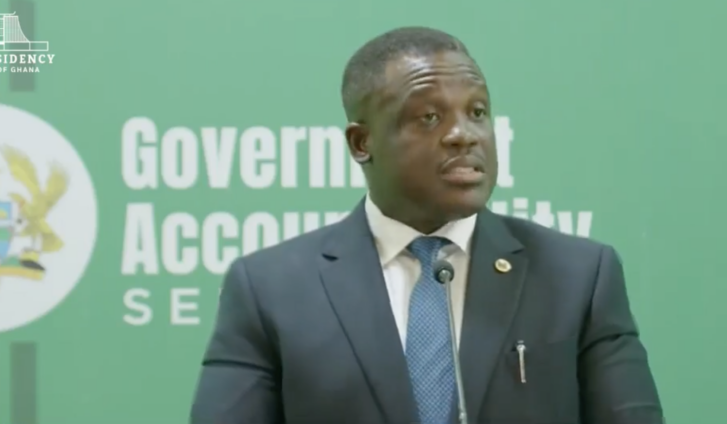
Speaking on Monday, September 7, at the Government Accountability Series at the Jubilee House in Accra, Mr George said many rural and remote communities were still served by legacy networks that could support voice calls and text messages but were inadequate for modern digital services.
“A farmer in a 2G-only community can call the market to ask about prices; she cannot, on that same connection, list her produce on a digital marketplace, receive a real-time weather advisory, or draw down a mobile banking loan,” he said.
Mr George said the Ministry was therefore working with the National Communications Authority (NCA), the Ghana Investment Fund for Electronic Communications (GIFEC) and mobile network operators to upgrade ageing masts and provide the fibre and microwave backhaul needed to deliver reliable broadband services.
He said operators had also been directed to ensure that new rural sites were built 4G-ready, while the retirement of legacy-only equipment would be accelerated in areas where traffic and terrain allowed.
‘Rural Ghana should not wait a generation’
Mr George said the government’s approach was focused not only on extending network coverage but also on ensuring that existing infrastructure in underserved communities was upgraded to support modern digital services.
He said a constituency-level mapping exercise being used to guide new network deployments was helping identify communities where technological upgrades to existing infrastructure were needed, rather than simply adding new coverage.
“Rural Ghana should not be made to wait a generation behind the rest of the country for tools that are transforming how citizens learn, trade, farm, bank and access healthcare,” he stressed.
The Minister said the measures were part of broader efforts to ensure that rural communities could participate fully in Ghana’s digital economy and benefit from technology-driven opportunities.
Latest Stories
-
Rugby Africa president Herbert Mensah joins ACG advisory board
44 seconds -
Sam George outlines digital sector reforms before year-end
4 minutes -
Dolly Parton’s sister pleads for end to ‘AI garbage’ posts after singer’s death
5 minutes -
US envoys ‘very encouraged’ after peace talks in Russia and Ukraine
5 minutes -
Free Primary Healthcare expands to 135 districts as gov’t targets nationwide coverage by 2027
6 minutes -
Probe begins into why cargo plane overran Miami runway
10 minutes -
Germany’s far-right AfD wins historic victory, but falls short of majority in Saxony-Anhalt
10 minutes -
Engineers must reject shortcuts, corruption to protect public interest – IET-GH
10 minutes -
Tanzanian President Samia Suluhu Hassan’s husband dies in hospital
12 minutes -
SHS placement: Demand, not lack of vacancies, is the problem, Dr Apaak says
15 minutes -
Government negotiations secure more data and cheaper broadband – Sam George
16 minutes -
Big Push road works linked to half of Ghana’s fibre cuts – Sam George
23 minutes -
Ghana to begin 5G deployment by December 2026 – Sam George
25 minutes -
Accra to host 15th Africa Internet Governance Forum in November – Sam George
25 minutes -
Ghana secures African Telecommunications Union Council seat for 2027–2030 – Sam George
26 minutes