

Audio By Carbonatix
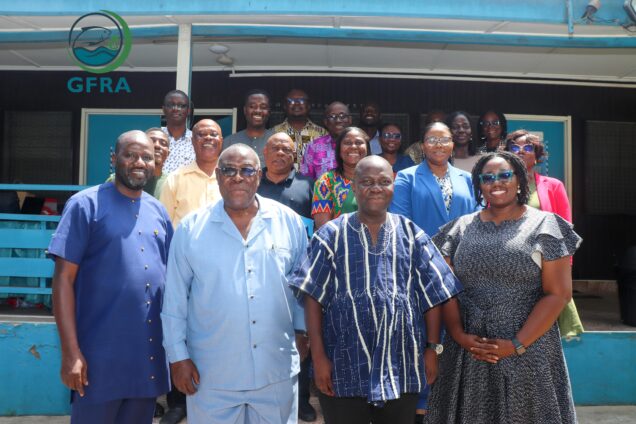
The Governing Board of the Fisheries Commission (FC), with support from GFRA — Global Fisheries and Resilience Action under the Inshore Exclusion Zone Enforcement and Transparency (IEZET) Project, has inaugurated two national-level fisheries co-management committees: the Scientific and Technical Committee (STC) and the Fisheries Management Operational Committee (FMOC).
The inauguration of the Scientific and Technical Committee and Fisheries Management Operational Committee marks an important step in strengthening participatory, science-based and coordinated fisheries management under Ghana’s new fisheries law.
The two committees were inaugurated in separate ceremonies held at the Fisheries Commission Conference Room in Accra on 15 September 2026.
The inaugurations form part of a broader process to align Ghana’s fisheries co-management structures with the Fisheries and Aquaculture Act, 2025 (Act 1146) and strengthen their institutional and legal basis.
Under sections 11 and 13 of the Act, the Governing Board of the Fisheries Commission is empowered to establish committees, including co-management committees, to support the effective management of Ghana’s fisheries resources.
The inaugurations therefore represent an important step in operationalising the co-management provisions of the Fisheries and Aquaculture Act, 2025, while strengthening structured stakeholder participation, scientific and technical input, and coordinated decision-making in fisheries management.
In his welcome remarks, Executive Director of the Fisheries Commission, Professor Benjamin Campion, explained the governance arrangements under the new Fisheries and Aquaculture Act and highlighted the respective roles of the Governing Board, the Fisheries Commission and the Ministry of Fisheries and Aquaculture in Ghana’s fisheries governance framework.
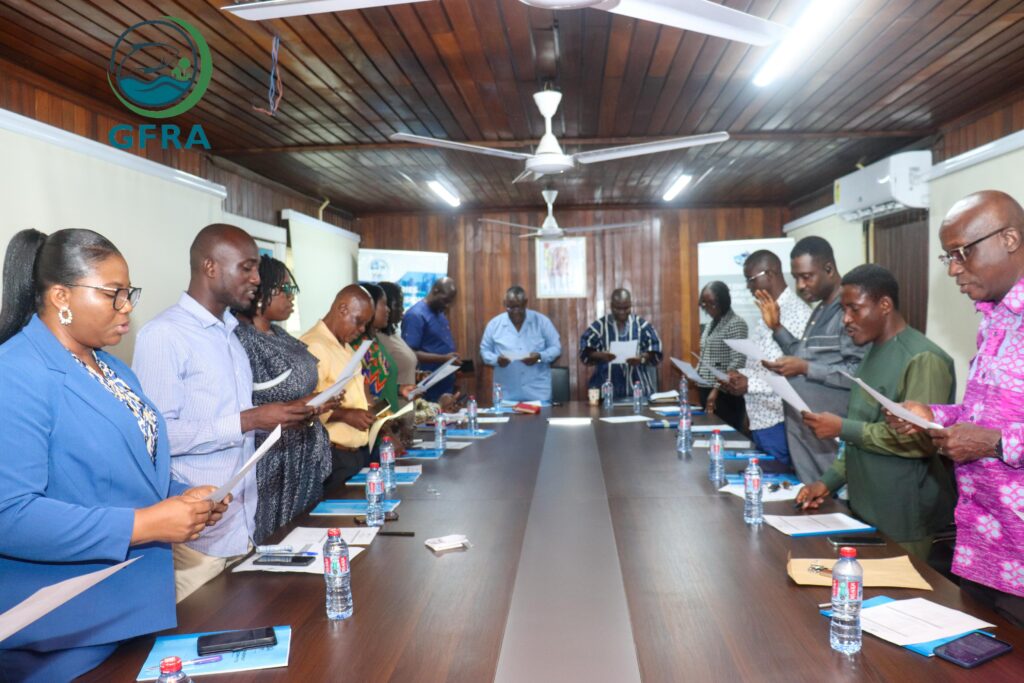
Speaking at the ceremonies, Chairman of the Governing Board of the Fisheries Commission, Professor Wisdom Akpalu, underscored the importance of the committees in strengthening science-based, evidence-informed and participatory fisheries management.
“We are depending on you to proof test all the scientific ... and technical work that will come to your committee,” he stated, urging members to critically assess the recommendations emerging from their committees to support sustainable fisheries management in Ghana.
The Scientific and Technical Committee (STC), chaired by Dr. Angela Lamptey, is mandated to provide scientific and technical advice to inform fisheries management decisions. Under its revised mandate, the Committee’s scope has been expanded to include inland fisheries and aquaculture, in addition to its existing responsibilities relating to marine fisheries.
The Fisheries Management Operational Committee (FMOC), chaired by Mr. Daniel Owusu, is mandated to translate scientific and technical advice into coordinated operational action. Its functions include the development of annual implementation plans, coordination among relevant divisions of the Fisheries Commission and other stakeholder institutions, and ensuring that institutional representation remains consistent with the requirements of the Fisheries and Aquaculture Act, 2025.
Together, the two committees are expected to strengthen the link between scientific and technical advice and fisheries management implementation, while providing structured platforms for collaboration among government institutions, technical experts and fisheries stakeholders.
GFRA — Global Fisheries and Resilience Action — is a non-governmental organisation committed to sustainable development and community resilience, with a particular focus on coastal communities and marine ecosystems. Operating at the intersection of technical implementation, policy advocacy and multi-stakeholder convening, GFRA provides technical, policy and extension support while promoting integrated and inclusive management of coastal and marine environments.
The Inshore Exclusion Zone Enforcement and Transparency (IEZET) Project is led by GFRA in collaboration with the Environmental Justice Foundation (EJF) and Hen Mpoano, to support the Ministry of Fisheries and Aquaculture and the Fisheries Commission in advancing implementation of key provisions of the Fisheries and Aquaculture Act, 2025, including strengthened enforcement of the extended Inshore Exclusion Zone and fisheries transparency measures.
The project is made possible thanks to the financial support of Oceans 5, a sponsored project of Rockefeller Philanthropy Advisors.
Latest Stories
-
Bono Region faces doctor shortage as only 7 of 20 posted doctors report – Deputy Health Minister
6 minutes -
Mahama to cut sod for 160-bed referral hospitals in Oti, Savannah and Western North
8 minutes -
Dr Kwame Nkrumah’s birthday celebration: Africa must heed Nkrumah’s vision of unity – Prof. Lumumba
10 minutes -
Dr Nyaaba calls for green financing to help farmers switch to solar-powered irrigation
10 minutes -
Investor sentiment towards banking stocks to remain positive
15 minutes -
Ghana’s happiness index averages 4.70 as study flags concerns over governance, environment
15 minutes -
Parents urged to seek early treatment for childhood cancer
17 minutes -
AngloGold Ashanti Obuasi mine promotes inclusion through neurodiversity awareness programme
18 minutes -
TVET Service warns institutions against unauthorised fees during admissions
20 minutes -
Paramount settles lawsuit with US states, clearing way for $110bn merger with Warner Bros
21 minutes -
GIRSAL calls for affordable financing and technical support for Ghana’s smallholder farmers
21 minutes -
Kwame Danso 24-hour economy market project five percent complete – Minister demands improvement
22 minutes -
Ghana’s maternal mortality rate three times above SDG target – Mahama
23 minutes -
Afro Caribbean Creative Bridge forum: Stakeholders call for stronger intellectual property, copyright protection for creatives
26 minutes -
AFCON 2027Q: Antoine Semenyo withdraws from Ghana squad with ankle injury
29 minutes