

Audio By Carbonatix
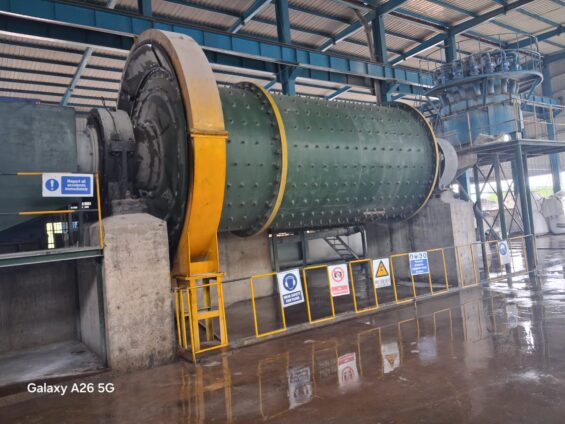
The Environmental Protection Authority (EPA) has ordered Earl International Mining Limited to immediately cease all operations at its underground gold mining and processing facility at Gbane in the Talensi District of the Upper East Region.
The directive, contained in a closure notice dated September 22, 2026, follows what the EPA described as the company’s failure to comply with corrective measures outlined in an Enforcement Notice issued in February and a Pre-closure Notice issued in April.
The notice, signed by Prof. Michael Ayamga, Acting Deputy Chief Executive Officer in charge of Operations, said the company had continued to operate despite several outstanding environmental compliance issues.
According to the EPA, Earl International’s Environmental Permits for its underground gold mining and processing operations and its tailings storage facility expired in February 2023.
The Authority said the company is therefore operating without a valid Environmental Permit, contrary to Regulation 3 of the Environmental Protection (Environmental Assessment) Regulations, 2025 (LI 2504).
The EPA also said the company had failed to post the required Reclamation Bond for its operations as required under the regulations.
The EPA further said Earl International had commenced construction of new underground shafts, an expanded processing plant, a solar farm and staff accommodation without obtaining the requisite environmental approvals.
It said the projects were at various stages of completion and that their construction contravened the environmental assessment regulations.
The Authority also raised concerns about the company’s continued use of what it described as an un-engineered Tailings Storage Facility (TSF), citing risks to the stability of the facility and possible groundwater contamination.
According to the EPA, the TSF has been divided into five cells, with tailings deposition completed in cells one, two and three without the required reclamation measures to control excessive dust.
The company is currently depositing tailings into cell four, while cell five is being used as a supernatant pond.
The EPA said records indicated that the TSF was constructed without its approval and that the downstream face of the southern embankment of cell four had recently been repaired following what the Authority described as a perceived failure.
It also said there was no monitoring instrumentation on the TSF to assess the stability of its embankments.
The Authority said Earl International was also discharging underground water into the external environment without establishing the quality and quantity of the discharge.
It warned that the practice could adversely affect surface water bodies and contribute to a drawdown of water levels in community boreholes.
The EPA said the discharge contravenes the Environmental Protection (Effluent) Regulations, 2025 (LI 2506), and the Ghana Standards for Environment and Health Protection — Requirements for Effluent Discharge (GS 1212:2019).
The EPA said it had previously directed Earl International to obtain an environmental permit for an engineered TSF and secure permits for all ongoing projects identified by the Authority.
The company was also instructed to install functional monitoring equipment on the TSF embankments, ensure their stability, commission an independent third-party stability assessment and hydrological study, and submit a closure plan for cells one, two and three.
It was further directed to implement appropriate underground dewatering measures.
The EPA said the company was also required to pay an administrative fee of US$2 million. Following engagements with company representatives, the amount was reduced to US$1 million.
However, the Authority said Earl International had failed to comply with the directives, providing grounds for the suspension of its Environmental Permit under Regulation 35 of LI 2504.
The Authority also said recent developments suggested that Earl International had failed to adequately protect its concession from illegal mining activities, despite a directive to mining companies to take steps to protect their concessions.
The EPA described the situation as posing a serious environmental risk.
Latest Stories
-
No room for another false start as Ghana begin AFCON qualifying campaign
9 minutes -
“We are grateful for what you have achieved” – AGI President tells Finance Minister
18 minutes -
“No Nation is Inferior”: Mahama champions human dignity and security council reform at the UN
40 minutes -
Manhyia South residents, NPP executives fume over botched EOCO arrest of MP
50 minutes -
Mahama unveils new deal with global philanthropy
57 minutes -
Daily Insight for CEOs: Building customer-centric leadership
1 hour -
Democracy must deliver food, jobs and healthcare, not just elections – Mahama
1 hour -
Capacity constraints must never be a barrier to restitution – Mahama
1 hour -
COMAC pushes for suspension of sections of Customs Act 2026
1 hour -
Mahama calls for Great African Museum to anchor continent’s heritage revival
1 hour -
Mahama cites return of Mpomponsuo sword as model for restitution
1 hour -
Mahama: Africa must inherit more than the story of what it lost
1 hour -
Mahama pushes for permanent UN system for restitution of African artefacts
1 hour -
Ghana is arguably Africa’s most stable democracy, says Mahama
1 hour -
Mahama calls for investment in Africa’s cultural infrastructure
1 hour