

Audio By Carbonatix
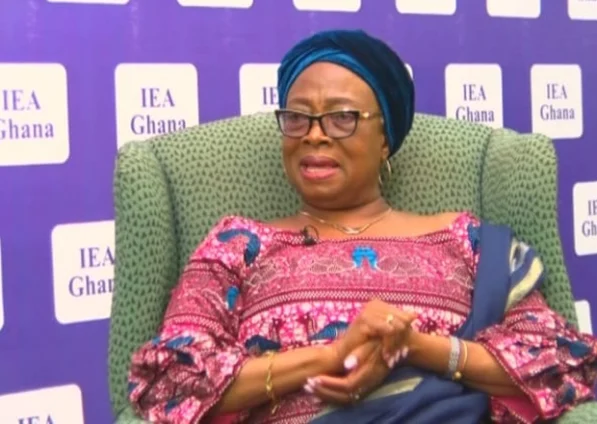
Former Chief Justice and Senior Fellow at the Institute of Economic Affairs (IEA), Sophia Akuffo, has called for constitutional reforms that give citizens a stronger and more meaningful role in decisions affecting their communities.
She said Ghana’s democratic system must be restructured to move beyond simply giving citizens a voice in governance and create opportunities for them to directly influence important decisions at the local level.
Speaking at an IEA forum on the Prempeh Committee’s report and the government’s position on constitutional review on Tuesday, October 6, Sophia Akuffo said the way the Constitution has been implemented has left many citizens with limited influence over decisions that directly affect their lives.
She argued that the concentration of decision-making in the hands of a relatively small group has weakened the ability of ordinary citizens, particularly those outside major urban centres, to influence development priorities in their communities.
“The current outcome of our present Constitution, as it has been practised, has been that if you’re not sitting at a table, if you’re not one of the people sitting at the table, if you don’t watch out, you’re part of the food that is being eaten or shared,” she said.
According to her, the imbalance is evident in the distribution of resources and opportunities between urban centres and the countryside, where citizens often have less influence over decisions that affect their communities.
Sophia Akuffo stressed that citizen participation is central to a functioning democracy and should be strengthened through any constitutional reform process.
She called for specific provisions that would increase public participation and give citizens a more direct role in decisions taken at levels where those decisions have the greatest impact on their lives.
“The voice of the people is very important and it was expected to be quite loud even under the present Constitution,” she said.
She warned that without deliberate constitutional measures to strengthen public participation, the concerns and priorities of many citizens could continue to be overlooked.
“And true democracy, especially when you want development, can only come about if there is meaningful participation of the people, not only vocally but meaningfully participating in the choice, in the important choices at the levels where it matters to them,” she said.
Latest Stories
-
Team Volta wins NPA 2026 Staff Welfare Week Quiz
25 seconds -
Team Eternity Ghana releases new album “The Promise – Phase 1”
5 minutes -
Inside the human genome: Why scientists are still discovering who we are
8 minutes -
PAC grills Central Regional Coordinating Council over GH¢14.9m payments processed outside GIFMIS
15 minutes -
Ghana’s industrial dream at risk? How the Yuan policy could deepen China dependence
16 minutes -
Teachers’ strike: Government has funds, but processes are causing delays – Education Committee Vice Chair
22 minutes -
Afenyo-Markin urges Christian Council to intervene over arrests linked to free speech
22 minutes -
GCB Bank urges MSMEs to formalise businesses for easier access to finance
24 minutes -
Criminal cases must be tried in ordinary courts – Prof. Oquaye opposes tribunals
25 minutes -
Ghana, India sign MoUs to deepen cooperation in agriculture, healthcare, railways and ICT
53 minutes -
Pete Edochie becomes first Pan-African honouree of Ghana’s Legacy Project
56 minutes -
GCB MSME Caravan Clinic unfolds in Accra, boosting support for Ghanaian small businesses
57 minutes -
AMA urged to crack down on unauthorised billboards in Accra
58 minutes -
Obuasi East Assembly orders removal of containers from road reservation
59 minutes -
From selling body splash to Best Female Graduating Student at UDS – Hamdia’s inspiring journey
60 minutes