

Audio By Carbonatix
Imagine a grandmother speaking Ga to her grandchild. The child looks confused, turns to the mother and asks, “Mummy, what is Grandma saying?” The mother translates into English, and the conversation continues. Everyone may find the situation amusing, but beneath the laughter lies a disturbing reality: a language spoken fluently by one generation is becoming unfamiliar to the next.
This is increasingly noticeable in some Ghanaian homes. Parents who communicate comfortably in their indigenous languages with relatives deliberately speak English to their children. Their intention is understandable. English is associated with education, social mobility and professional advancement. However, must a child lose proficiency in the mother tongue to become competent in English?
The issue deserves attention because language is not merely a tool for communication. It is also a repository of cultural knowledge, identity, values, and collective memory. Through language, children encounter the wisdom of their ancestors, appreciate traditional expressions, and develop meaningful relationships with their communities.
When children cannot understand the language of their grandparents, something more significant than vocabulary is lost. An important channel through which cultural knowledge passes from one generation to another gradually closes.
Does Speaking the Mother Tongue Affect Educational Achievement?
Some parents believe that exposing children to indigenous languages may interfere with their English proficiency. However, research on bilingual education challenges this assumption.
Cummins (2000) explains that knowledge and skills developed through one language can support learning in another. For example, a child who understands how to narrate events, organise ideas and explain relationships in Ga may transfer aspects of these abilities when learning English.
This does not suggest that proficiency develops automatically in both languages. Rather, meaningful exposure, opportunities for interaction and appropriate educational support contribute to language development.
Similarly, Grosjean (2010) argues that bilingual individuals should not be assessed as though they were two separate monolingual speakers. They may use different languages competently for different purposes and in different social contexts.
A child may therefore communicate in English at school, speak Ewe at home and interact confidently in both languages without experiencing linguistic disadvantage simply because of bilingualism.
UNESCO (2003) also recognises the importance of multilingual education, particularly when children begin learning through languages they understand. Familiar languages can facilitate classroom participation, comprehension and the acquisition of new knowledge.
The educational implication is clear: English proficiency and mother-tongue development need not be competing objectives.
What Happens When Families Abandon Their Languages?
The consequences extend beyond individual households.
Fishman (1991), in his influential work on reversing language shift, emphasises the importance of intergenerational language transmission. When parents discontinue the use of a language with their children, its continued existence within the family becomes increasingly uncertain.
Consider the cultural knowledge embedded in Ghanaian proverbs. Among the Akan, Ewe, Ga, Dagbani, Dagaare, Nzema, Dangme and other linguistic communities, proverbs communicate wisdom concerning responsibility, respect, cooperation and human relationships.
Although translations may communicate their general meanings, they do not always preserve their cultural associations, humour and linguistic richness.
A child who cannot communicate in the family language may consequently become dependent on translation to understand stories, participate in traditional interactions or appreciate certain cultural practices.
This raises an important concern: are we unintentionally producing generations who are academically educated but increasingly disconnected from their linguistic heritage?
The Responsibility Begins at Home
Preserving indigenous languages requires deliberate action rather than occasional expressions of concern.
Parents should create opportunities for children to use their home languages during meals, family conversations, storytelling and visits to relatives. Such practices need not prevent children from acquiring English.
Children who struggle with pronunciation or mix languages should receive encouragement rather than ridicule. Language proficiency develops through practice, correction and meaningful interaction.
Grandparents also have an invaluable role. Their stories, songs, proverbs and experiences provide opportunities for children to acquire language alongside cultural knowledge.
Schools must complement these efforts. Ghanaian languages should not be reduced to examination subjects. Storytelling, drama, reading and creative writing can demonstrate their relevance to intellectual development.
Educational authorities must equally invest in trained teachers, suitable textbooks and effective multilingual education policies. Meanwhile, broadcasters, publishers and digital-content creators should produce engaging materials in Ghanaian languages, including those spoken by smaller communities.
Give Children English, but Do Not Deny Them Their Heritage
Ghanaian children undoubtedly need English to participate effectively in higher education, professional life and international communication. Nevertheless, educational advancement should not require linguistic abandonment.
We must reject the mistaken assumption that speaking English exclusively is necessarily evidence of superior upbringing or intelligence.
A child should not have to surrender Ga, Ewe, Akan, Dagbani, Dagaare, Gonja, Gurene, Kasem, Sisaala or any other indigenous language to succeed academically.
The challenge is not choosing between English and the mother tongue. It is creating an environment in which both can flourish.
Parents, speak your language to your children. Allow them to ask questions, make mistakes and learn. Every ordinary conversation offers an opportunity to preserve something valuable.
English may open doors to the wider world, but the mother tongue connects children to the people, experiences and cultural knowledge that shape their identity.
Let us give our children the advantage of English without denying them the inheritance of their mother tongue.
About the Author
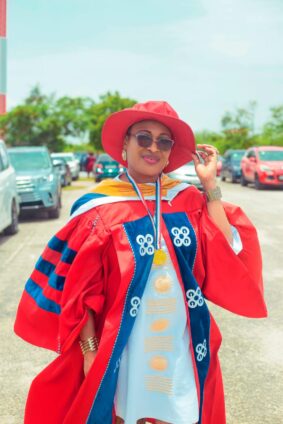
Dr Patience Calys-Tagoe s a university lecturer and researcher with academic interests in language, communication, pragmatics and education. Her scholarly interests include language use, sociocultural communication, critical thinking and the relationship between language and society.
References
Cummins, J. (2000). Language, power and pedagogy: Bilingual children in the crossfire. Multilingual Matters.
Fishman, J. A. (1991). Reversing language shift: Theoretical and empirical foundations of assistance to threatened languages. Multilingual Matters.
Grosjean, F. (2010). Bilingual: Life and reality. Harvard University Press.
UNESCO. (2003). Education in a multilingual world. UNESCO.
Email- patoo28@yahoo.com
Latest Stories
-
EcoBank invests in digital education of 4 Garisson School to mark 40 years in Africa
10 minutes -
AGI urges investment in skills and raw materials to strengthen local manufacturing
13 minutes -
GPL 2026/27: ‘We have to rectify our mistakes’ – Boadu reacts to Aduana FC defeat
14 minutes -
No disability access, no building permit – KMA declares
14 minutes -
Asantehene to lead environmental restoration effort at Jimi Land Reclamation Site
18 minutes -
Poor Ghanaians are being jailed because they cannot afford justice – Crime Check Foundation
19 minutes -
No conflict in appointing Emelia Agbenyo as Deputy EC Chair – NDC
20 minutes -
87-year-old man jailed 20 years for defiling 9-year-old girl at Ofankor
23 minutes -
Sankofa Gold targets 70kg output after 9-month shutdown
25 minutes -
Tamale, Bolgatanga had just one Legal Aid lawyer between them – Kwesimintsim MP
32 minutes -
PAC orders eviction of former irrigation company MD from official residence
36 minutes -
Legal Aid Commission has offices in only 45 of Ghana’s 261 districts, needs 180 more staff
38 minutes -
Challenging Heights welcomes Ghana’s Tier 1 ranking, calls for more anti-trafficking funding
58 minutes -
Cedi extends depreciation against dollar; going for GH¢12.10 at forex bureaus
59 minutes -
ECG cannot keep lending electricity for free
1 hour