


Audio By Carbonatix
Scientists have developed a sensor that can monitor blood sugar levels by analysing sweaty skin.
But rather than a gym-soaked t-shirt, it needs just one millionth of a litre of sweat to do the testing.
The team - in South Korea - showed the sensor was accurate and think it could eventually help patients with diabetes.
And in extra tests on mice, the sensor was hooked up to a patch of tiny needles to automatically inject diabetes medication.
The team at the Seoul National University were trying to overcome the need for "painful blood collection" needed in diabetes patients.
- Type 1 diabetes is caused by the immune system attacking the part of the body that controls blood sugar levels
- Type 2 diabetes is often caused by lifestyle damaging the body's ability to control blood sugar levels
- Patients with both conditions need to medically control their blood sugar levels to prevent damage to the body and even death
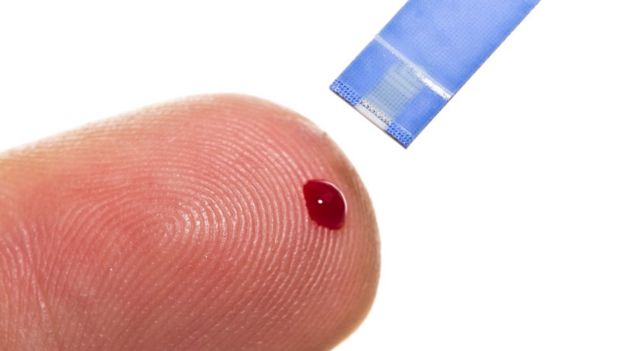
This is how patients with diabetes would normally keep track of blood sugar levels:
And this could be the future:
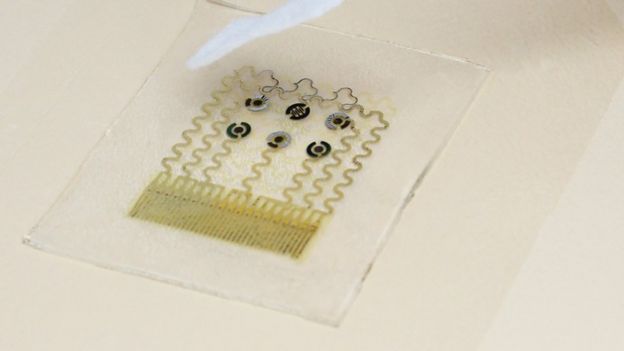
The sensor is flexible so it can move with the skin it is stuck onto.
However, the scientists needed to overcome a series of challenges to make it work.
There is less sugar in sweat than blood so it is harder to find, and other chemicals in sweat such as lactic acid can disrupt the results.
So the patch has three sensors keeping track of sugar levels, four that test the acidity of the sweat and a humidity sensor to analyse the amount of sweat.
It is all encased in a porous layer that allows the sweat to soak through and bathe the electronics.
All this information is passed onto a portable computer which does the analysis to work out the sugar levels.
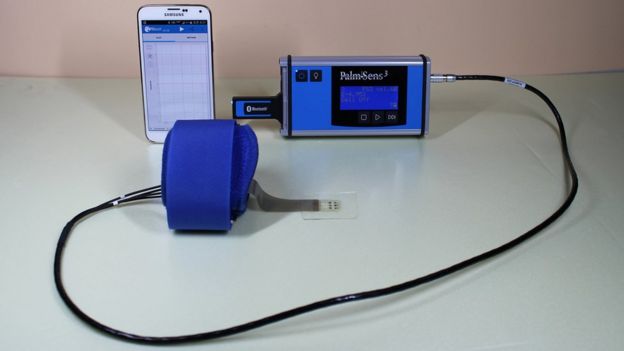
Tests before and after people sat down for a meal, published in the journal Science Advances, showed the results from the sweat patch "agree well" with those from traditional kit.
However, for the next stage the researchers turned to mice with diabetes.
They used the blood sugar monitor to control an array of microneedles to give the mice doses of the diabetes drug metformin.

The researchers conclude: "The current system provides important new advances toward the painless and stress-free" care for diabetes.
However, there is a leap between proving something can sense sugar levels in a lab and turning that into something that is so reliable people can put their lives in its hands.
So the researchers next want to test how the patches work in the long-term.
Latest Stories
-
Petra Odubayo sets September 11 for maiden album release
18 minutes -
IMF expresses worry over continued build-up of SOEs liabilities; ECG accounts for GH¢71bn of liabilities
28 minutes -
IMF identifies political appointments as major weakness in GPHA, VRA, COCOBOD and other SOEs
45 minutes -
Government reform efforts yet to translate into improved SOEs financial performance – IMF
1 hour -
Teacher unions demand apology from Muntaka over WASSCE forgery comments
2 hours -
NSMQ 2026: From 9 points to ADO9 – PRESEC Legon survive thriller to claim 9th trophy
2 hours -
Photos: Inside the thrilling NSMQ 2026 Grand Finale as PRESEC, AUGUSCO and Accra Academy battle for glory
2 hours -
Achimota, five other SHSs pilot waste segregation, clean-air initiative
2 hours -
More women attempt suicide, but men die by suicide more often – National Suicide Analysis Report
3 hours -
Three Ghanaian students launch e-commerce platform, Panta, to support small businesses
3 hours -
KMA passes by-law requiring Metropolitan Chief Executives to occupy official residence
3 hours -
Zoomlion rolls out disinfection, disinfestation exercise across Volta Region
3 hours -
Photos: Mahama swears in three new Supreme Court justices
3 hours -
$260 e-Visa fee could make Ghana less competitive – GHATOF
3 hours -
New Supreme Court justices pledge fairness, impartiality and fidelity to Constitution
3 hours