

Audio By Carbonatix
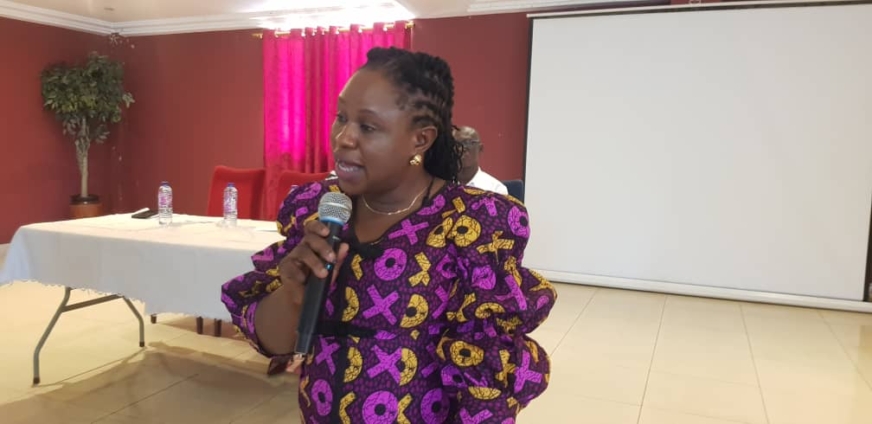
The Bono Regional Director of the Department of Gender, Joycelyn Adii, says that about 32 per cent of girls in the country between 15 years to 24 years believe that ‘wife beating’ is justifiable.
According to her, a domestic violence survey conducted in 2016 revealed that 27.7 per cent of Ghanaian women have suffered at least one form of violence.
Mrs Adii called for stakeholder support to end outmoded traditional practices, inimical to the holistic growth and development of women and girls.
She said harmful traditional norms remained a key barrier to the progressive growth and development of women and girls in the country.
Mrs Adii made the call when speaking at a forum to mark the 2025 celebration of the “16 Days of Activism Against Gender-based Violence” campaign, held at Abesim, near Sunyani, on Thursday, November 26.
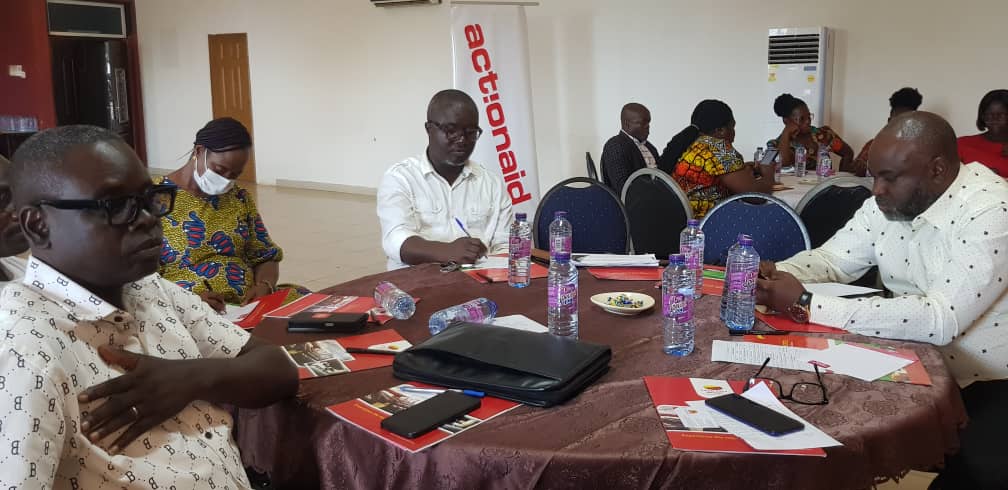
Every year in November, the Ministry of Gender, Children, and Social Protection (MoGCSP) launches and spearheads the campaign to raise awareness and promote action to eliminate violence against women and girls in the country.
On the theme: “The role of the community in protecting women and girls”, the Bono Regional Office of the Department of Gender, with Support from ActionAid Ghana (AAG), a non-governmental organisation, organised the forum.
It sought to intensify awareness creation and to highlight forms of gender-based violence against women and girls to stimulate stakeholders' support towards ending the menace.
Mrs Adii noted that: “When a woman is beaten, when a girl is assaulted, when a child is mistreated, the entire community feels the impacts because families are broken, children are traumatised, productivity declines, and poverty deepens”.
She emphasised that gender-based violence was not a private issue, but a human rights issue, a public health concern and a key development challenge.
“In fact, violence does not occur in a vacuum but occurs in our homes, neighbourhoods, classrooms, marketplaces, and now in the digital space.
"It hides behind closed doors and is too often protected by silence, stigma, blame and harmful norms,” Mrs Adii stated.
She expressed concern that such online attacks, cyberstalking, non-consensual sharing of images, body-shaming, threats, defamation and harassment have become tools of abuse, saying “just like physical violence, digital violence destroys confidence, dignity, mental health and opportunities."
The Bono Regional Programme Manager of the AAG, Kwame Afram Denkyira, emphasised that violence against women and girls continued to be the most urgent and pervasive human rights violation, resulting in serious harm for individual women, families, communities and the broader society.
Latest Stories
-
Hubtel CEO calls for national data-sharing framework to boost AI development
2 minutes -
Twelve Golden Rules of real estate development in Ghana, Africa
7 minutes -
Five new telephony cell sites in Ashanti Region to be activated in October 2026 – Sam George
7 minutes -
Mahama cuts sod for Afienya Industrial Park, targets 120 enterprises
12 minutes -
Rush for fuel from accident tankers is stealing, punishable by law – NPA boss, Edudzi Tamakloe
18 minutes -
GhIG pushes for legislation to regulate geoscientists’ activities
24 minutes -
Mfantsipim @150: Ace Anan Ankomah leads project to preserve school’s musical heritage
28 minutes -
Gov’t launches rCOMSDEP in Ahanta West, Mpohor Fiase to promote responsible community mining
30 minutes -
AI is forcing professionals to rethink how they deliver value – Hubtel CEO
32 minutes -
Daily Insight for CEOs: Strengthening the CEO’s Leadership Legacy
33 minutes -
Jimmy Aglah’s ‘When the River Testified’ approved by NaCCA as Supplementary Reader
42 minutes -
Hubtel willing to contribute to Ghana’s proposed AI fund – CEO
46 minutes -
Nkrumah family pays tribute to Gamal, says he died after prolonged illness
56 minutes -
Police arrest eight suspects in anti-narcotics operation at Okaishie Drug Lane
1 hour -
Former Krowor chairman pledges grassroots empowerment in NDC regional chairmanship bid
1 hour