

Audio By Carbonatix
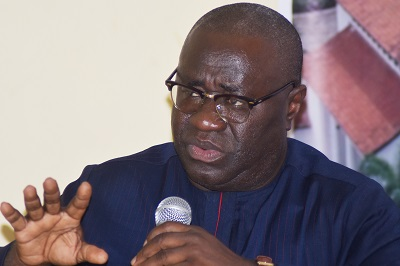
Security consultant Prof Kwesi Aning has highlighted that the conflict in Bawku has evolved beyond ethnic tensions and chieftaincy disputes, now being primarily driven by organised crime and a transnational network.
Speaking on the JoyNews AM Show, he revealed that the violence, which has been ongoing for years, is now primarily driven by organised crime rather than the ethnic tensions and leadership struggles that initially sparked it.
Prof Aning emphasised that the situation in Bawku is far more complicated than most people realize.
“The presupposition and the common perception are that what is happening in Bawku is essentially a conflict between two groups of people. My agreement, however, is that it has transcended these two groups. It has also moved beyond chieftaincy issues,” he explained.
He pointed out that the real force behind the continuing violence is criminal networks, which have capitalised on the existing ethnic and traditional leadership tensions in the region.
“What we are witnessing in Bawku today is being driven more by criminality and a transnational network. These criminal groups use the notions of ethnicity, ethnic identity, and long-standing suspicions surrounding chieftaincy to further their agendas,” Prof Aning noted.
Although the professor refrained from delving into sensitive details about the criminal groups involved, he made it clear that the conflict has become much more complex. “But I cannot delve too much into this, as I hold a public office, and such matters are sensitive,” he said. His comments, however, underscore the significant role criminal groups are playing in fueling the violence in Bawku.
Prof Aning also criticised the popular narrative that frames the conflict as merely an ethnic or chieftaincy issue.
He warned that this view oversimplifies the situation and can worsen the violence.
“The argument that it is simply an ethnic or chieftaincy issue is false. It does not help the situation at all. In fact, it may even exacerbate tensions, which are already at a breaking point,” he stated.
The professor pointed to the government's inability to effectively address the crisis, given the lack of resources and strategic planning.
“I can assure you that the situation is a delicate one, on the verge of becoming a scorched-earth policy. We do not have the necessary resources or the strong foundation to resolve this effectively. There is a need for more strategic focus, and without that, the crisis will only deepen,” he said.
Professor Aning concluded with a stark assessment of the government’s capabilities, stating, “That I can tell you, and we cannot calm the conflict. We don’t have the resources, we don’t have the backbone.”
Latest Stories
-
Lamisi takes ‘Let Us Clap’ tour across five countries and 18 dates
1 minute -
DVLA cuts roadworthy contract cost from $155.4m to GH¢2m – CEO
3 minutes -
Okyeame Kwame calls for free university education for farmers’ children
6 minutes -
Black Stars: Two decades of coaching triumphs and turmoil (2006–2026)
10 minutes -
DVLA plans simulator-based driving tests to assess prospective drivers in Ghana
18 minutes -
FDA disposes of 40-foot container of non-compliant diapers imported from Spain
21 minutes -
PAC disappointed by Agric Ministry’s failure to present key witnesses in GH¢69bn special audit inquiry
29 minutes -
DVLA to digitise road accident reporting, requiring location coordinates before reports are filed
30 minutes -
GJA accepts Mahama’s request to organise national forum on hate speech
49 minutes -
Democratizing the judiciary: Why Judges in Ghana should engage “We the People” through social media platforms.
52 minutes -
Bond market: Turnover increases by 47% to GH¢4.07bn
1 hour -
DVLA prepares electronic queue system to reduce congestion
1 hour -
Hearts of Oak coach Kapor raises alarm over poor pitches in Ghana football
1 hour -
Dorimon Traditional Council endorses policy to formalise female chieftaincy
1 hour -
DVLA expands from 33 to 63 offices after opening 30 new service centres across Ghana
1 hour