

Audio By Carbonatix
Political historians may one day mark this moment as the turning point in how Ghanaian opposition parties are expected to operate.
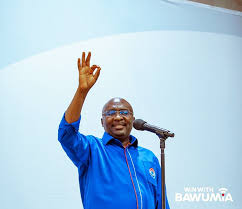
With the formal launch of its 23-sector policy committee framework, the New Patriotic Party, under the intellectual stewardship of Dr Mahamudu Bawumia, has placed itself in uncharted territory: an opposition party that functions, structurally and operationally, like a government-in-waiting.
No opposition party in Ghana's democratic history has assembled anything approaching this scale of organised policy capacity. Previous opposition cycles, whether NDC in opposition post-2000 or NPP between 2009 and 2017, relied heavily on ad hoc policy teams convened primarily during election season, with limited cross-sector coordination and no standing research infrastructure.
What Bawumia is building is categorically different.
The framework features 23 sector committees with full technical membership, a dedicated Policy Coordination Office, internal reporting mechanisms, and a phased deliverables schedule running through to 2027. Each committee is tasked not merely with critiquing the current government's performance but with developing fully costed, implementable policy alternatives, the kind of detailed programming that can be converted directly into a governing agenda.
Dr. Bawumia's fingerprints are all over the design. During his tenure as Vice President, he was famously meticulous about evidence-based policy, spearheading Ghana's digital transformation agenda with a rigour that set new standards for public administration. That same disposition, systematic, data-driven, forward-looking, is now being institutionalised in the NPP's opposition architecture.
Senior party figures interviewed were emphatic about the significance of the moment. "The NPP is redefining what it means to be in opposition in Ghana," one veteran party official said. "We are not just opposing, we are proposing. Not just criticising, we are constructing."
For a country whose political culture has often reduced opposition to mere noise-making, the Bawumia policy committees represent a genuine qualitative leap. If the committees deliver on their mandate, the NPP will arrive at the 2028 polls not with promises, but with a programme, detailed, researched, and ready for implementation on day one of a new administration.
Ghana's political history, it appears, is being rewritten. And the NPP, under Bawumia's direction, is holding the pen.
Latest Stories
-
Crowds, deals and home solutions as Republic Bank-JoyNews Habitat Fair enters final day
1 hour -
Fire Service finds only five functional hydrants in Ministries enclave
2 hours -
Government to sign 1,200MW gas power deal before end of 2026 – Mahama
2 hours -
West Mamprusi launches community-led WASH and livelihoods project across 100 communities
2 hours -
Iran says it will wait for official US response after Trump rejects Strait of Hormuz proposal
2 hours -
90 Oti communities to benefit from government electrification project
2 hours -
Floods leave 246 without shelter as 93 houses collapse in North East Gonja
2 hours -
Labour Minister wants SOEs to help shape new public pay system
7 hours -
IPEC will ensure Equity and Sustainability in SOEs Compensation
7 hours -
White House bars CNN from travelling with Trump on Air Force One
8 hours -
Fennis wins second consecutive ITF J60 title in Accra
8 hours -
Spain beat England in thriller after Kane penalty miss
8 hours -
GPL 2026/27: Zaidan’s late goal ends Hearts of Oak unbeaten start
8 hours -
CEOs demand clarity on pay harmonisation, board autonomy as FWSC engages SOEs bosses over IPEC transition
8 hours -
2026 Women’s Super Cup: FC Savannah, Epiphany Warriors maintain top spots ahead of final group games
8 hours