

Audio By Carbonatix
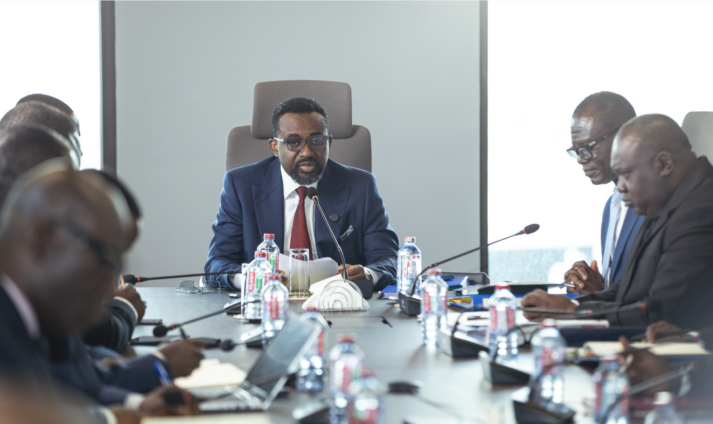
Dr. Johnson Asiama, Governor, Bank of Ghana, has proposed the implementation of mechanisms to make the Monetary Policy Committee’s decisions more accessible whether through publishing of voting outcomes or enhancing the narrative content of policy statements.
He said similarly, the committee needed to work on simplifying the way forecasts were presented so the public and market participants could better understand the underlying policy story.
The Governor was speaking at the opening of the 123rd regular meeting of the Monetary Policy Committee (MPC) in Accra on Monday.
He said these changes would strengthen credibility and deepen trust in the policy framework.
Dr Asiama said the transparency of the MPC decision-making process and the communication of the forward-looking guidance could further be strengthened going forward.
There’s a growing sense in public commentary that MPC decisions are taken behind closed doors without clear, data- driven reasoning, he said.
He commended the external members of the Committee; Professors Joshua Abor and Ebo Turkson for their long-standing contributions to the Committee.
He said while inflation was easing, it remained uncomfortably high, at over 23 per cent, and progress had been slow, particularly on a month-on-month basis.
He said, for instance, structural drivers of food inflation remained persistent.
The Governor said the external environment, though currently supportive, was becoming increasingly volatile.
“We have seen a strong trade surplus and solid reserve build-up on the back of gold exports and remittance flows, but a possible escalation in global tariff wars, rising geopolitical tensions, and weakening Chinese demand could quickly shift the dynamics,” he added.
He said these global factors could also have spillover effects on inflation, capital flows, and exchange rate stability.
He said domestically, the 2024 fiscal outturn was expansionary, with the deficit exceeding programme targets.
Dr Asiama said there were encouraging signs of consolidation early in 2025, but questions remained as to whether current measures were adequate to anchor expectations and satisfy upcoming IMF programme reviews.
The Governor said financial conditions were evolving quickly, liquidity in the system had increased, commercial banks had raised concerns about the Cash Reserve Ratio framework, and there was the need to carefully assess its macro financial implications, especially with respect to inflation, foreign exchange demand, and credit growth.
He said while private sector credit was recovering in nominal terms, real credit growth remained modest, banks were still cautious, and Non Performing Loans levels remained a concern.
“Meanwhile, our microfinance and rural banking sectors are showing early signs of stability, but recapitalization and regulatory reforms must continue to preserve confidence,” he added.
He acknowledged that some of today’s challenges stemmed from earlier monetary and fiscal policy missteps, particularly losing fiscal policy during periods of macro stress, weak monetary fiscal coordination, and delays in key structural reforms.
These contributed to elevated inflation, impaired policy transmission, and a loss of credibility.
He said it was essential that the MPC reflected on these issues not to assign blame, but to strengthen the institutions and avoid repeating past mistakes.
“There are also deeper, structural issues we must not lose sight of such as underinvestment in agriculture, persistent exchange rate misalignments, and the need to deepen domestic financial markets,” he said.
These are outside the scope of today’s immediate rate decision, but they will shape the broader monetary policy landscape over the medium term.
He said they were facing a convergence of risks: stubborn inflation, elevated liquidity, soft real interest rates, a fragile fiscal recovery, and growing external uncertainty.
“But we also have buffers, strong reserves, improving sentiment, and the credibility of our policy framework to guide us,” he added.
Latest Stories
-
SOE comments controversy: ‘We must never abandon our humanity because of judicial office’ – CJ
53 seconds -
Samuel Kojo Brace declares intention to contest NPP parliamentary primary in Ahanta West
2 minutes -
Dr Apaak calls for evidence-based education response to emergencies
6 minutes -
Pilot may have sought to crash Israel-bound flight after stabbing other pilot, Netanyahu says
10 minutes -
Report flags potential money laundering, terrorist financing risks among Ghana’s NGOs
10 minutes -
Breast Cancer Awareness Month launched: 2,695 women die from breast cancer annually — Dr Ann-Dadzie
18 minutes -
Mahama’s proposed airline looks to South America, Caribbean as Ghana confronts mounting drug trafficking cases
33 minutes -
5% progress on Suame Interchange Phase One inadequate – Roads Minister tasks contractor to speed up work
36 minutes -
Photos: Vice President joins GAAS Awards to celebrate outstanding women leaders
37 minutes -
OSP vs Ken Ofori-Atta, SML and others: Court gives OSP four more weeks to serve Ofori-Atta with summons
39 minutes -
High Commission sends caution to Ghanaians in South Africa ahead of planned protests
42 minutes -
Okai Mintah outlines vision for NDC Youth Wing as he engages MMDCEs
47 minutes -
Mahama Ayariga leads renewed push for stronger local governance through partnerships
51 minutes -
NDC youth organiser aspirant Okai Mintah consults MMDCEs ahead of elections
52 minutes -
PHOTOS: Ayikuma Methodist Basic School wins National Juniors Challenge
54 minutes