

Audio By Carbonatix
The Governor of the Bank of Ghana (BoG), Dr. Johnson Asiama, has urged commercial banks to reassess their lending strategies in the wake of the central bank’s latest monetary policy decision aimed at revitalising the economy.
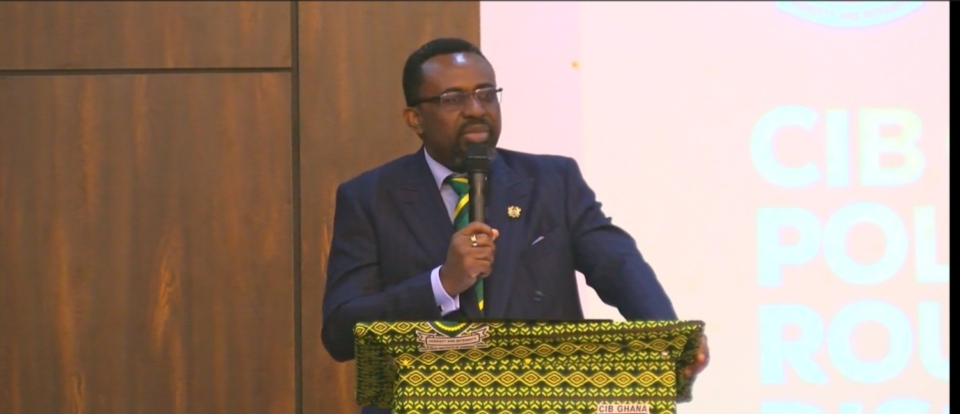
Speaking at the Chartered Institute of Bankers Ghana’s post Monetary Policy Committee (MPC) roundtable discussion, Dr. Asiama said the recent 300 basis point cut in the policy rate presents a strategic opportunity for banks to deepen credit support to the private sector.
“This policy adjustment is a deliberate step to ease credit conditions and unlock new avenues for private sector-led growth,” Dr. Asiama noted. “Banks must respond accordingly by revising their business models to direct more capital into productive sectors.”
Dr. Asiama also called on financial institutions to align their operations with the Bank of Ghana’s broader objectives of building a resilient and inclusive financial ecosystem.
“We must ensure our financial system supports all segments of society,” he stressed. “By adopting a more inclusive lending approach, banks can play a pivotal role in fostering sustainable development and economic stability.”
Speaking to Joy Business, Chief Executive Officer of the Chartered Institute of Bankers, Ghana Robert Dzato, reiterated the importance of providing robust support to banks to enable them to fully play their role in national development.
“Banks must be empowered and supported to respond to the changing dynamics of our economy,” Dzato emphasized. “With the policy rate reduction, we must work collectively to ensure that the benefits are passed on to businesses and individuals through accessible, affordable credit.”
The policy rate cut is expected to translate into lower lending costs, making loans more affordable for businesses and consumers. The central bank hopes this will spur investments, improve liquidity in the market, and ultimately accelerate economic growth.
The Governor’s comments come at a time when many private enterprises, particularly in agriculture, manufacturing, and small-scale industries, have cited limited access to affordable credit as a major barrier to expansion.
Industry watchers say the policy rate cut, combined with proactive lending reforms from banks, could mark a turning point for Ghana’s credit landscape—potentially leading to stronger private sector participation in the economy.
Latest Stories
-
Drug cartels may be seeing Ghana as easy route – Lenin Anane Agyei
35 minutes -
Ghana risks gaining notoriety as drug-trafficking hub – Bobby Banson
44 minutes -
Government dismissed my drug trafficking warning, then tried to arrest me – Ntim Fordjour
46 minutes -
Day Two: 3rd Republic Bank-JoyNews Habitat Fair Clinic underway at Junction Mall
46 minutes -
NACOC addressing inherited gaps in fight against drug trafficking – Deputy Director-General
59 minutes -
Taekwondo goes to school as GTF launches five-region youth campaign
1 hour -
The issues Mourinho is struggling to fix at Real Madrid
1 hour -
Hundreds throng EducationUSA College Fair in Kumasi in pursuit of abroad studies
1 hour -
Drug bust: NACOC should be part of port inspection team – Twum-Barimah
1 hour -
Ward appointed Liverpool’s sporting director
1 hour -
This isn’t the first cocaine bust; NPP must stop the politicisation – NACOC deputy boss
1 hour -
Drug bust case: Only Customs officers, MPS officials in scanning room – NACOC
2 hours -
I don’t mind being insulted; I have a crocodile skin – President Mahama
3 hours -
Samson’s Take: Verify the badge – and verify the story
3 hours -
President Mahama explains why Ghana must rethink regulation of TikTok, other new media platforms
3 hours