

Audio By Carbonatix
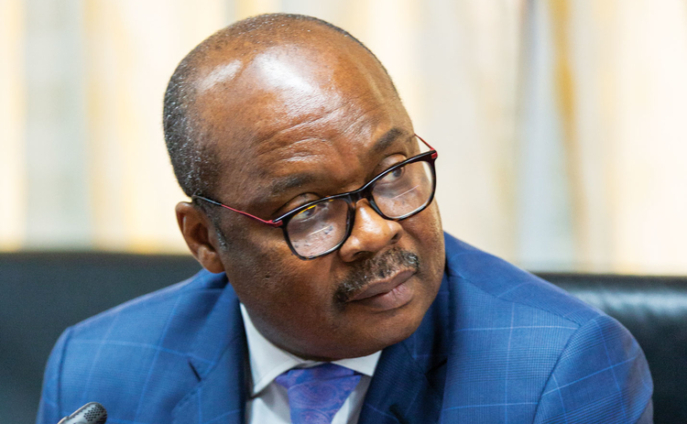
Governor of the Bank of Ghana (BoG), Dr Ernest Yedu Addison, highlighted the significance of the central bank’s internationally acclaimed banking sector cleanup.
In an interview on PM Express Business Edition on Joy News on January 2, he stated that the recognition BoG received for its decisive actions was a testament to the importance of the reforms and urged Ghanaians to value the achievement.
Dr Addison reflected on the dire state of Ghana’s financial system before the cleanup began in 2017.
“Sometimes people forget very easily,” he said.
“We came into a system where people were crying in banking halls. Women with babies strapped to their backs were being beaten because they couldn’t access their money from microfinance institutions. The chaos was undeniable.”
He described a financial sector that had lost public confidence, functioning more like a Ponzi scheme than a legitimate banking system.
“The financial system is supposed to promote savings and channel those savings into investments to support growth,” he explained.
“But what we had was a system where people no longer trusted the institutions. That defeated the entire purpose of having a financial system in place.”
The Governor reiterated the justification for revoking the licenses of poorly managed banks and microfinance institutions.
“When I give you a bank license, I’m giving you a license to take people’s money. That money is not yours,” he emphasized.
“But what we found was shareholders taking depositors’ money and using it to fund their own businesses. That’s not banking.”
Dr. Addison recounted instances of malpractice, including investments in illiquid assets and blatant disregard for banking regulations.
“These institutions were very badly run. People were treating depositors’ money as if it were their private funds, and that’s unacceptable,” he said.
The cleanup effort, according to Dr. Addison, was driven in part by the International Monetary Fund (IMF), which had flagged the banking sector crisis as a critical issue.
“These policies had been discussed with the previous administration, but there wasn’t much traction,” he revealed.
By the time the new administration took office, the situation had escalated.
“The IMF had made it a prior action. Either you implemented the reforms, or there wouldn’t be a program for Ghana. It was as simple as that,” Dr. Addison said.
Despite the controversies surrounding the cleanup, Dr. Addison proudly noted that the BoG’s actions earned international recognition.
“The Bank of Ghana received an international award for the very effective cleanup of our banking system, and I think we should value that,” he said.
The Governor underscored the importance of this recognition, not just for the central bank but for Ghana as a whole.
“This award is a reflection of the bold steps we took to stabilize the financial sector and restore confidence. It shows that our efforts were not only necessary but also effective,” he added.
Dr Addison highlighted the transformation of Ghana’s banking sector post-cleanup.
“Today, the banks that remain are well-capitalised, adhere to stronger corporate governance standards, and are properly managed and supervised,” he said.
He also pointed out the broader impact of the reforms.
“We cleaned up the system to allow the banking sector to play its rightful role in a market economy like ours. It was not an easy road, but we’ve emerged stronger,” he concluded.
As Ghana’s financial sector continues to recover, Dr Addison urged all stakeholders to learn from the past and prioritize the integrity of the banking system.
“A banking license is a special kind of instrument. It comes with responsibilities and rules that must be respected,” he stated.
Latest Stories
-
GPL 2025/26: Dreams FC stage stunning comeback to hammer Eleven Wonders
1 hour -
Livestream: The Probe examines Kumasi’s looming water crisis
1 hour -
MTN Ghana gears up to lead Africa’s AI revolution
1 hour -
Philanthropist Alhaji FuZak donates Da’wah bus to Ambariya Sunni community
2 hours -
GUTA calls for suspension of Publican AI system over trade disruptions
2 hours -
TTAG raises alarm over proposed recruitment of 7,000 teachers, demands national posting roadmap
2 hours -
Civilians feared killed after reports of air strike on Nigerian market
2 hours -
Bishop Simon Kofi Appiah installed as new Jasikan Diocese Bishop
2 hours -
Trump’s Strait of Hormuz blockade threat raises risks and leaves predicaments unchanged
2 hours -
US Court backs extradition of former MASLOC CEO Sedina Tamakloe-Attionu to Ghana
3 hours -
Seven arrested as NAIMOS dismantles illegal mining camp, seizes firearms at Boin River
3 hours -
Fire erupts at Madina Ritz Junction, destroys multiple wooden structures and containers
3 hours -
Daniel-Kofi Kyereh returns from long-term injury, registers assist for Freiburg U23
3 hours -
Knifeman calling himself ‘Lucifer’ slashes three at NYC’s Grand Central
3 hours -
Brands are built from within to without
3 hours