

Audio By Carbonatix
They are called pre-term because they are born sooner than the 40 weeks that they are supposed to be in their mother’s womb. They come into the world very tiny but only God knows the magnitude of the struggle they enter the world with. I am referring to premature babies.
In the last couple of weeks, I have been twice at the Korle-Bu Teaching Hospital’s Neonatal Intensive Care Unit (NICU), first with my Church Group to present to the Unit an ultrasound fitting to assist with quality care for pre-term babies admitted into intensive care.
The second visit was days after the presentation on the fact-finding mission and to talk to some mothers whose babies were on admission to feel their anxieties.
What I witnessed on both occasions indeed humbled me. It called for intensive awareness creation out there with some focus on the dire needs of such babies who are born prematurely through no fault of theirs.
World Prematurity Day
The World marked Prematurity Day on November 17, to raise awareness of the needs of premature babies and their families and to promote early detection of pre-term births. A noble call in the right direction, but how many of us stopped that day to think of the struggle of those precious tiny tots and their mothers?
The theme for this year’s Day was “Breaking barriers; Access to quality care everywhere”. My emphasis is “access to quality care”.
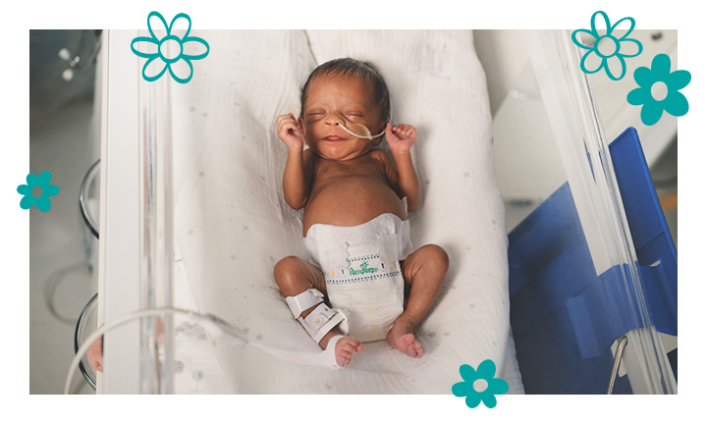
The scores of babies I saw on admission at the NICU, lying helpless in their cots with tubes, oxygen and other equipment invading their tiny bodies, some as tiny as the size of a beer bottle or a child’s water bottle. With some, their heads could fit into my open palm.
Pre-term babies, as I learnt, are born before 37 or the normal 40 weeks of pregnancy. According to experts, such babies do not have enough time to fully develop in the womb. This means that certain organs and body systems may not be ready to support them in their lives.
Optimism
On seeing what I saw at the NICU, I asked the question as to whether such babies could survive out of the womb. I was encouraged by the positive answer I received as well as the optimism of some parents I spoke to.
Though there were some complaints about the amount of money they had spent on endless tests, some parents, including a father who had come that morning to pay for his daughter’s tests, were confident that their babies were doing well and sooner, they would be going home.
Though some statistics chanced upon cited pre-term births as one of the leading causes of death in children under five in many parts of the world, there is a strong belief that with advancements in medical technologies, premature babies are increasingly overcoming early hindrances.
That is exactly what neonatal intensive care units are there for. However, they need optimum medical equipment to do the job. With help from Churches, organisations and individuals, the Korle-Bu NICU should be well equipped to take the charge a step further to treat premature babies and save more lives, learning that even 26 to 28 weeks pre-term babies have survived under their care.
Early detection
So if the Day of Awareness Creation is also meant to promote early detection of pre-term birth, then what should potential mothers be looking out for before they get to that critical stage?
Experts do say that people can go into premature labour due to chronic health conditions such as diabetes or heart disease. As well, multiple births with twins or triplets, pre-eclampsia, abruptions in the placenta and infections during pregnancy are all factors causing pre-term deliveries.
In terms of challenges, and from what I witnessed at Korle-Bu last Tuesday and the week before, pre-term births leave a big emotional impact on the parents. As they came outside from the wards for a breather and to compare notes, I overheard a mother whose baby had then just been admitted saying that it looked like they were going to spend Christmas in the NICU based on conversations she was gathering.
For another mother, they had spent tens of thousands of Cedis on tests alone, all of which had proved negative. I was touched by the comment of a father who had been waiting to see his wife. He said, “If you don’t do the tests, how would they know the symptoms to treat?”
And indeed, as I had earlier learnt, early treatment, no matter the cost is critical to reduce long-term impacts and sometimes even avert some such challenges as visual impairment, developmental delays and learning difficulties among others.
I have learnt that pre-term babies are not disabilities. They have good chances of survival with modern technologies and quality care, both in the hospital’s intensive care unit and at home.
That is why the World Prematurity Day Awareness call to break barriers and access to quality care everywhere is everybody’s call. We can all contribute to making the world a better place of stay for those who come in too soon.
******
The writer can be contacted via email at vickywirekoandoh@yahoo.com
Latest Stories
-
I leave with respect, gratitude and pride – Carlos Queiroz
12 minutes -
Stop turning investigation into punishment – OccupyGhana tells EOCO, BNI
12 minutes -
GPL 2026/27: Medeama go top after win over Port City
24 minutes -
Manhyia South MP Baffour Awuah reports himself to EOCO after arrest warrant
34 minutes -
Ghana records 11 cocaine cases in 28 drug busts since March 2025; biggest hauls seized abroad
36 minutes -
The numbers behind Carlos Queiroz’s tenure as Black Stars boss
45 minutes -
The man who saw tomorrow: How Dr Bawumia built for Ghana what America and Nigeria are building today
1 hour -
Kumasi drivers demand price controls for goods, brand some traders as real ‘Kalabule’
1 hour -
Consumer Protection Agency commends FDA for destroying illegal bales of diapers
1 hour -
GNFS rescues stranded persons after flooding in Hohoe
2 hours -
Baffour Awuah deliberately refused to honour EOCO invitation – Deputy AG, Srem-Sai
2 hours -
‘Believe in these players’ – Carlos Queiroz tells Ghanaians after leaving Black Stars job
2 hours -
Gideon Boako: GoldBod books must be stretched to establish true nature of reserves support
2 hours -
ECG announces planned maintenance outage in parts of Accra on Friday
2 hours -
Carlos Queiroz sacked as Black Stars head coach
2 hours