

Audio By Carbonatix
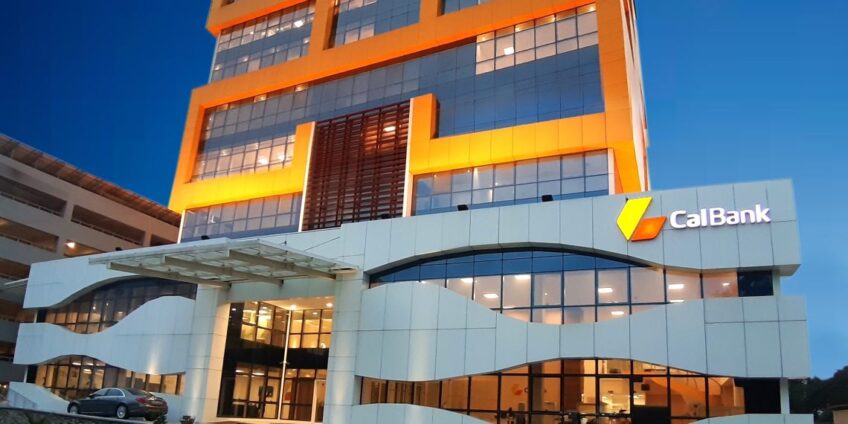
CalBank PLC, one of Ghana's indigenous banks, has completed a turnaround, according to its unaudited financial results for the nine months ended 30 September 2026.. In just a year, the Bank has gone from a lender operating under tight regulatory constraints to one positioned to pursue significant loan growth.
The transformation follows a landmark capital raise in late 2025 that far exceeded expectations and transformed the bank's balance sheet.
From Constrained to Capitalised
For much of 2025, CalBank's lending capacity was severely restricted. Its capital adequacy ratio fell into negative territory, triggering the Bank of Ghana's Prompt Corrective Action regime. Its non-performing loans (NPL) ratio was at 26.5%, and it was under intense regulatory scrutiny.
Expanding the loan book at that time was not an option.
However, that changed in November 2025 when CalBank launched a Rights Issue and Private Placement with a target of GHS900 million. Instead, they ultimately raised GHS1.164b (29.4% over target).
The capital injection produced immediate and dramatic results:
- Stated capital rose from GHS 545.8 million to GHS 1,421.5 million
- Capital Adequacy Ratio jumped from negative 1.6% to 18.4%
- NPL ratio fell from 26.5% to 8.5% - already below the Bank of Ghana's 10% year-end deadline
Crucially, the BoG lifted its regulatory restrictions once CalBank restored its capital position, removing the restrictions that had previously prevented the bank from lending.
The Final Catalyst
CalBank's Board Chairman Daniel Nii Kwei-Kumah Sackey described the oversubscription as "a clear vote of confidence in Brand CalBank, its governance and its long-term strategy".
Managing Director Carl Selasi Asem was even more direct in stating that the capital was "the final catalyst required to trigger the renewed strategy".
The bank is in a very good position at the moment: well capitalised, the regulatory constraints are all gone and it's in a market where rates are at their lowest in 25 years.
A Favourable Lending Environment
Ghana's average commercial lending rate dropped to 15.94% in August 2026 (down from 20.58% in January) representing a 25 year low. This is expected to drive up demand for credit from both the business and household sectors.
Private sector credit growth was 29% in August 2026. Banks were clearly shifting lending away from government securities toward the private sector.
CalBank's strategic focus on corporate and retail banking is in a position to capitalise on this growing demand.
Signs of Expansion
The bank's financials for the nine months to 30 September 2026 already show signs of renewed activity.
Loans and advances to customers increased by 61% to GHS2.05bn, customer deposits increased by 24.5% to GHS10.63bn and bank level profit for the period increased by 39.4% to GHS321.7m.
Net trading income was up 185% and net interest income up 70.6% on the same period in 2025.
A Note of Caution
Even with the positive figures, the analysts are of the view that CalBank is not going to be the sort of bank to go in for wild expansion.
A July 2026 IC Africa Securities report stated that although the bank "has effectively completed the stabilisation phase of its recovery", management are expected to focus on credit quality rather than on loan growth. The report noted that CalBank's retained earnings are still negative and the bank will have to continue to build up its profitability before it can consider any form of shareholder return.
Managing Director Carl Asem has been equally upbeat, stating that "CalBank today is in a far better position than it has ever been to go out and pursue growth aggressively but responsibly".
What It Means for Ghanaians
For the general public a well-capitalised CalBank is one more bank that will be in a position to lend as rates fall. For businesses it means more competition for quality borrowers and potentially better lending terms.
For CalBank, the issue now is to demonstrate that new lending capacity can, in fact, beget sustainable, high-quality growth.
The bank's journey from regulatory constraint to lending freedom is complete. The real test which is to lend well has only just begun.
Latest Stories
-
MTN Ghana trains civil society organisations on artificial intelligence
26 minutes -
GoldBod FX framework aims to make dollar supply predictable – Acheampong
1 hour -
How does a Ghanaian team make it to the BAL?
1 hour -
Ghana’s investment climate presents opportunities for industrial growth and job creation.
1 hour -
‘I paid thousands to a company for jobs that never came’
1 hour -
SSNIT intensifies informal sector enrolment drive with Techiman float
2 hours -
Ghana seeks long-term mining investments that benefit local communities – Armah-Kofi Buah
2 hours -
GHATOF demands compensation for 85 businesses affected by La Pleasure Beach demolition
2 hours -
Bono Regional Minister calls for investor education to drive economic growth
2 hours -
Ghana’s Ambassador to China, Kojo Bonsu, presents credentials to Nepalese President
2 hours -
Fairtrade Africa’s Cocoa Hubs Project strengthens rural service centres in cocoa-growing communities
2 hours -
MPs are not development officers – Edem Kpotosu
2 hours -
SEC cautions investors against fraudulent investment schemes
2 hours -
Land Ministry urges rCOMSDEP operators to reserve earnings for land reclamation
2 hours -
Commercial drivers give authorities one week to clear traders from lorry terminals, bus stops
2 hours