

Audio By Carbonatix
All is set for this year's Census Night, which falls tomorrow Sunday, June 27, 2021.
The Census Night is the reference date for census enumeration and all questions asked during enumeration will relate to that Night.
All persons who spend the Census Night in Ghana will be counted. This includes everyone who spent the night inside household, people who spent the night at hotels, people in transit and all outdoor sleepers.
In effect, everyone in Ghana during the time of the Census would be counted.
The enumeration exercise will continue from June 28 and end on July 11, 2021.
The listing of structures to herald the main exercise began on Sunday, June 13, 2021.
The 2021 PHC will provide important information to support the evidence-based implementation of the national development agenda and support the tracking of achievements of the Sustainable Development Goals and Agenda 2063 of the African Union.
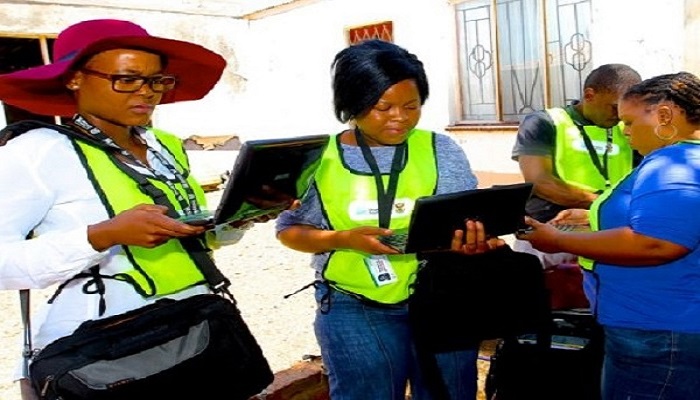
During enumeration, a census official (enumerator) will visit each household and administer a questionnaire (collect some information) from the head of household or any other adult in the household.
The enumerator will present their ID card on arrival. The interview to collect information must be conducted in the language that the respondent (household member) can understand.
It is important that everyone takes note of the Census Night and where one spent that night to answer the questions accurately.
All heads of households should also make note of all the persons that slept in their households on the Census Night, both usual members of the household and any visitors.
Enumerators will visit all households or institutions and collect detailed information on the persons that slept there on Census Night.
It is important that all household heads are able to answer these questions on behalf of others in their absence.
The information to be collected covers the following:
1. Travel history of household members who have migrated abroad
2. Socio-demographic characteristics (age, sex, education, ethnicity, religion etc.)
3. Literacy and education
4. Economic activity (employment status, job description, occupation, industry)
5. Difficulties in performing daily living activities (seeing, hearing, walking etc.)
6. Ownership and usage of ICT devices
7. Children born to women 12 years or over
8. Deaths of household members within the past 12 months
9. Housing conditions (construction materials of structure; water supply; asset ownership)
10. Sanitation (disposal of solid and liquid waste)
11. Source of water, lighting and cooking fuel.
Latest Stories
-
I do not see myself as better than anyone – NPP’s 1st Vice Chair Kojo Bamba
10 minutes -
Police blur the line between invitations and arrests – Reindorf Twumasi Ankrah
44 minutes -
Turning invitations into arrests is making citizens reluctant to assist police – Twumasi Ankrah
1 hour -
The Traffitech-GH SMS spot-fine system: The good, the sad, and the funny – Bright Simons writes
1 hour -
Hawa Koomson pledges experienced and mature leadership of NPP women’s wing
3 hours -
Young woman found dead at Kasoa Peace Town
3 hours -
Playback: The Law examined lawful arrest in Ghana
4 hours -
Mahama urges African governments to treat healthcare as an investment, not budget cost
4 hours -
Bawumia congratulates John Boadu and new NPP executives, pledges support ahead of 2028
4 hours -
Aksa Energy delegation pays courtesy call on GRA Commissioner-General
4 hours -
‘No talent should be left out’ – Bawumia pledges inclusive NPP campaign for 2028
4 hours -
Prof. Mike Oquaye recounts how he blocked the Special Prosecutor’s attempt to arrest Bawku Central MP
5 hours -
Make health sovereignty a priority for Africa – Mahama
5 hours -
Dorimon Naa, Wa West DCE lead massive clean-up exercise; threaten sanctions against recalcitrant residents
5 hours -
Photos from Adom FM Y2K Jam
5 hours